
Workstation Equipment Selection Parameters: A Practical Guide for Manufacturing Environments
Workstation Equipment Selection Parameters: A Practical Guide for Manufacturing Environments
Selecting workstation equipment involves more than choosing a standard size. Manufacturing environments vary significantly in load requirements, tool organization needs, and workflow patterns. This guide explains the key parameters to evaluate when selecting workbenches, tool cabinets, tool carts, and storage systems for your facility.
Core Selection Parameters for Workshop Equipment
Load Capacity Requirements
Load capacity is the foundation of workstation selection. Different operations demand different structural capabilities:
- Light to medium-duty operations
- (electronics assembly, testing stations): Standard workbenches with composite desktops typically support routine assembly tasks
- Heavy-duty operations
- (hardware molds, automotive parts): C-type cold-rolled steel frame constructions provide higher structural integrity for demanding environments
- Tool storage systems: Drawer configurations must accommodate both weight and frequency of access
When evaluating load requirements, consider not just the static weight of materials but also dynamic forces from tool usage, part placement, and operator movement.
Desktop Material and Surface Configuration
Desktop selection directly impacts durability, safety, and operational efficiency:
- Composite desktops
- combining steel plate with high-density fiberboard offer balanced load distribution and surface durability for general manufacturing
- Stainless steel surfaces
- serve environments requiring corrosion resistance or hygiene compliance
- Anti-static surfaces
- are essential for electronics manufacturing where electrostatic discharge can damage sensitive components
Storage Integration and Tool Organization
Effective workstation design integrates storage directly into the work area:
- Pegboard configurations
- (square-hole designs) enable flexible tool mounting and visual management aligned with 6S principles
- Drawer systems
- with tiered height options allow organized storage of tools ranging from small precision instruments to larger maintenance equipment
- Cabinet integration
- (such as inner half-pegboard storage cabinets) combines shelf storage with pegboard accessibility in a single unit
Industry-Specific Selection Considerations
Electronics and Electrical Appliance Manufacturing
Primary concerns: ESD protection, precision tool access, component organization
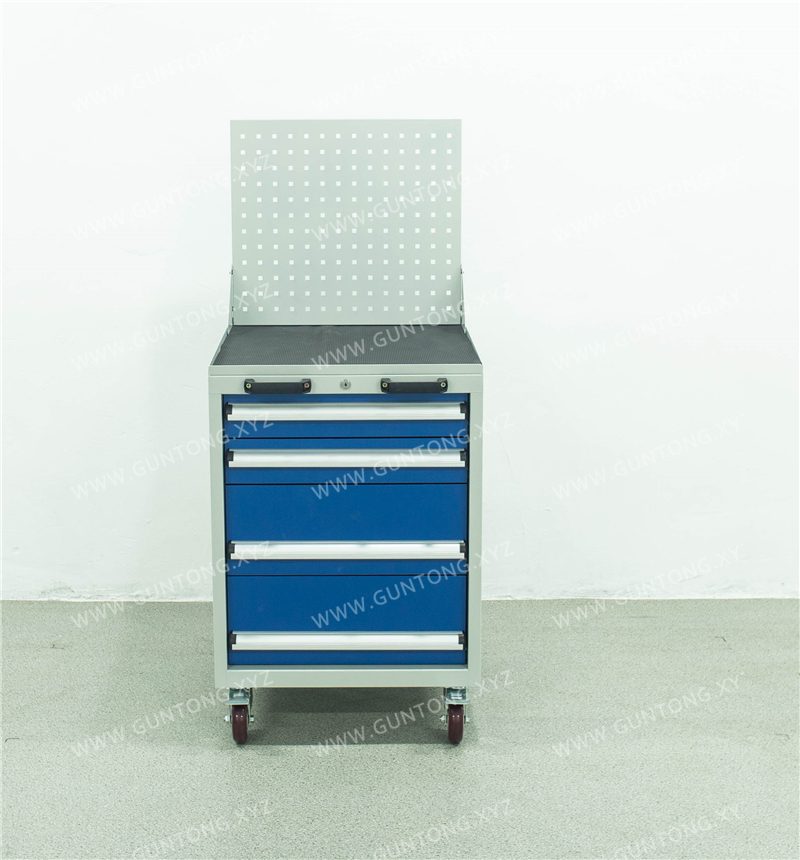
Electronics manufacturing environments require workstations that prevent electrostatic damage while maintaining organized access to small tools and components. Anti-static workbenches with appropriate grounding provisions are typically necessary. Tool carts with multiple drawer configurations support mobile assembly tasks, while pegboard-equipped storage cabinets keep frequently used instruments within immediate reach.
Automotive Parts and Hardware Mold Production
Primary concerns: Heavy load support, durability under demanding conditions, parts turnover efficiency
These environments place significant demands on workstation structures. Workbenches must support heavy components and withstand repeated impact from tools and parts. C-type steel frame constructions with reinforced desktops address these requirements. Automotive parts turnover racks and mold racks require specialized designs that accommodate irregular part shapes while maintaining structural stability.
Maintenance and Testing Institutions
Primary concerns: Versatility, tool accessibility, equipment protection
Maintenance facilities benefit from workstations that accommodate diverse tasks. Multi-drawer tool carts with pegboard extensions provide mobile solutions for technicians moving between service points. Storage cabinets with adjustable shelves support varying equipment sizes, while robust workbench surfaces handle both diagnostic equipment and repair tools.
Warehousing and Logistics Operations
Primary concerns: Storage density, retrieval efficiency, system integration
Warehouse environments require equipment that maximizes vertical space while maintaining accessibility. Lean pipe systems offer modular flexibility for creating custom material flow solutions. For automated operations, tote-based systems with appropriate load specifications (typically 50-100kg per tote) integrate with automated storage and retrieval systems, with rack heights designed to facility constraints.
Vocational Training Centers
Primary concerns: Durability, safety, multi-purpose flexibility
Training facilities need equipment that withstands frequent use by learners while supporting diverse instructional scenarios. Standardized workbenches with robust construction serve multiple training modules, while tool storage systems teach proper organization principles applicable in professional settings.
Standard Products vs. Custom Solutions: Decision Framework
When Standard Products Suffice
Standard workstation configurations work effectively when:
- Your operational requirements align with common dimensions and load specifications
- Tool storage needs match available drawer and shelf configurations
- Facility layout accommodates standard footprint sizes
When Customization Becomes Necessary
Non-standard customization addresses situations where:
- Unique part geometries require specialized rack designs
- Facility constraints demand non-standard dimensions
- Specific workflow patterns require integrated equipment configurations
- Industry-specific requirements exceed standard product capabilities
Guang'ErMei Precision Components supports both standardized production and non-standard customization, enabling manufacturers to select the appropriate approach based on their specific operational parameters.
Implementation and Verification Steps
Before finalizing workstation equipment selections:
- Document operational requirements: List all tools, materials, and equipment that will be used at each workstation, including weight specifications
- Assess facility constraints: Measure available space, ceiling heights, and access points for equipment installation
- Evaluate workflow patterns: Map how materials and tools flow through your production or service processes
- Verify load specifications: Confirm that selected equipment meets or exceeds your calculated load requirements with appropriate safety margins
- Consider 6S adaptation: Ensure equipment supports your facility's organization and standardization objectives
Service and Support Considerations
Workstation equipment represents a long-term operational investment. When evaluating suppliers, consider:
- Design support: Availability of on-site workstation planning services to optimize layout and workflow
- Installation services: Professional installation ensures equipment performs as designed
- After-sales support: Full-process service coverage addresses issues that arise during equipment lifecycle
- Customization capability: Suppliers offering both standard and custom solutions can adapt to changing operational needs
Next Steps for Manufacturing Decision Makers
Selecting appropriate workstation equipment requires systematic evaluation of your specific operational environment. Begin by documenting your load requirements, tool organization needs, and workflow patterns. Then evaluate whether standard products meet these requirements or if customization provides necessary advantages.
Guang'ErMei Precision Components provides comprehensive workstation solutions covering workbenches, tool cabinets, tool carts, mold racks, automotive parts turnover racks, lean pipe systems, and automated storage accessories. With capabilities spanning design, production, installation, and after-sales service, we support manufacturing enterprises across electronics, automotive, hardware, maintenance, warehousing, and training sectors.
Contact our technical team to discuss your specific workstation requirements and receive guidance on optimal equipment selection for your operational environment.