End-to-End Customization Workflow: From Design to Delivery
End-to-End Customization Workflow: From Design to Delivery
Executive Summary
For manufacturing enterprises in electronics, automotive parts, hardware molds, and logistics, a "one-size-fits-all" approach often fails to address specific workflow bottlenecks. Guang'ErMei Precision Components delivers an end-to-end customization workflow that bridges the gap between standardized product catalogs and unique operational requirements. This guide outlines the critical stages of this process, helping decision-makers evaluate suitability, understand service scope, and define clear acceptance criteria before committing to a project.
Phase 1: Requirement Discovery and Site Inputs
The foundation of any successful customization project lies in accurate requirement discovery. Unlike off-the-shelf purchases, custom solutions require precise data regarding the physical environment and operational flow.
Key Inputs Required:
- Site Dimensions & Layout:*
- Accurate floor plans are essential. We analyze available space to determine optimal dimensions, ensuring compatibility with standard workbench depths or custom configurations tailored to your workshop layout.
- Throughput Analysis:*
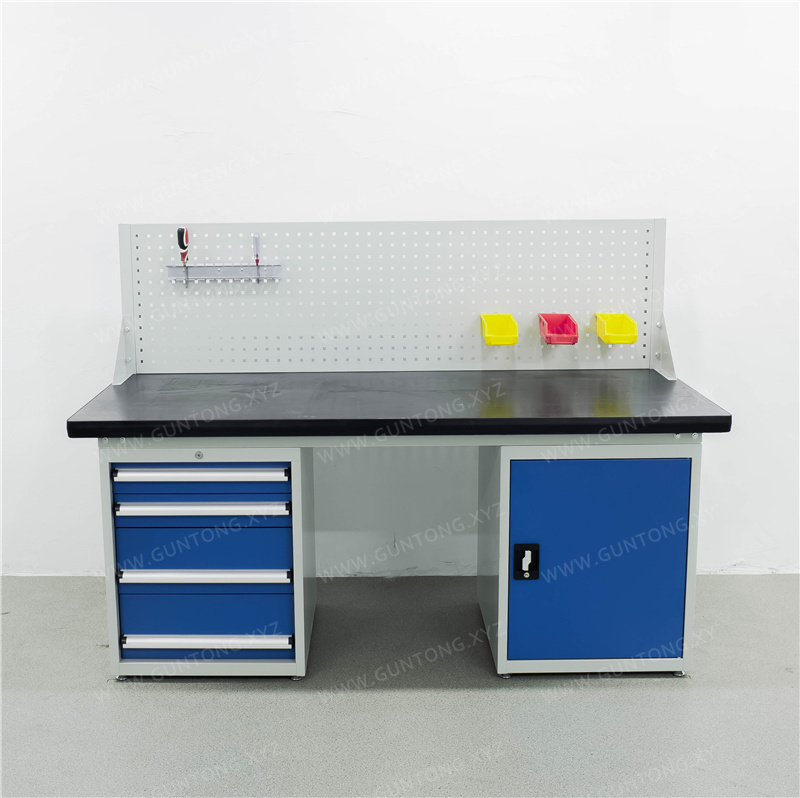
- We assess daily part volumes and tool retrieval frequencies. This determines whether a static solution like a Single Back Panel Single Door 4-Drawer Steel Plate Workbench is sufficient or if a mobile solution like a 4-Drawer 1-Door Tool Cart with Pegboard is needed for line-side support.
- Load-Bearing Requirements:*
- Critical for safety and longevity. Our engineering team evaluates expected loads against structural limits. For instance, our C-type cold-rolled steel frame workbenches are designed for a total load capacity of 1000kg, while shelf units can be configured with 100kg per shelf capacity using adjustable shelving.
Phase 2: Design Trade-offs and Engineering Validation
Once inputs are gathered, the design phase involves balancing standardization with customization. The goal is to maximize efficiency without compromising structural integrity or budget.
Design Considerations:
- Material Selection:*
- We offer composite desktop structures, such as the combination of 5mm raw steel plate and high-density fiberboard found in our steel plate workbenches. This choice balances high load capacity with surface durability. Alternatively, for environments requiring corrosion resistance, stainless steel options are available.
- Modularity vs. Fixed Structure:*
- Decisions on pegboard integration allow for flexible expansion later. Our 4-Drawer 1-Door Tool Cart with Pegboard features a standard square-hole pegboard for visual management and flexible tool organization. However, adding too many dynamic elements can increase lead times and cost.
- 6S Adaptation:*
- Designs must align with lean management principles. Our Pegboard Storage Cabinets (Inner Half-Pegboard Type) feature dual pegboard layouts on cabinet doors to improve retrieval efficiency, directly supporting visual management and 6S standards.
Decision Criteria:
- Standardized:
- Faster delivery, lower unit cost, proven reliability.
- Customized:
- Tailored fit, optimized workflow, higher initial investment.
- Trade-off:
- We recommend a hybrid approach where core structures remain standardized (e.g., frame profiles) while functional modules (drawers, pegboards, accessories) are customized.
Phase 3: Manufacturing and Quality Control
Guang'ErMei leverages dual capabilities in standardized production and non-standard customization. During manufacturing, strict quality controls ensure that the final product matches the design specifications.
Quality Checkpoints:
- Structural Integrity:*
- Verification of weld points and frame stability. For heavy-duty applications, we utilize reinforced columns capable of handling significant pressure.
- Surface Treatment:*
- Consistency in coating or plating to prevent rust and ensure aesthetic uniformity across large installations.
- Component Fit:*
- Ensuring drawers slide smoothly and pegboards align correctly with pre-drilled holes.
Phase 4: On-Site Installation and Acceptance
Delivery is not the end; installation is where the value proposition is realized. Our team provides on-site workstation planning and installation services.
Acceptance Criteria:
- Dimensional Accuracy:*
- Verify that installed units match the approved drawings within tolerance.
- Load Testing:*
- Conduct spot checks to ensure load-bearing capacities meet the specified limits (e.g., confirming 1000kg capacity for designated workbenches).
- Functional Verification:*
- Test drawer mechanisms, pegboard flexibility, and overall stability under simulated working conditions.
- Safety Compliance:*
- Ensure all units are level, anchored if necessary, and free of sharp edges or hazards.
Implementation Boundaries and Risks
While our workflow is comprehensive, certain boundaries exist:
- Lead Time Variability:*
- Highly customized items may have longer lead times compared to standard SKUs. Early engagement allows for better scheduling.
- Site Constraints:*
- Existing infrastructure (floor flatness, power access, ceiling height) can impact installation feasibility. A preliminary site survey is recommended.
- Scope Creep:*
- Changes requested after the design freeze stage may incur additional costs and delays. Clear change management protocols are essential.
Conclusion
An end-to-end customization workflow transforms generic equipment into a strategic asset. By focusing on precise requirement discovery, rigorous design trade-offs, and clear acceptance criteria, manufacturers can ensure their workstation and storage systems drive efficiency rather than create new bottlenecks. Whether deploying automated storage and retrieval system (Miniload) accessories or upgrading manual tool carts, the process remains consistent: define needs, validate design, execute with precision, and verify performance.
Next Steps
Ready to evaluate your specific workstation or storage needs? Contact our engineering team to initiate a site assessment and receive a tailored proposal based on your throughput and spatial requirements.
Key Points
- Requirement Discovery:*
- Success depends on accurate site data, throughput analysis, and load-bearing definitions.
- Design Strategy:*
- Hybrid models (standard frames + custom modules) offer the best balance of cost and functionality.
- Product Examples:*
- Solutions range from 1000kg capacity steel plate workbenches to 100kg/shelf pegboard cabinets.
- Acceptance:*
- Rigorous testing of dimensions, load capacity, and safety is mandatory before project sign-off.
- Service Scope:*
- Covers design, manufacturing, on-site installation, and full-process after-sales support.
SEO Metadata
seo_title: End-to-End Customization Workflow: From Design to Delivery - Guang'ErMei Precision Components
seo_description: Evaluate the complete workflow for custom workstation equipment. Learn how Guang'ErMei handles design, load-bearing validation, and acceptance for electronics, automotive, and manufacturing sectors.
seo_keywords: end-to-end customization workflow, custom workbench design, industrial workstation delivery, tool cart customization, load-bearing workbench, 6S workstation planning, Guang'ErMei manufacturing process
Summary
This article details the end-to-end customization workflow for industrial workstation equipment, covering requirement discovery, design trade-offs, manufacturing quality control, and on-site acceptance. It highlights specific product capabilities like 1000kg load capacity workbenches and modular pegboard systems, providing a decision framework for manufacturing leaders.
Call to Action
Contact Guang'ErMei Precision Components today for a professional site survey and customized workstation solution proposal.