
Workbench Weight Capacity: How to Determine the Right Load Rating for Your Needs
Who Needs to Care About Workbench Weight Capacity?
If you are equipping a production line, a maintenance bay, or a vocational training workshop, the load rating of a workbench is not just a catalog number—it is a daily safety and productivity factor. This matters most for:
- Electronics and electrical appliance manufacturers
- who place testing instruments, fixturing, and sub-assemblies on the same surface for hours at a time.
- Automotive parts manufacturers
- handling heavy castings, gear sets, or brake components that can easily exceed the capacity of a light-duty bench.
- Hardware mold factories
- where a single mold insert or die set must sit securely during fitting, polishing, or inspection.
- Maintenance and testing institutions
- that combine heavy power tools, vises, and measurement equipment on one bench.
- Vocational training centers
- where benches must survive student misuse, impact loads, and frequent reconfiguration.
In all these scenarios, choosing a workbench with an insufficient load rating leads to surface deformation, frame fatigue, and potential safety incidents. The goal is to match the bench's rated capacity to your real workload—before the first heavy part is placed on it.
What "Weight Capacity" Actually Means for a Workbench
A workbench weight capacity is not a single number. Three distinct ratings matter in practice:
- Static load capacity (uniformly distributed) – The total weight the bench can support when the load is spread evenly across the desktop. This is the most commonly quoted figure.
- Point load capacity – The weight that can be applied to a small area, such as under a vise, a press, or a concentrated fixture. A bench rated for a high static load may still dent locally if a heavy point load sits on a small footprint.
- Dynamic load capacity – The load the structure can handle during operations that involve vibration, impact, or frequent loading and unloading. Hammering, pressing, or dropping a heavy assembly introduces forces well beyond the static weight.
For reference, a steel-plate workbench from Guang'ErMei Precision Components with a raw steel plate composite desktop and a C-type cold-rolled steel frame is engineered for a total static load capacity of 1000 kg. This type of construction is designed for environments where heavy tooling and workpieces are the norm, not the exception.
Before You Buy: Define Your Real Load Profile
Before comparing specifications, document what will actually happen on the bench. Walk the shop floor and answer three questions:
- What is the heaviest single item that will ever be placed on the desktop?*
- Include vises, fixtures, and sub-assemblies, not just raw parts.
- Will the load be static or dynamic?*
- If operators hammer, press-fit, or torque components on the bench, you need a dynamic safety margin—typically 1.5× to 2× the static weight.
- How is the load distributed?*
- A heavy mold base concentrated on four small feet creates a very different stress pattern than the same weight of evenly stacked electronic enclosures.
A practical rule of thumb: take the heaviest expected static load, multiply by 1.5 if any dynamic work occurs, and then verify that the bench's rated static capacity exceeds that number with a comfortable margin. For a heavy mold plus occasional hammering, a 1000 kg rated bench is a reasonable starting point, not overkill.
During Selection: Match Construction to Load Type
Once you know your load profile, focus on three structural elements that determine real-world performance.
Desktop Construction
The desktop is the primary load-bearing surface. Common configurations include:
- Solid steel plate composite desktops
- (e.g., raw steel plate bonded to high-density fiberboard with PVC edge banding) offer high point-load resistance and long service life under heavy, concentrated loads.
- Stainless steel tops
- provide corrosion resistance for food, pharmaceutical, or cleanroom applications but may require thicker gauge material to match the load capacity of a carbon steel composite top.
- Anti-static laminates
- are essential for electronics assembly but typically have lower point-load tolerance; the underlying substrate must carry the mechanical load.
For heavy manufacturing, a steel plate composite desktop is the default choice. It resists dents, supports vises and presses, and maintains flatness over years of use.
Frame and Leg Structure
The frame transfers desktop loads to the floor. Look for:
- C-type cold-rolled steel frames
- with welded or bolted cross-bracing. This profile provides high torsional rigidity and predictable load paths.
- Adjustable leveling feet
- that compensate for uneven floors and ensure full leg contact. A bench with only three legs in firm contact can fail well below its rated capacity.
- Total frame load rating, which should match or exceed the desktop rating. A high-capacity desktop on a lower-rated frame limits the entire bench to the frame's capacity.
Storage Integration and Load Interaction
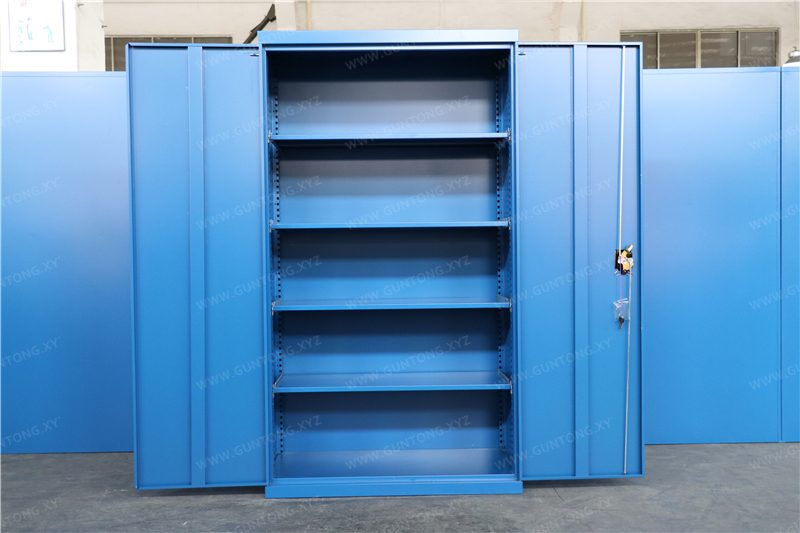
Many workbenches include drawers, cabinets, or pegboards. These add functionality but also add weight. A 4-drawer steel plate workbench with a single back panel and a single door cabinet already carries the weight of stored tools before any workpiece is added. When calculating available capacity, subtract the weight of fully loaded drawers and cabinets from the total frame rating.
For example, if each drawer holds a significant amount of tooling and multiple drawers are installed, that permanent load reduces the remaining capacity for workpieces and dynamic forces. On a 1000 kg rated frame, the net capacity for workpieces is the total rating minus the weight of stored items.
After Installation: Verify and Maintain Load Integrity
Load capacity is not a "set and forget" specification. After installation, take three steps:
- Level and anchor the bench. All feet must contact the floor evenly. On uneven surfaces, use shims or adjustable feet to eliminate rocking. A rocking bench concentrates stress on two diagonal legs and can fail at a fraction of its rated load.
- Inspect after heavy use cycles. Check for loose fasteners, deformed desktop edges, or cracked welds after the first month of production use and quarterly thereafter. Early signs of overload include doors or drawers that no longer align smoothly.
- Re-evaluate when workflows change. If a new product line introduces heavier parts, a larger vise, or a pneumatic press, recalculate the load profile. A bench that was adequate for lighter assemblies may be dangerously under-specified for heavier ones.
When Standard Ratings Are Not Enough
Some applications exceed the capacity of standard workbench configurations. In these cases, non-standard customization becomes necessary. Guang'ErMei provides design and production services that address specific load requirements through:
- Reinforced frame structures
- with additional cross-members or thicker gauge steel.
- Upgraded desktop materials, including thicker steel plates or solid steel tops without fiberboard cores.
- Integrated under-structure supports
- that transfer point loads directly to the floor, bypassing the desktop.
For automated storage and retrieval system (Miniload) accessories, load capacities of 50–100 kg per tote and rack heights up to 12 meters are standard design parameters. The same engineering discipline applies to custom workbenches: define the load, design the structure, and validate before production.
Key Takeaways for Your Next Workbench Specification
- Static load rating is a starting point, not the full picture.*
- Always consider point loads and dynamic forces.
- Match desktop material to the load type.*
- Steel plate composites handle concentrated loads; laminates and stainless steel serve different priorities.
- Account for integrated storage weight.*
- Drawers and cabinets reduce available work surface capacity.
- Verify installation quality.*
- Leveling and anchoring directly affect real-world load performance.
- Plan for the heaviest foreseeable load, not today's average.*
- Retrofitting is more expensive than specifying correctly upfront.
If you are evaluating workbenches for a new production line or upgrading existing workshop equipment, start with a clear load profile. Guang'ErMei Precision Components provides standardized workbenches with documented load ratings and non-standard customization services for applications that exceed standard specifications. Contact our engineering team with your load requirements, workspace dimensions, and workflow description to receive a configuration recommendation.