
Safety Checks to Prevent Tipping When Moving Fully Loaded Tool Carts or Heavy Workbenches
Safety Checks to Prevent Tipping When Moving Fully Loaded Tool Carts or Heavy Workbenches
For compliance managers and facility leaders in manufacturing, electronics, automotive, and warehousing sectors, workplace safety extends beyond personal protective equipment to include the structural integrity and mobility of workstation equipment. A critical risk scenario involves moving fully loaded tool carts or heavy workbenches, where improper handling can lead to tipping, structural deformation, or injury.
While manufacturers often advertise high "load capacities," these figures typically refer to static weight limits (items resting on a stationary surface). They do not automatically guarantee dynamic stability (resistance to tipping during movement or vibration). Understanding this distinction is essential for risk mitigation.
Myth vs. Fact: Understanding Load and Stability
Myth 1: "If it holds significant weight statically, it’s safe to move while full."
Fact: Static load capacity and mobility safety are governed by different physical principles.
- Static Load:
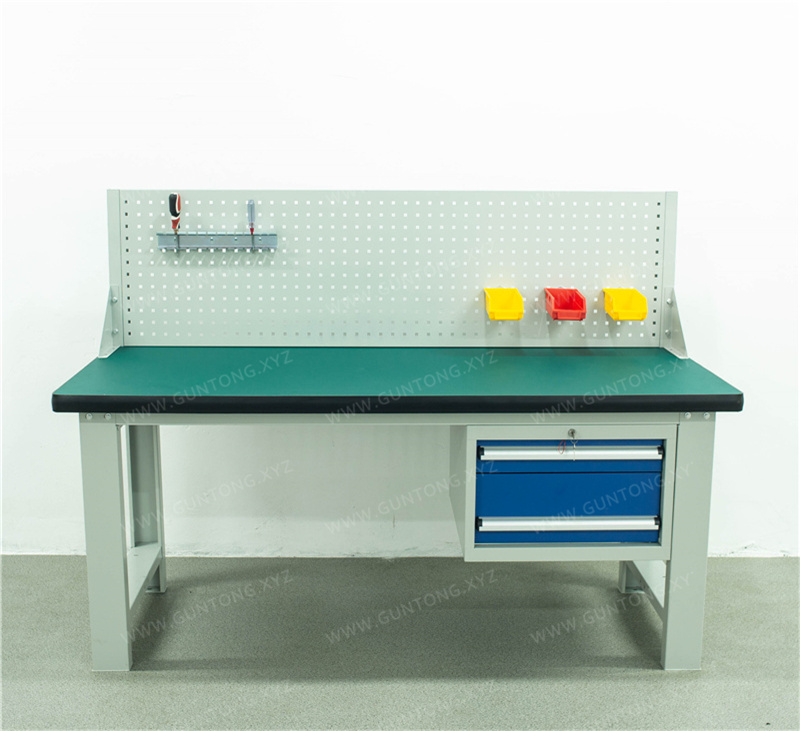
- Refers to the maximum weight a structure can support without collapsing when stationary. For example, the Single Back Panel Single Door 4-Drawer Steel Plate Workbench features a C-type cold-rolled steel frame with a total load capacity of 1000kg. This ensures the bench won’t collapse under heavy parts during assembly.
- Dynamic Stability:
- Refers to the center of gravity and friction. Moving a heavily loaded unit requires significant force. If casters are not rated for dynamic loads or if the floor is uneven, momentum can cause tipping.
Risk Boundary: Never assume that static capacity equals safe mobility. Always check caster ratings and ensure the load is distributed evenly across the base.
Myth 2: "All drawers and shelves are equally strong."
Fact: Load distribution varies significantly by component design.
- Tool Carts:
- The 4-Drawer 1-Door Tool Cart with Pegboard specifies a load capacity of 80kg per drawer. However, placing the maximum load in the top drawers raises the center of gravity, increasing the risk of tipping when the cart is moved or pulled sharply.
- Storage Cabinets:
- The Pegboard Storage Cabinet (Inner Half-Pegboard Type) offers 100kg per shelf with adjustable shelving. While robust, storing heavy items on upper shelves without securing them can create hazards during accidental impacts.
Implementation Advice: Follow the "bottom-heavy" principle. Store heavier tools and materials in lower drawers or bottom shelves to maintain a low center of gravity, enhancing stability during any potential movement or vibration.
Critical Factors for Mobility Safety
When dealing with units equipped with casters or heavy tops, compliance managers must verify three key areas:
1. Caster Load Ratings and Braking
Casters have specific dynamic load limits that are often lower than their static ratings.
- Verification:
- Ensure casters are rated for the total weight of the unit plus its maximum intended load.
- Braking:
- Units like the 4-Drawer 1-Door Tool Cart must be equipped with reliable locking mechanisms. Before adding or removing heavy tools, always lock the casters to prevent unintended rolling.
2. Desktop Structure and Rigidity
The desktop material affects how weight is distributed.
- Composite Desktops:
- The Single Back Panel 4-Drawer Steel Plate Workbench uses a composite structure of 5mm raw steel plate and high-density fiberboard. This combination provides high rigidity, preventing sagging under heavy loads. Sagging can shift the center of gravity and compromise stability over time.
- Edge Banding:
- Proper edge banding (e.g., black PVC) protects the core material from moisture and damage, which could otherwise weaken the structural integrity.
3. Floor Conditions and Clearance
Stability is also dependent on the environment.
- Level Surfaces:
- Uneven floors can cause wobbly cabinets or carts to tip more easily.
- Clearance:
- Ensure there is adequate clearance around the workstation to allow for safe maneuvering without collisions that could destabilize the unit.
Selection Criteria for Compliance Managers
When specifying workstation equipment for high-risk environments, prioritize the following:
| Feature | Why It Matters for Stability | Example Product Reference |
|---|---|---|
| Frame Material | Cold-rolled steel frames offer higher torsional rigidity than thin-walled alternatives. | C-type cold-rolled steel frame (Workbench ID 149) |
| Load Distribution | Even weight distribution prevents localized stress points that could lead to failure. | 4-drawer tiered design with specified per-drawer limits (Cart ID 157) |
| Adjustable Feet | Allows leveling on uneven surfaces, reducing wobble and tipping risk. | Standard feature in most heavy-duty workshop benches |
| Caster Quality | High-quality, locked casters prevent unintended movement. | Verify caster specs against total unit weight |
Next Steps for Risk Mitigation
- Audit Existing Equipment: Check the load ratings of current tool carts and workbenches against actual usage weights. Identify any units where heavy items are stored in top drawers or on unstable casters.
- Define Operating Procedures: Establish clear rules for loading (bottom-heavy), moving (locked casters, slow speed), and maintenance (regular inspection of welds and casters).
- Consult Specialists: For custom setups involving unusual weights or dimensions, engage with manufacturers who offer on-site workstation planning and load-bearing design services. Guang'ErMei Precision Components provides one-stop solutions combining standardized products and non-standard customization, ensuring that every unit meets specific site requirements.
Conclusion
Heavy-duty workbench stability is not just about how much weight a table can hold; it’s about how that weight interacts with movement, floor conditions, and structural design. By distinguishing between static load capacity and dynamic stability, and by adhering to proper loading and handling practices, compliance managers can significantly reduce the risk of accidents. Always rely on verified product specifications and professional installation guidance to ensure a safe working environment.
For tailored advice on selecting stable, compliant workstation equipment for your specific industry—whether electronics, automotive, or warehousing—contact our engineering team to discuss your unique load and mobility requirements.