
How to choose implementation process, single p: selection, rollout and support checklist
Preparation
Before deploying a single pegboard 3-drawer composite workbench in an automotive parts assembly or hardware mold maintenance area, the implementation process begins with accurate spatial and load mapping. Workshops typically face fragmented tool placement, limited floor space, and fluctuating part weights during assembly or inspection. The decision standard hinges on matching the workbench’s structural capacity to daily operational loads. For instance, the standard configuration utilizes 100×50×1.5 mm C-channel steel legs paired with a 50 mm thick composite desktop, delivering a verified total load capacity of 1,000 kg. This framework supports both static component staging and dynamic tool retrieval without frame deformation. During the layout phase, planners should verify aisle clearance for material handling carts, align the 450 mm square-hole pegboard height with operator eye level, and map drawer positions to minimize repetitive bending. If the workshop requires specialized anti-static surfaces or chemical-resistant coatings, these must be specified before fabrication, as the base composite desktop is optimized for general mechanical assembly and precision fitting tasks.
Implementation
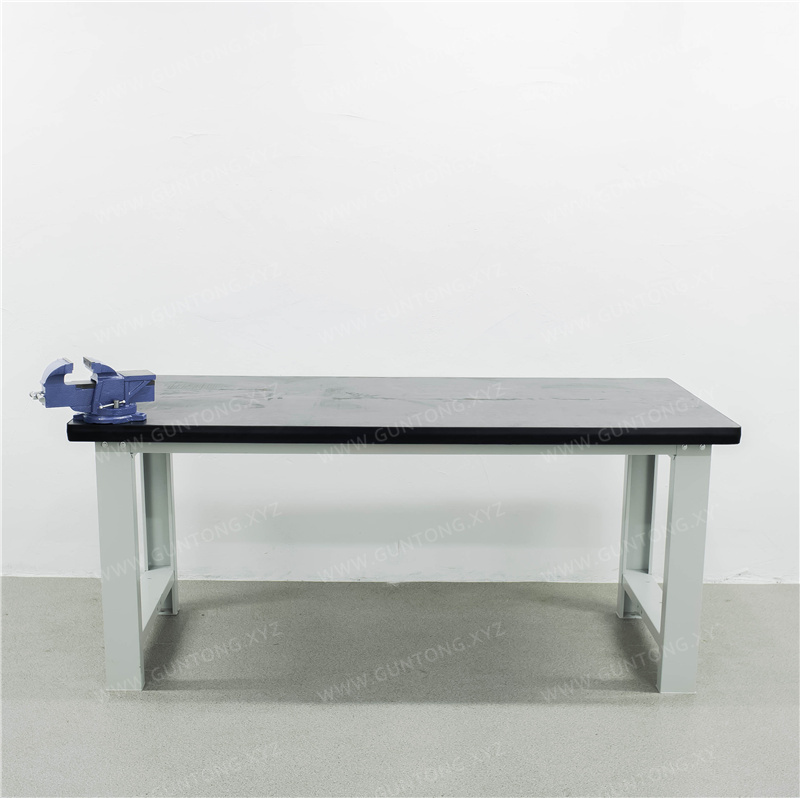
Physical deployment follows a strict sequence to preserve structural integrity and ensure smooth drawer operation. Upon delivery, the workbench components are unpacked and positioned according to the pre-approved floor plan. Leveling feet are adjusted to compensate for minor floor irregularities, preventing lateral stress on the C-channel frame. The composite desktop is secured using factory-rated fasteners, ensuring even weight distribution across the support rails. Next, the three horizontal drawers are installed with single-guide rails designed for an 85% extension rate. This opening ratio is critical for workflow efficiency, allowing operators to access deeply stored fixtures without removing adjacent tools. The pegboard panels are mounted flush against the back panel, and visual management hooks are distributed based on the 6S workbench methodology—frequently used items within arm’s reach, heavier jigs on lower shelves. Throughout installation, technicians verify that all locking mechanisms engage properly and that the desk surface remains flat under initial test loads. Delivery boundaries clarify that on-site assembly covers structural erection and functional calibration; electrical wiring, overhead crane integration, or custom surface treatments fall outside standard scope and require separate engineering coordination.
Acceptance
Post-installation validation ensures the workstation meets operational safety and durability standards. Acceptance protocols begin with a progressive load test: placing calibrated weights up to 80 kg per drawer and verifying that the single-rail system maintains stable extension without binding or sagging. The total 1,000 kg capacity benchmark is confirmed by distributing mass evenly across the 50 mm composite desktop. Surface inspection checks for edge banding integrity, pegboard anchor security, and frame weld quality. Operators then conduct a functional run-through, simulating typical pick-and-place cycles to confirm ergonomic reach zones and drawer slide smoothness. Documentation includes as-built dimensions, fastener torque records, and maintenance schedules. Acceptance is formally closed when all load tests pass, visual management layouts match the approved 6S plan, and workshop supervisors sign off on operational readiness. Any deviations, such as uneven leveling or restricted drawer travel, trigger immediate field adjustments before handover.
Maintenance
Long-term reliability depends on scheduled upkeep rather than reactive repairs. The composite desktop resists minor abrasions and oil splashes but should be cleaned with neutral detergents; abrasive pads or solvent-based cleaners can degrade the PVC edge banding over time. Drawer slides require quarterly lubrication with light machine oil to maintain the 85% extension performance and prevent dust accumulation from affecting the single-rail mechanism. Pegboard hooks should be inspected monthly for deformation, especially when storing sharp-edged automotive brackets or heavy die-casting components. Frame joints and leveling feet must be checked semi-annually for loosening caused by vibration or frequent cart collisions. Workshops operating in high-humidity environments or those handling corrosive cutting fluids should apply protective films to exposed metal surfaces. Routine maintenance logs should track wear patterns, enabling proactive replacement of consumable components like drawer glides or pegboard anchors before they compromise workflow continuity.