
Implementing a Custom Composite Desktop Workbench: Process Decisions for Automotive Parts Workshops
Preparation: Site Assessment and Configuration Planning
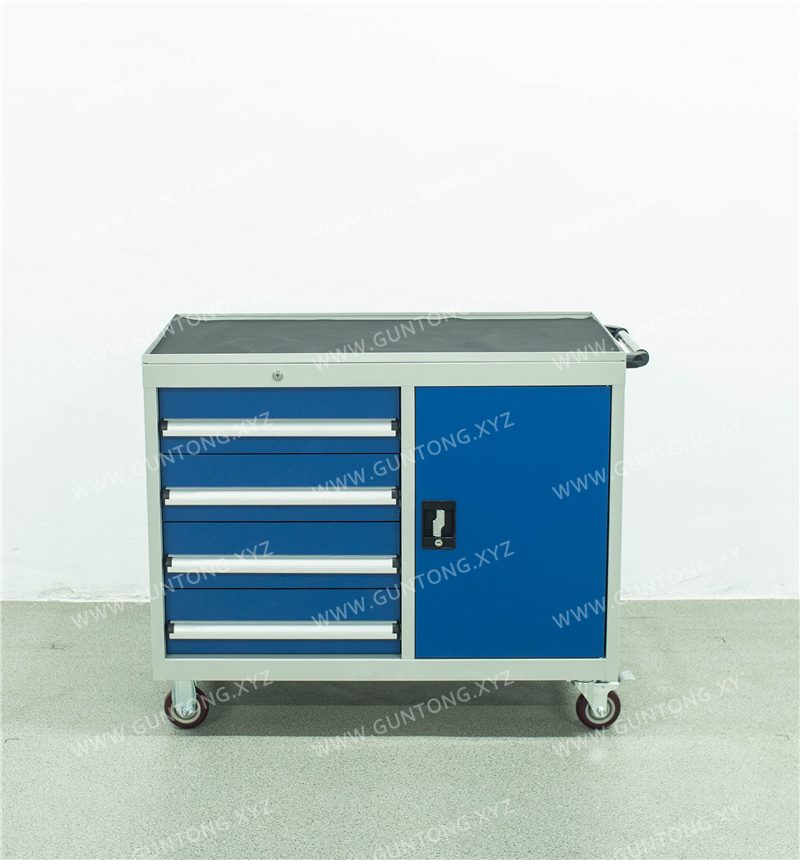
Before deploying a composite desktop workbench in an automotive parts or hardware mold maintenance area, the first step is mapping the physical constraints and operational workflow. Unlike standard office furniture, industrial workstations must accommodate heavy components, frequent tool retrieval, and strict 6S visual management standards. During the preparation phase, engineers typically verify floor flatness, measure available aisle widths, and define the required work zone dimensions. For facilities requiring mobile support alongside fixed stations, pairing the workbench with a dedicated tool cart can streamline part transfer between assembly lines and testing zones.
Load requirements dictate the structural baseline. Workshop environments handling transmission housings, brake calipers, or precision machining fixtures demand frames that resist deflection under dynamic stress. The standard industrial configuration utilizes a 100×50×1.5 mm C-shaped cold-rolled steel frame, which provides rigid vertical support while maintaining a clean footprint. Desktop thickness is equally critical; a 50 mm composite panel distributes impact resistance and vibration dampening across the working surface, preventing warping when torque tools or heavy jigs are placed directly on the bench.
Implementation: Assembly, Pegboard Integration, and Drawer Setup
On-site assembly follows a modular sequence to minimize downtime. The steel frame is leveled and anchored using adjustable feet, ensuring stability even on uneven concrete floors. Once the base is secured, the composite desktop is fastened, followed by the mounting of auxiliary storage modules.
Visual management is achieved through integrated pegboard systems. A 450 mm high square-hole pegboard is positioned at ergonomic reach height, allowing technicians to hang wrenches, calipers, and torque drivers without leaving their station. This setup reduces search time and enforces shadow-board tracking. Below the work surface, horizontal three-drawer configurations are installed. Each drawer operates on a single-rail mechanism designed for an 85% open ratio, meaning nearly the entire interior depth is accessible without pulling the drawer completely out. With a verified single-drawer load capacity of 80 kg, these compartments safely store fasteners, small assemblies, and calibration gauges.
Acceptance: Load Validation and Alignment Verification
Prior to handing over the workstation to production staff, a formal acceptance check ensures compliance with engineering specifications. Technicians perform a static load test by distributing weight evenly across the desktop, confirming that the total rated capacity of 1000 kg remains within safe operational limits without frame bowing or joint separation. Drawer slides are cycled repeatedly to verify smooth engagement and confirm that the 85% opening range does not interfere with adjacent cabinets or wall-mounted equipment.
Pegboard anchoring points are inspected for secure fastening, and all edge banding on the composite surface is checked for complete adhesion. At this stage, facility managers should also validate clearance heights for overhead lighting, ventilation ducts, or crane rails to prevent future interference during daily operations.
Maintenance: Routine Inspection and Reconfiguration Protocols
Long-term reliability depends on scheduled maintenance rather than reactive repairs. Monthly checks should focus on tightening frame fasteners, inspecting caster brakes if mobility variants are used, and verifying that pegboard hooks remain seated without bending under repeated loading. The composite desktop surface tolerates standard industrial cleaners, but abrasive pads or solvent-based degreasers should be avoided to preserve the PVC edge banding and laminate integrity.
When production workflows shift—for example, transitioning from engine component assembly to electrical harness testing—the workstation can be reconfigured. Pegboard layouts can be adjusted to accommodate different tool silhouettes, and drawer contents can be rebalanced to match new inventory profiles. Because the system relies on standardized mounting holes and modular brackets, modifications do not require welding or specialized fabrication. For complex layout changes or non-standard dimension requests, professional workshop workstation customization services provide CAD-backed planning to ensure spatial efficiency before manufacturing begins.
Conclusion
Successfully deploying a composite desktop workbench hinges on disciplined preparation, precise assembly sequencing, rigorous load acceptance, and proactive maintenance. By aligning structural specifications with actual shop-floor demands, manufacturers can achieve consistent 6S compliance, reduce tool retrieval time, and extend equipment service life.