
Organizing Tools in Storage Cabinets with Pegboard Doors: Selection and Configuration Guide
Organizing Tools in Storage Cabinets with Pegboard Doors: Selection and Configuration Guide
Workshop managers replacing legacy storage often ask: Can a standard storage cabinet with pegboard doors actually handle our mixed tool inventory, or will the pegboard become a cosmetic feature rather than a working surface? The short answer is that pegboard doors work well for visual tool control, but only when the cabinet frame, shelf load rating, and pegboard mounting method are verified against the actual tool set. This guide walks through the decision points that determine whether a pegboard storage cabinet is a functional upgrade or a compliance risk.
Who Needs Pegboard Storage Cabinets and Why
Pegboard storage cabinets are typically specified by maintenance teams, tool room supervisors, and 6S program leads in manufacturing environments where tools must be both stored securely and retrieved quickly. Common scenarios include:
- Maintenance and repair workshops
- where wrenches, sockets, and inspection tools are used daily and must be accounted for at shift change.
- Electronics and appliance assembly lines
- where anti-static or stainless steel cabinets may be required alongside pegboard visibility.
- Automotive parts and hardware mold shops
- where heavy tools coexist with small fasteners, demanding a mix of shelf and pegboard storage.
- Vocational training centers
- where tool sets must be visually complete for student accountability.
The pegboard door is not just a storage surface; it is a visual management tool. When configured correctly, it supports 6S audits by making missing tools immediately visible.
Cabinet Structure: What to Verify Before Ordering
Not all pegboard cabinets are built the same. The key structural elements to check are:
Frame Material and Thickness
Cabinet bodies are typically made from cold-rolled steel. For the Pegboard Storage Cabinet (Inner Half-Pegboard Type), the main body uses cold-rolled steel with thickness options such as 1.0 mm or 1.2 mm depending on the model. Thicker steel improves rigidity, especially when doors are frequently opened or shelves carry heavy loads.
Shelf Load Capacity
Adjustable shelves in pegboard storage cabinets are commonly rated at 100 kg per shelf. The Inner Half-Pegboard Storage Cabinet, for example, provides 3 adjustable shelves each rated at 100 kg. If your tool inventory includes heavy items such as torque wrenches, die sets, or test equipment, verify that the shelf rating matches your actual load.
Pegboard Type and Mounting
Pegboards come in two main styles:
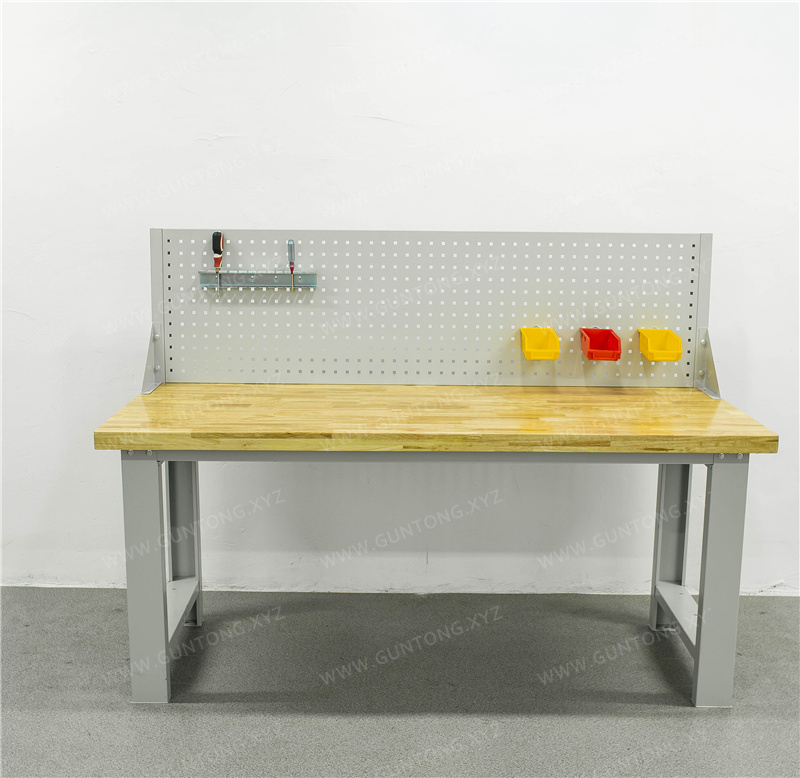
- Square-hole pegboard: Compatible with standard hooks and brackets, widely used in industrial settings. The 4-Drawer 1-Door Tool Cart with Pegboard uses a 500 mm standard square-hole pegboard for flexible expansion and visual management.
- Louvered (perforated) pegboard: Less common, used for specific hook types.
Mounting location matters. Some cabinets feature pegboard on the inner door surface only, while others combine an inner half-pegboard with door-mounted pegboard for dual-sided access. The "inner half-pegboard" configuration places pegboard on the upper interior section and both sides of the cabinet door, maximizing hook capacity without sacrificing shelf space below.
Configuration Options: Matching Layout to Tool Sets
When configuring a pegboard storage cabinet, consider these practical combinations:
Option 1: Full Pegboard Door, All Shelves
Best for workshops where all tools are small to medium-sized and can be hung. Shelves are used for bulk items or tool boxes. The Inner Half-Pegboard Storage Cabinet has overall dimensions of 1000 × 500 × 1800 mm, providing ample vertical space for both hanging tools and shelf storage.
Option 2: Inner Half-Pegboard with Drawers
Combines pegboard visibility with drawer storage for small parts. The 4-Drawer 1-Door Tool Cart with Pegboard features a drawer configuration of 100 mm H × 2 + 200 mm H × 2, with each drawer rated at 80 kg load capacity. This is suitable for maintenance teams that need both hanging tools and organized fasteners.
Option 3: Stainless Steel Cabinet with Pegboard
For environments requiring corrosion resistance (e.g., food processing, chemical labs, or humid workshops), stainless steel cabinets with pegboard doors are available. Stainless steel offers resistance to weak corrosive media such as air, steam, water, and certain acids and alkalis.
Implementation Steps: From Audit to Installation
- Tool Inventory Audit: List all tools by size, weight, and frequency of use. Separate heavy tools (shelf storage) from light tools (pegboard hanging).
- Load Calculation: Sum the weight of tools per shelf and per drawer. Compare against rated capacity (e.g., 100 kg/shelf, 80 kg/drawer).
- Pegboard Hook Selection: Match hook type to tool handle shape. Square-hole pegboards accept standard industrial hooks; verify hook load rating.
- Cabinet Placement: Ensure adequate clearance for door opening and drawer extension. Verify aisle width based on the specific cabinet model and drawer travel.
- 6S Labeling: Label each pegboard hook position and shelf location. This supports audit compliance and reduces search time.
- Installation and Verification: After delivery, check frame squareness, door alignment, and shelf levelness. Load test shelves with actual tools before full deployment.
Boundaries and Risk Points
Pegboard storage cabinets are not universal solutions. Key limitations include:
- Pegboard load limits: Hooks have individual load ratings. Overloading pegboard hooks can cause tools to fall, creating safety hazards.
- Door weight: Fully loaded pegboard doors add significant weight. Verify hinge capacity and ensure doors open smoothly without sagging.
- Drawer vs. pegboard trade-off: Adding drawers reduces pegboard space. Balance visual management needs against small-part storage requirements.
- Customization lead time: Non-standard dimensions or special materials (e.g., stainless steel) may require longer lead times. Confirm delivery schedules before committing to workshop layouts.
- Parameter verification: Specific dimensions, load ratings, and pegboard configurations vary by model. Always confirm final specifications against product drawings or contracts.
Next Steps for Procurement
Before requesting a quote, prepare the following information:
- Workshop layout and available floor space
- Tool inventory list with weights and dimensions
- Environmental requirements (e.g., anti-static, corrosion resistance)
- 6S or compliance audit standards
- Preferred cabinet dimensions and configuration (shelves, drawers, pegboard type)
With this information, manufacturers can provide accurate drawings and load calculations. For workshops in Huizhou and Guangdong Province, local manufacturers offer on-site measurement and installation support. Nationwide delivery and customization are also available.
Conclusion
Pegboard storage cabinets are effective for tool organization when selected and configured based on actual tool sets and workshop conditions. The key is to verify frame material, shelf load capacity, and pegboard mounting method before ordering. By following a structured audit and implementation process, maintenance managers can ensure that pegboard doors serve as functional visual management tools rather than decorative features.
For detailed product specifications or custom configuration support, contact the manufacturer with your tool inventory and workshop layout. Accurate information enables precise quoting and reduces the risk of post-installation modifications.