
Maintenance and Support Protocols for Double Pegboard Stainless Steel Workbenches: Diagnosing Load Limits and Wear
Maintenance and Support Protocols for Double Pegboard Stainless Steel Workbenches: Diagnosing Load Limits and Wear
For technical evaluators managing cross-regional manufacturing facilities, the core question regarding maintenance and support for a double pegboard stainless steel workbench is how to sustain structural integrity and 6S compliance under continuous operational stress. The direct answer lies in shifting from reactive repairs to predictive diagnostics: strictly enforcing component-level load boundaries, monitoring specific wear signals on moving parts, and standardizing upkeep routines across all sites. Whether deploying a heavy-duty custom workbench or a standard composite desktop workbench, consistent support protocols prevent localized failures from escalating into facility-wide safety risks.
Primary Diagnostic Signals for Workstation Degradation
Before scheduling downtime, facility managers must identify early indicators of mechanical or structural fatigue. When evaluating a workshop workbench, look for the following diagnostic signals:
- Drawer and Rail Friction:*
- If the workbench integrates storage modules, uneven sliding or metallic grinding indicates rail misalignment or overloading.
- Pegboard Hook Deflection:*
- On a double pegboard setup, hooks holding heavy tools should remain perfectly horizontal. Downward angling suggests the pegboard mounting brackets are loosening or the board itself is yielding.
- Frame Joint Stress:*
- Inspect the welded joints and bolted connections of the C-type cold-rolled steel or stainless steel frame. Visible micro-cracks or rust accumulation at stress points require immediate intervention.
- Surface Contamination:*
- For stainless steel variants, localized pitting or discoloration indicates that chemical exposure has breached the passive oxide layer, compromising the hygienic or anti-corrosive properties required in electronics or testing environments.
Actionable Maintenance and Support Procedures
Implementing a standardized support checklist ensures uniform performance across different regional plants.
1. Load Verification and Redistribution
Routine maintenance must include verifying that actual tool weights match the designated 6S workbench layout. If a facility transitions from a single pegboard workbench to a double-sided configuration, the cumulative weight on the vertical plane increases. Ensure tools are distributed symmetrically to prevent center-of-gravity shifts.
2. Moving Component Lubrication and Alignment
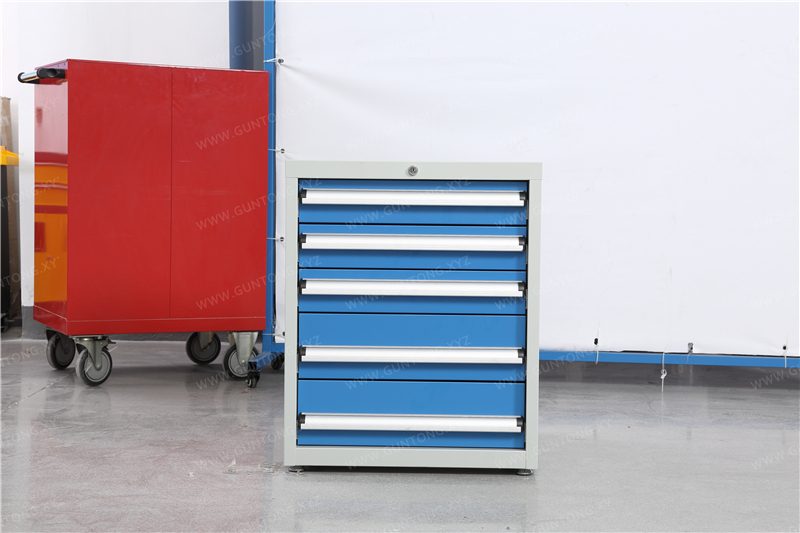
For integrated cabinets or a three-drawer composite workbench setup, clean the drawer rails monthly using a non-corrosive degreaser, followed by a light application of industrial lubricant. Check the locking mechanisms to ensure they engage fully when the workbench is subjected to vibration from nearby stamping or machining equipment.
3. Fastener Torque Audits
Vibration from heavy manufacturing processes can loosen structural bolts. Establish a quarterly torque audit for all frame connections, pegboard mounting brackets, and adjustable feet to maintain absolute levelness and rigidity.
Operational Boundaries and Load Risk Control
Understanding the engineering limits of workstation equipment is critical for risk control. Exceeding these boundaries voids standard support agreements and introduces severe safety hazards.
- Drawer Load Limits:*
- When diagnosing drawer wear on integrated workbench cabinets, verify that the load does not exceed the standard 80 kg per drawer limit, and ensure drawers are not forced beyond their 85% opening threshold to prevent rail detachment and tipping hazards.
- Shelf and Cabinet Capacities:*
- If the workbench incorporates auxiliary storage cabinets or lower shelving, confirm that individual shelf loads remain within the 100 kg capacity to maintain overall stability and prevent frame distortion.
- Structural Deformation Thresholds:*
- For the underlying support frames or integrated heavy-duty storage components, structural integrity must be evaluated against a 1.5x safety factor. Any load-bearing beam deformation exceeding the 1/200 length ratio indicates an immediate need for reinforcement or load reduction.
It is crucial to differentiate between workstation limits and heavy-duty storage racking limits. While pallet racks may handle 1 to 3 tons, a custom workbench is engineered for precision assembly and tool management, not bulk pallet storage.
Strategic Next Steps for Facility Managers
Effective maintenance and support extend the lifecycle of your workstation equipment and safeguard operator efficiency. If your current diagnostic audits reveal persistent wear or if you are scaling operations across multiple regions, standardized equipment and unified support protocols are essential.
Evaluate your current workstation configurations against these load boundaries. For facilities requiring tailored solutions, partnering with an experienced Huizhou workbench manufacturer ensures that both standardized products and non-standard customizations are backed by rigorous engineering and full-process after-sales service.