Maintenance and Support for Beech Top Workbenches: Evaluating Upgrades for Single Pegboard and Dual Drawer Configuration
Direct Answer: Evaluating Workbench Maintenance and Upgrade Needs
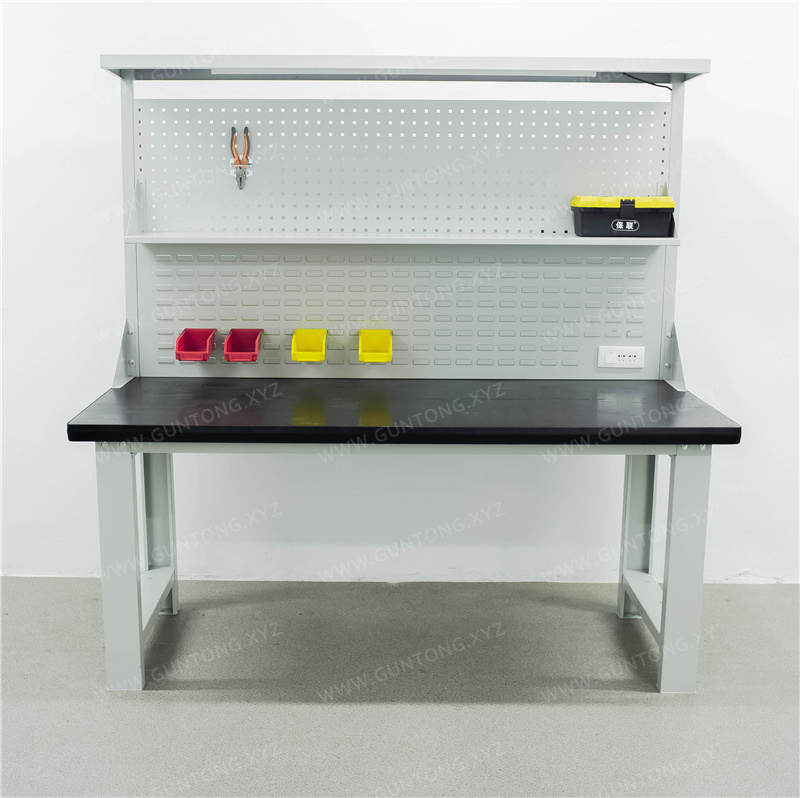
When maintaining a beech top workbench configured with a single pegboard, dual drawers, and a bottom rail, the primary objective is to ensure structural stability and operational efficiency under daily workshop conditions. For manufacturing and maintenance personnel, effective support begins with diagnosing whether component wear requires routine maintenance, targeted part replacement, or a complete workstation upgrade. The evaluation must focus on the beech desktop's surface integrity, the mechanical smoothness of the dual drawers under load, and the mounting rigidity of the single pegboard and bottom rail. If the current setup no longer meets updated 6S management standards or load-bearing requirements, transitioning to a reinforced composite or steel-plate workstation becomes the necessary support action.
Diagnostic Signals: When to Maintain vs. Replace
Identifying the correct intervention requires monitoring specific physical signals across the workbench's core modules.
1. Beech Desktop and Bottom Rail
- Surface Wear: Minor oil stains or scratches on the beech top can be sanded and resealed. However, deep structural cracks or severe warping indicate the need for a desktop replacement.
- Rail Deformation: The bottom rail is critical for foot support and lower-tier storage. If the rail shows visible bending or weld fatigue, it compromises the entire frame's stability and requires immediate structural reinforcement or frame replacement.
2. Dual Drawers and Slide Mechanics
Drawer failure is a common bottleneck in workshop efficiency. When assessing drawer support, operators must verify the load limits. Based on standard heavy-duty workshop configurations, heavy-duty drawers can open approximately 85% with a single drawer load capacity reaching 80 kg.
- Signal for Maintenance: If the drawer sticks but the load is under 80 kg, the slide rails likely need cleaning and lubrication.
- Signal for Replacement: If the drawer sags, drops, or fails to lock when loaded within the 80 kg limit, the slide mechanisms are permanently deformed and must be replaced.
3. Single Pegboard and Tool Management
The single pegboard is essential for visual tool management.
- Signal for Maintenance: Loose mounting brackets or slightly bent hooks can be tightened or swapped out.
- Signal for Replacement: If the pegboard panel itself bows outward, it indicates overloading. In standardized workshop storage, standard pegboard storage sections or shelves often carry a maximum load of 100 kg. Exceeding this threshold on a single panel compromises the backboard's integrity, necessitating a upgrade to a thicker gauge steel pegboard or a dual-pegboard configuration.
Action Guide: Conditional Maintenance and Replacement Strategies
Workshop managers should apply a conditional comparison approach to determine the most cost-effective support action.
| Condition Scenario | Diagnostic Status | Recommended Action | Expected Outcome |
|---|---|---|---|
| Scenario A: Routine Wear | Beech top has minor scratches; drawers operate smoothly under 80 kg; pegboard hooks are loose. | Routine Maintenance: Sand and oil the beech top; lubricate drawer slides; tighten pegboard mounting bolts. | Restores aesthetic and functional baseline; extends equipment lifecycle. |
| Scenario B: Component Failure | Drawer slides jam under normal loads; bottom rail shows minor deflection; pegboard hooks bend. | Targeted Replacement: Swap out heavy-duty slide rails (ensuring 85% extension and 80 kg capacity); replace standard hooks with reinforced ones. | Resolves specific operational bottlenecks without the cost of a full workbench replacement. |
| Scenario C: Systemic Overload | Beech top is warped from heavy impacts; drawer frames are distorted; single pegboard cannot hold required tool weight. | Full Workstation Upgrade: Replace with a heavy-duty composite or 5mm steel plate workbench featuring a C-type cold-rolled steel frame (up to 1000 kg total load). | Aligns the workstation with heavy-duty manufacturing or mold maintenance requirements. |
Service Boundaries: Standard Support vs. Custom Redesign
When engaging with a workstation manufacturer for maintenance and support, it is crucial to understand the boundaries of standard after-sales service versus custom engineering.
- Standard Support Coverage: Replacing standardized modular components such as drawer slides, casters, pegboard hooks, and basic desktop surfaces. This applies to workbenches where the primary frame remains structurally sound.
- Custom Redesign Requirements: If the workshop's operational scope changes—for example, shifting from light electronics assembly to heavy automotive parts maintenance—the existing single pegboard and dual drawer configuration may be fundamentally inadequate. In such cases, support transitions into a custom redesign phase. This involves on-site workstation planning, recalculating load-bearing requirements, and potentially integrating automated storage accessories or heavy-duty mold racks.
Conclusion
Maintaining a beech top workbench with a single pegboard and dual drawers requires a disciplined approach to load management and component inspection. By recognizing the physical signals of wear and applying conditional replacement strategies, workshop operators can minimize downtime. When component-level maintenance no longer satisfies the operational demands, upgrading to a higher-capacity standardized or custom workstation ensures long-term productivity and safety.
pegboard, often integrated into heavy-duty tool cabinets alongside drawers, doors, and adjustable shelves, requires careful load management. While some configurations provide combination parameters for cabinets, pegboards, and casters, the specific load limits must be verified according to the exact model. Furthermore, if the workbench's integrated storage is insufficient, transitioning to dedicated warehouse shelving systems—which offer high load capacity, reliable connections, and resistance to deformation—can significantly optimize the overall workshop space and tool management.