
How to Maintain ESD Workbench Surface Conductivity Over Time
How to Maintain ESD Workbench Surface Conductivity Over Time
In electronics assembly, precision instrument repair, and semiconductor handling, the loss of electrostatic discharge (ESD) protection on a workbench surface is a silent risk. Unlike visible mechanical damage, conductivity degradation often goes unnoticed until a static-sensitive component fails. For facilities using anti-static workbenches from Guang'ErMei Precision Components, maintaining surface resistivity within the safe range requires a disciplined approach to cleaning, environmental control, and inspection.
Immediate Answer: The Core Maintenance Protocol
To maintain ESD conductivity over time, you must implement a three-step routine:
- Daily Cleaning: Remove insulating contaminants (dust, oils, plastic shavings) using only ESD-safe cleaners. Never use standard silicone-based polishes or alcohol-heavy solvents that strip the conductive layer.
- Weekly Grounding Check: Verify the physical connection between the desktop laminate, the metal frame, and the facility ground point. A broken ground wire renders even a perfect surface useless.
- Quarterly Resistance Testing: Measure surface-to-ground resistance using a calibrated megohmmeter. If readings exceed the upper safety limit, the surface requires re-treatment or replacement.
Why Conductivity Degrades: Root Causes in Real Scenarios
Understanding why an anti-static workbench loses effectiveness helps prevent premature failure. Based on our experience serving electronics manufacturers and maintenance institutions, the primary causes include:
1. Contamination Buildup
The most common issue is the accumulation of insulating materials. In electronics manufacturing scenarios, flux residues, solder splatter, and general workshop dust create a barrier on the surface. Similarly, in maintenance and testing institutions, lubricating oils from machinery can coat the laminate, increasing surface resistance significantly.
2. Improper Cleaning Agents
Many facilities inadvertently damage ESD surfaces by using generic industrial cleaners. Solvents with high alcohol content or abrasive scrubbing pads can erode the carbon-infused top layer of the laminate. Guang'ErMei's composite desktops, which often feature specialized edge banding and layered structures, require pH-neutral, anti-static specific cleaning agents to preserve their chemical properties.
3. Environmental Humidity Fluctuations
ESD materials rely partly on ambient moisture to dissipate charge. In dry seasons or air-conditioned warehousing and logistics areas where humidity drops significantly, surface resistance naturally rises. While this doesn't mean the bench is broken, it necessitates more frequent monitoring or the use of local humidification near critical stations.
4. Physical Wear and Delamination
Heavy usage in hardware mold factories or vocational college training centers can lead to physical abrasion. If the top layer wears through to the non-conductive substrate (such as the high-density fiberboard core found in some heavy-duty models), the path to ground is severed locally.
Implementation Checklist: Daily, Weekly, and Monthly Actions
Adopt this schedule to align with 6S management standards and ensure consistent protection.
Daily Operations
- Wipe Down:*
- Use a microfiber cloth dampened with an approved ESD cleaner. Wipe from the center outward to the grounding point.
- Visual Inspection:*
- Check for cracks, deep scratches, or spills that have not been cleaned. Ensure the grounding snap or clip is securely attached to the designated stud on the workbench.
Weekly Verification
- Ground Continuity Test:*
- Use a multimeter to check resistance between the metal frame of the workbench and the floor ground. Guang'ErMei workbenches typically utilize a C-type cold-rolled steel frame; ensure the paint or powder coating has not insulated the contact points where the ground wire attaches.
- Mat Integrity:*
- If using removable ESD mats on top of steel plate workbenches, lift them to check for debris underneath that could cause uneven pressure or insulation.
Quarterly Audit
- Resistance Measurement:*
- Perform a formal surface-to-ground test. Place one probe on the surface and the other on the ground point.
- Pass:*
- Readings within the standard anti-static range.
- Warning:*
- Readings approaching the upper insulative limit (Clean deeply and retest).
- Fail:*
- Readings indicating excessive conductivity (risk of shock) or persistent high resistance (insulative).
- Edge Banding Check:*
- Inspect the black PVC edge banding on composite desktops. Damaged edges can allow moisture ingress into the core, altering electrical properties.
Boundaries and Risks: When to Repair vs. Replace
Not all conductivity issues can be solved by cleaning. Recognize the limits of maintenance:
- Irreversible Damage:*
- If the surface shows deep gouges exposing the raw material beneath the conductive layer (e.g., exposed wood fiber or bare plastic), the bench cannot be reliably repaired. This is common in fitter workbench applications involving heavy metal filing.
- Chemical Saturation:*
- If the surface has absorbed oils or solvents deeply, cleaning may temporarily improve readings, but the resistance will drift back up quickly. Replacement of the tabletop laminate is required.
- Frame Corrosion:*
- In humid environments, if the steel frame connecting the ground corrodes excessively, the entire grounding path fails. While the surface might test fine in isolation, the system is unsafe.
Product-Specific Considerations for Guang'ErMei Users
Guang'ErMei Precision Components offers various workstation types, each with specific maintenance nuances:
- Composite Desktop Workbenches:*
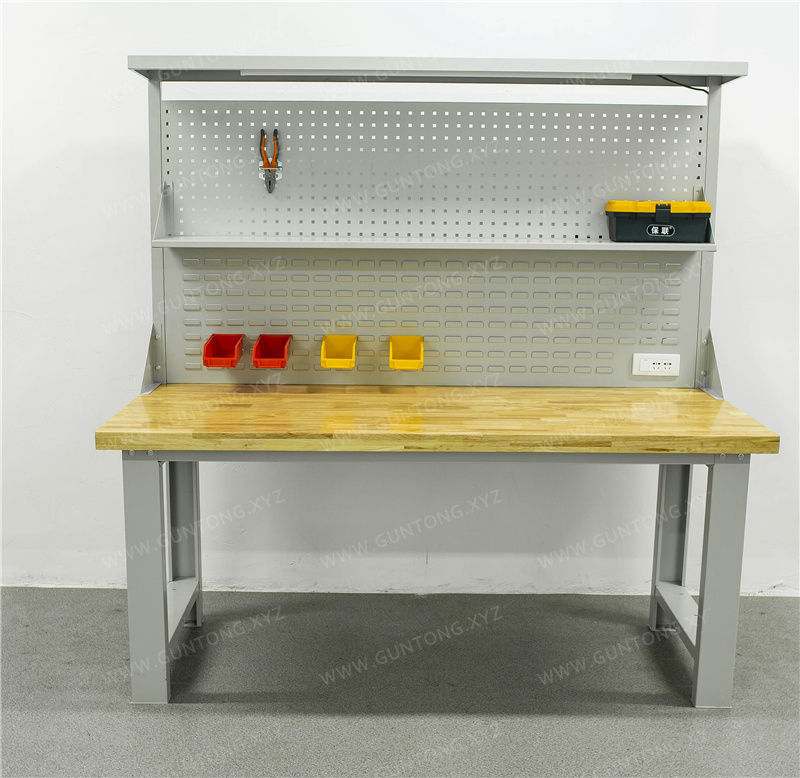
- Models featuring a raw steel plate and high-density fiberboard structure rely on the top conductive layer. Avoid impacting the surface with sharp tools that could pierce the laminate.
- Stainless Steel Workbenches:*
- While inherently conductive, these require regular cleaning to remove oxide layers or grease that act as insulators. Ensure the grounding clamp bites directly into clean metal.
- Custom Configurations:*
- For non-standard customization projects involving integrated lighting or power strips, verify that internal wiring does not interfere with the grounding path of the tabletop.
Conclusion and Next Steps
Maintaining ESD workbench conductivity is less about complex technology and more about consistent hygiene and verification. By integrating these checks into your daily 6S routine, you protect sensitive components in electronics, automotive parts, and precision hardware production lines.
If your quarterly tests consistently fail despite proper cleaning, or if you need to upgrade your current stations to meet stricter ESD standards, Guang'ErMei provides replacement tabletops and custom anti-static workbench solutions. Our team supports on-site workstation planning and load-bearing design to ensure your infrastructure matches your production needs.
Contact Guang'ErMei Precision Components today for a consultation on ESD workstation audits or to request specifications for compliant replacement surfaces.