
Operational Checks and Scale-Up Boundaries for Inner Half-Pegboard Storage Cabinets
Symptom: Storage Bottlenecks During Workshop Expansion
When manufacturing enterprises scale production lines or add maintenance stations, tool retrieval delays and disorganized storage often emerge. Operators report spending excessive time locating specific tools, while compliance officers notice deviations from 6S standards. These issues typically surface when standard shelving fails to accommodate mixed-size tooling or when cabinet layouts were not designed for high-frequency access patterns.
Root Cause: Mismatched Cabinet Configuration for Operational Density
Inner half-pegboard storage cabinets address this by combining vertical shelf storage with pegboard-mounted tool organization. However, improper specification during procurement or deployment can undermine their effectiveness. Common root causes include:
- Underestimated load requirements: Shelves rated below actual tool weight cause deflection or failure over time
- Inadequate pegboard coverage: Single-sided pegboards limit visual management in high-density tool zones
- Poor drawer-shelf integration: Lack of tiered storage forces operators to choose between shelf or drawer access, reducing efficiency
Diagnostic Checks Before Scale-Up
1. Verify Load Capacity Against Actual Tool Weight
The inner half-pegboard storage cabinet from Guang'ErMei Precision Components features 3 adjustable shelves with 100 kg load capacity per shelf. Before deploying across multiple stations:
- Weigh your heaviest tool clusters (e.g., torque wrenches, calibration instruments, mold components)
- Confirm that peak load per shelf does not exceed 100 kg
- Account for dynamic load during drawer extension if combining with drawer modules
2. Assess Pegboard Layout for Visual Management
The cabinet's inner half-pegboard structure includes an upper interior pegboard section plus dual pegboard layout on the cabinet door. This design supports:
- Standard square-hole pegboard for flexible hook placement
- Visual tool shadow boards for 6S compliance
- Quick identification of missing tools during shift handovers
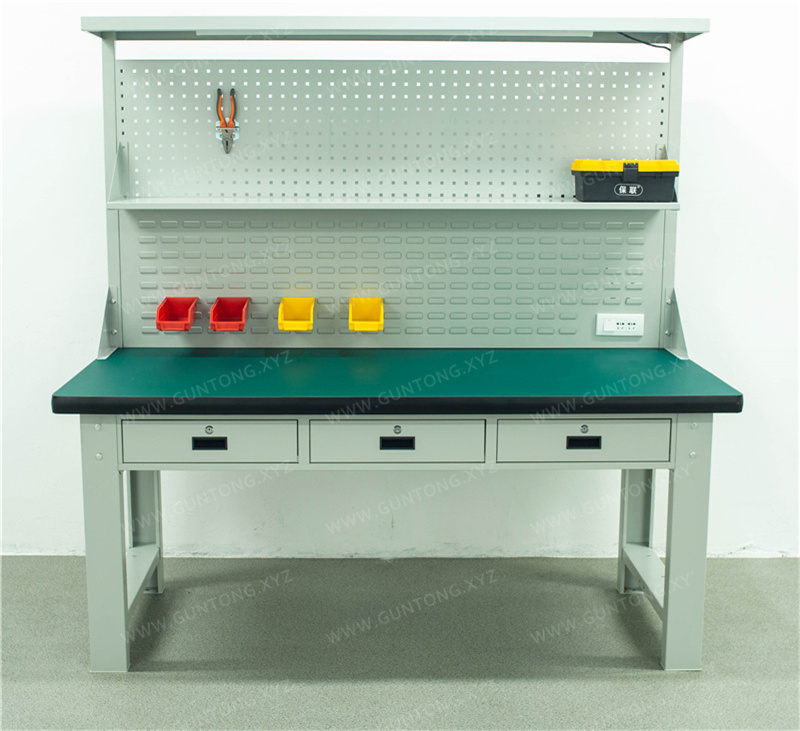
Check: Map your tool inventory against available pegboard area. If tools exceed available pegboard height, consider supplementary wall-mounted pegboards or single back panel 4-drawer steel plate workbench configurations with integrated overhead storage.
3. Evaluate Material Durability for Shift Intensity
The cabinet body uses 1.0 mm or 1.2 mm cold-rolled steel, suitable for standard manufacturing environments. For high-corrosion or heavy-impact zones (e.g., automotive parts turnover, hardware mold maintenance):
- Specify 1.2 mm thickness for enhanced rigidity
- Request powder-coated finish if exposed to moisture or chemicals
- Confirm drawer slide ratings if integrating with composite desktop workbench modules
Implementation Boundaries and Risk Points
Delivery and Installation Constraints
Guang'ErMei provides full-chain service from design to on-site installation. However, scale-up projects must account for:
- Lead time variability: Non-standard dimensions or custom pegboard layouts require extended production cycles
- Site preparation: Floor leveling and anchor bolt placement must be completed before cabinet delivery
- Integration with existing systems: If deploying alongside automated storage and retrieval systems (Miniload), confirm that cabinet dimensions align with aisle width requirements
Compliance and Audit Considerations
For vocational training centers or maintenance institutions subject to safety audits:
- Document load test records for each cabinet batch
- Maintain pegboard layout diagrams showing tool shadow positions
- Establish quarterly inspection protocols for drawer slide wear and shelf bracket integrity
Selection Recommendations by Scenario
| Scenario | Recommended Configuration | Key Consideration |
|---|---|---|
| Electronics assembly lines | Inner half-pegboard + anti-static workbench pairing | Ensure ESD-safe materials if required |
| Automotive parts maintenance | 1.2 mm steel body + heavy-duty drawer integration | Verify drawer load capacity matches tool weight |
| Warehousing logistics | Standard 1.0 mm body + adjustable shelves | Optimize shelf spacing for mixed-size tote storage |
| Vocational training | Dual pegboard doors for student visibility | Allocate extra pegboard area for tool demonstration |
Escalation Path: When to Request Custom Engineering
Standard inner half-pegboard cabinets suit most workshop environments. Escalate to custom engineering if:
- Ceiling height constraints require reduced cabinet height
- Tool inventory exceeds 100 kg per shelf consistently
- Integration with lean pipe systems or automated retrieval accessories is needed
Guang'ErMei's dual capability in standardized production and non-standard customization allows flexible adaptation. Contact the engineering team with your tool inventory list, site layout, and load requirements to receive a tailored configuration proposal.
Next Steps for Operations Managers
- Conduct a tool inventory audit: Categorize tools by weight, frequency of use, and retrieval pattern
- Map pegboard requirements: Identify which tools benefit from visual hanging vs. drawer storage
- Request a site assessment: Guang'ErMei's on-site workstation planning service can validate load-bearing design and 6S adaptation before procurement
- Pilot deployment: Start with 2–3 cabinets in a single production cell to validate retrieval efficiency before full scale-up
For detailed specifications or to initiate a custom configuration request, contact Guang'ErMei's technical support team with your operational parameters.