
Evaluating Cost and Value in Custom Composite Desktop Workbenches for Automotive Workshops
Direct Conclusion: Where Cost Meets Long-Term Value
For automotive parts assembly and maintenance lines, investing in a custom composite desktop workbench delivers measurable cost savings through reduced replacement cycles, optimized floor space, and integrated 6S visual management. The true value lies not in the lowest unit price, but in engineered structural load ratings, material compatibility with heavy components, and modular configurability that adapts to evolving production layouts.
Technical Evidence: Structural Integrity and Operational Efficiency
When evaluating cost and value in workshop fixtures, surface durability and frame engineering are the primary drivers of total cost of ownership. A properly specified composite desktop workbench replaces standard particle-board alternatives with a layered construction designed for industrial abuse. The desktop typically features a polymer wear surface bonded to an MDF core, reinforced with black adhesive backing and plastic edge banding to prevent delamination under impact or chemical exposure. This configuration resists oils, static discharge, and repeated tool drops common in automotive bracket handling.
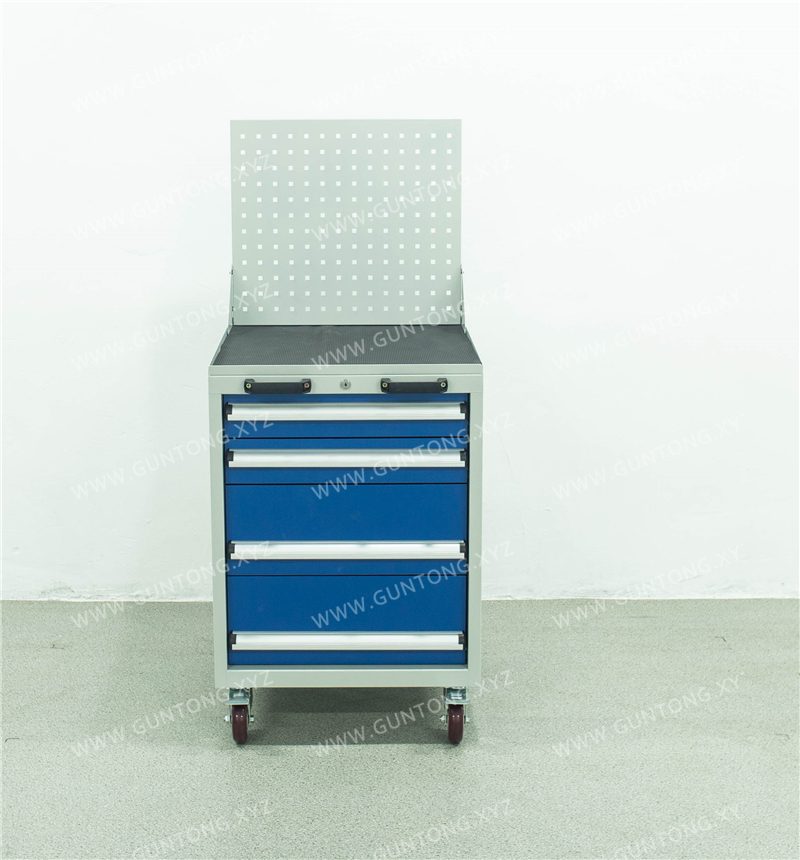
Supporting this surface is a cold-rolled C-steel frame (100×50×1.5mm) that has undergone acid pickling, phosphating, and anti-static powder coating. This treatment prevents corrosion from workshop humidity and ensures the bench maintains a rated overall load capacity of 1000KG without sagging or joint fatigue. For tool organization, integrated square-hole pegboards (typically 450mm height) allow dynamic zoning of hand tools, torque wrenches, and inspection gauges, directly supporting lean manufacturing workflows. When drawer configurations are added, single-rail mechanisms provide an 85% opening rate with verified per-drawer capacities around 80KG, ensuring safe retrieval without workspace clutter.
These specifications translate into lower lifecycle costs: fewer structural failures, reduced reorganization labor, and extended asset lifespan compared to lighter commercial-grade furniture. The initial premium pays back through sustained throughput and minimized downtime during peak production runs.
Counterexamples and Implementation Boundaries
Not every environment justifies a composite desktop specification. Facilities requiring direct welding sparks, continuous immersion in aggressive solvents, or strict cleanroom particulate control should consider stainless steel or specialized epoxy-coated alternatives instead. Composite surfaces excel in general assembly, testing, and light-to-medium mechanical maintenance, but they are not universal substitutes for extreme-condition stations.
Customization also introduces specific implementation boundaries. Non-standard dimensions, specialized mounting interfaces, or integrated power/data conduits require engineering review and typically extend lead times to 7–10 working days. Floor anchoring, cable routing, and ergonomic height adjustments must be planned during the layout phase rather than retrofitted after delivery. Additionally, while standardized models offer faster deployment, heavily customized load distributions may require site-specific reinforcement calculations to comply with local facility safety codes.
Actionable Selection and Deployment Steps
To align procurement decisions with actual operational needs, follow these steps:
- Audit current floor load requirements and map tool weight distribution across your assembly or testing zones.
- Select pegboard heights and drawer depths based on visual management standards and frequent-access tool lists.
- Request structural drawings, load certificates, and surface material certifications before finalizing orders.
- Coordinate site preparation (floor leveling, power outlets, ventilation) parallel to manufacturing to avoid installation delays.
- Validate the configuration against your existing [workshop workstation planning guide] to ensure seamless integration with adjacent equipment.
Conclusion
Prioritize engineered load capacity, corrosion-resistant framing, and modular 6S integration over superficial finishes when assessing cost and value. A properly specified composite workbench functions as a durable production anchor rather than disposable furniture, delivering predictable ROI through sustained reliability and streamlined workflow management.
Contact our engineering team to review your automotive workshop layout and receive a customized load analysis, configuration options, and project timeline.