
Custom Workbench Manufacturing Process: From Requirement to Delivery
Custom Workbench Manufacturing Process: From Requirement to Delivery
For manufacturing enterprises in electronics, automotive parts, hardware molds, and warehousing, a workbench is not just furniture; it is a critical node in production efficiency and safety. When standard products fail to meet specific spatial or load requirements, custom workbench manufacturing becomes necessary. However, the process involves more than just cutting steel plates. It requires a structured approach from initial requirement gathering to final on-site delivery. This article outlines the practical workflow used by professional manufacturers like Guang'ErMei Precision Components, helping procurement and engineering teams understand what happens behind the scenes, how to evaluate suitability, and what criteria to use when comparing service providers.
Phase 1: Requirement Analysis & Scenario Definition
The foundation of any successful custom workstation project lies in accurate requirement definition. Before any drawing is produced, the manufacturer must understand the specific operational context.
Key Questions in This Phase:
- *Load Requirements:
- What is the maximum weight per square meter? Are there concentrated loads (e.g., heavy machinery, mold racks)?
- *Spatial Constraints:
- What are the exact dimensions of the workshop floor? Are there obstacles like pillars or overhead cranes?
- *Operational Flow:
- How will tools and materials be accessed? Does the layout support lean manufacturing principles?
- *Environmental Factors:
- Is the environment corrosive (requiring stainless steel), static-sensitive (requiring anti-static surfaces), or high-traffic (requiring durable finishes)? Decision Tip: Provide detailed photos of the current workspace and list specific pain points (e.g., "current bench collapses under heavy loads," "tools are disorganized causing search time waste"). Vague requests lead to generic solutions that may not solve the core problem.
Phase 2: Structural Design & Engineering Validation
Once requirements are clear, the engineering team translates them into technical specifications. This phase ensures the product is safe, functional, and compliant with industry standards.
1. Load-Bearing Calculation
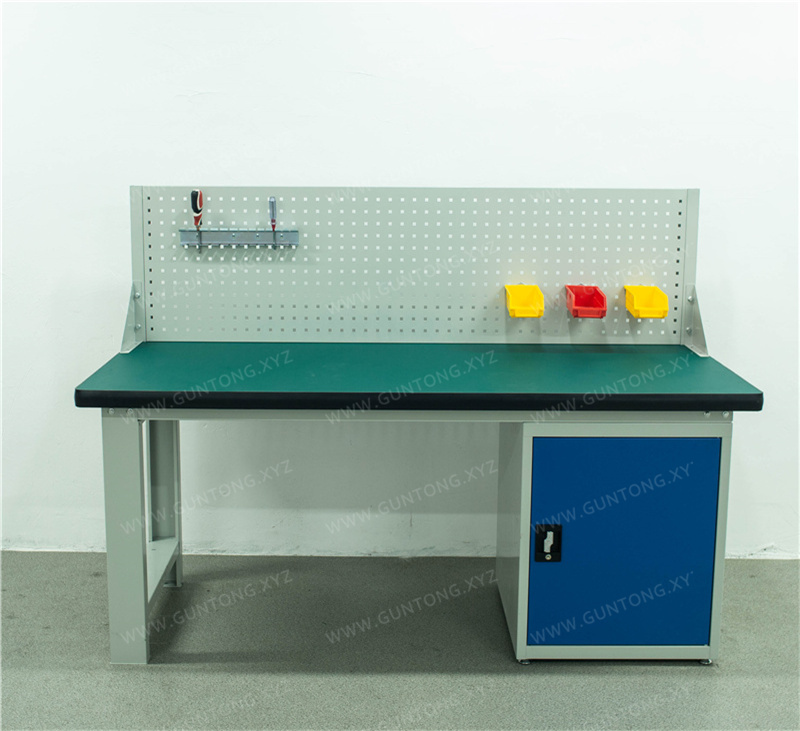
Structural integrity is paramount. For example, a Single Back Panel Single Door 4-Drawer Steel Plate Workbench typically uses a C-type cold-rolled steel frame designed to support up to 1000kg total load capacity. The design must account for dynamic loads (movement) and static loads (storage).
2. Material Selection
- *Desktop:
- Composite structures are common for durability. A typical spec might include a 5mm raw steel plate base combined with high-density fiberboard and black PVC edge banding. This offers high load capacity while providing a smooth, cleanable surface.
- *Frame:
- Cold-rolled steel is preferred for its strength-to-weight ratio. Thicknesses usually range from 1.0mm to 1.2mm depending on the load class.
- *Accessories:
- Pegboards (standard square-hole type) allow for flexible tool organization. Drawers are rated for specific weights to prevent sagging.
3. 6S Adaptation
Modern workshops require equipment that supports 6S management (Sort, Set in order, Shine, Standardize, Sustain, Safety). Designs often include integrated shadow boards, labeled zones, and ergonomic heights to reduce fatigue and improve visual management.
Phase 3: Production & Quality Control
Manufacturing involves precision fabrication. Reputable manufacturers maintain strict quality control at every step.
Fabrication Process:
- Cutting & Punching: Laser cutting or CNC punching ensures precise dimensions for frames and panels.
- Welding: Critical joints are welded for structural stability. Welds are ground smooth to prevent injury and ensure aesthetics.
- Surface Treatment: Electrostatic powder coating provides corrosion resistance and a uniform finish. Colors can be customized to match corporate branding or safety codes.
- Assembly: Components are assembled with standardized fasteners where possible, allowing for some degree of modularity.
Quality Checks:
- *Dimensional Accuracy:
- Tolerances are kept within millimeters to ensure fit during installation.
- *Load Testing:
- Random samples or full batches undergo load tests to verify capacity claims.
- *Surface Inspection:
- Coating thickness and adhesion are checked for durability.
Phase 4: Logistics & On-Site Installation
Delivery is not just about shipping; it’s about ensuring the equipment arrives undamaged and is installed correctly.
Packaging:
Equipment is packed to protect corners and surfaces. Larger items like Tool Cabinets or Mold Racks may be disassembled for transport and reassembled on-site.
Installation Services:
Professional manufacturers provide on-site installation services. This includes:
- Leveling the equipment on uneven floors.
- Securing tall units (like Pegboard Storage Cabinets) to walls or racks if required for stability.
- Adjusting drawers and doors for smooth operation.
- Training staff on proper usage and maintenance.
How to Evaluate Your Manufacturer
When comparing suppliers, look beyond price. Consider these factors:
| Criteria | What to Look For |
|---|---|
| Design Capability | Can they provide 3D drawings and load calculations before production? |
| Material Transparency | Do they specify steel thickness, desktop composition, and coating type clearly? |
| Customization Flexibility | Can they adapt standard designs (e.g., adding specific pegboard layouts or drawer configurations)? |
| Service Scope | Do they offer end-to-end service including design, production, installation, and after-sales? |
| Industry Experience | Have they served your specific sector (e.g., electronics, automotive, warehousing)? |
Conclusion
The custom workbench manufacturing process is a collaborative journey from requirement to delivery. By understanding each phase—from structural design and material selection to quality control and installation—you can make informed decisions that enhance workshop efficiency and safety. Partnering with a manufacturer who offers both standardized products and non-standard customization, along with full-chain service support, ensures that your investment delivers long-term value.
Next Steps
If you are planning a workshop upgrade or need specialized workstation equipment, start by documenting your specific requirements. Contact Guang'ErMei Precision Components for a free consultation and site assessment. Our team can help you design a solution that fits your space, supports your operations, and meets your budget. Contact Us for a Free Quote View Our Product Catalog