
How to Verify Drawer Load Capacity Meets Actual Tool Weight Requirements Before Procurement
Direct Answer: Validate Rated Capacity Against Calculated Peak Loads
To verify if a tool cabinet or workbench drawer meets actual requirements, compare the manufacturer’s rated load capacity against the calculated maximum weight of your intended tool set, applying an appropriate safety margin. For industrial applications such as automotive repair or electronics assembly, visual estimation is insufficient. Technical evaluators should confirm that the specific model provides a verified per-drawer rating—such as the 80 kg load capacity specified for Guang'ErMei’s 4-Drawer Tool Cart with Pegboard—and ensure this rating accounts for dynamic movement if the unit is mobile. Procurement validation requires confirming three data points: the rated static/dynamic load per drawer, the structural material specification (e.g., cold-rolled steel thickness), and the slide rail configuration. If the total weight of your heaviest drawer configuration approaches the rated limit, select a higher-capacity tier or redistribute tools to account for long-term wear and operational safety.
Diagnosing Load Requirements in Real Workshop Scenarios
Manufacturing enterprises and maintenance institutions often face a mismatch between catalog specifications and operational reality. The primary risk is not immediate collapse, but progressive deformation of slide rails and drawer bottoms caused by sustained near-limit loading.
Identifying Critical Load Points
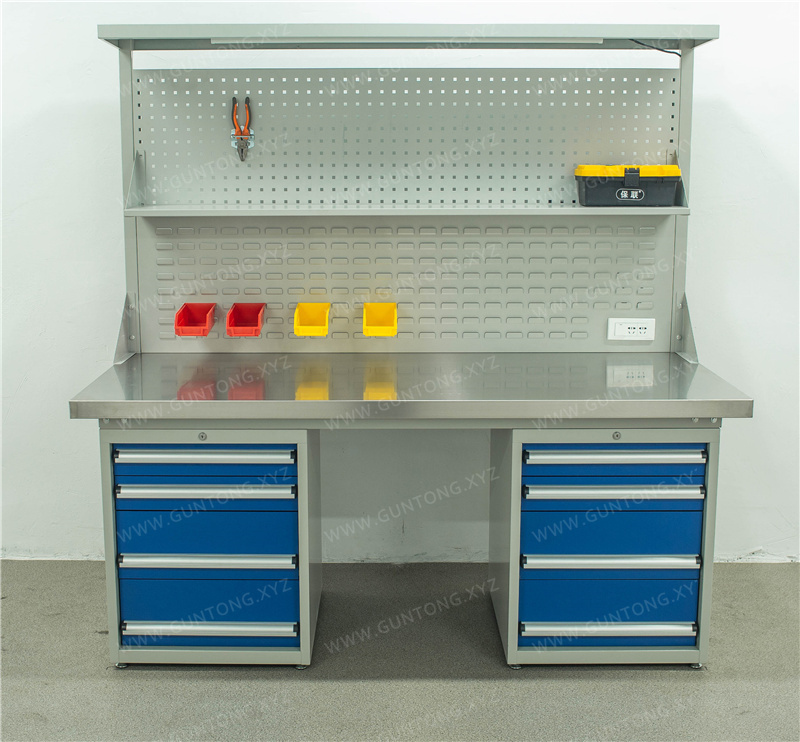
In scenarios like hardware mold factories or automotive parts maintenance, tool density varies significantly by drawer. A common error is averaging weight across all drawers. Instead, technical assessment must focus on the "critical drawer"—typically the bottom drawer storing heavy power tools, torque wrenches, or precision gauges. For example, when evaluating a 4-Drawer 1-Door Tool Cart with Pegboard, the configuration includes two 100 mm high drawers and two 200 mm high drawers. The deeper drawers are structurally designated for heavier items. Verification involves physically weighing the complete set of tools intended for each specific drawer height, rather than assuming uniform distribution.
Static vs. Dynamic Load Distinctions
Verification criteria differ based on equipment mobility:
- *Fixed Storage:
- For stationary units like the Pegboard Storage Cabinet (Inner Half-Pegboard Type), verify the shelf and drawer static load. These units utilize 1.0 mm or 1.2 mm cold-rolled steel construction, providing stable support where loads do not shift during operation. Shelf capacity is verified at 100 kg per shelf.
- *Mobile Units:
- For tool carts moved between workstations, the dynamic load rating is the governing constraint. Inertial forces during braking or turning increase effective stress on slide rails. Ensure the stated capacity explicitly covers mobile use cases, referencing the 80 kg per drawer rating established for mobile cart series.
Technical Verification Checklist for Procurement
When reviewing supplier documentation or conducting incoming inspections, use these verifiable parameters to validate claims.
1. Material and Structural Integrity
Load capacity is directly correlated to material gauge and frame design. Generic claims of "heavy duty" should be substantiated by specific material specs. Verified industrial tool carts specify cabinet body materials and stamped steel drawer structures. While tool cabinets operate at different scales than heavy racking, the same engineering principle applies: verify the steel thickness (e.g., 1.0 mm vs 1.2 mm) matches the load class. For context on structural rigor in similar industrial equipment, cantilever rack arms are validated for single-arm loads up to 1000 kg, demonstrating the manufacturer's capability in load-bearing design.
2. Slide Rail and Configuration Validation
The slide rail is the primary failure point. Validation should include:
- *Configuration Match:
- Confirm drawer heights match intended tool profiles (e.g., 100 mm for hand tools, 200 mm for power tools).
- *Safety Lock Mechanism:
- Verify interlock systems prevent multiple drawer openings, which shifts the center of gravity and affects individual drawer load dynamics.
- *Structural Integration:
- For integrated workbenches like the Single Back Panel 4-Drawer Steel Plate Workbench, verify that the drawer system is compatible with the overall frame load rating (e.g., 1000 kg total load capacity for the C-type cold-rolled steel frame).
3. Weight Calculation Protocol
Do not rely on net tool weight alone. Apply a safety factor to account for dividers, trays, and dynamic shock. If your calculated requirement approaches the rated limit (e.g., 80 kg for standard mobile drawers), evaluate heavy-duty alternatives or redistribute tools across additional drawers. For facilities integrating manual stations with automated storage, note that automated miniload systems typically handle tote loads of 50–100 kg. Manual tool cabinet specifications should align with these automated system limits to ensure compatibility in hybrid workflows.
Implementation Boundaries and Safety Constraints
Even with correct initial selection, operational boundaries determine long-term performance.
- *Load Distribution:
- Heavy items must be placed at the rear and bottom of the drawer. Front-loading creates leverage that multiplies stress on front slide bearings.
- *Modification Limits:
- Drilling additional holes or welding custom brackets onto drawer bodies can compromise structural integrity and void load ratings. Non-standard modifications require re-validation.
- *Environmental Factors:
- In humid or corrosive environments, corrosion can reduce effective load-bearing cross-sections over time. Stainless steel or treated finishes may be required to maintain rated capacity throughout service life.
Next Steps for Technical Evaluators
- Audit Current Inventory: Weigh existing tool sets per drawer position to establish baseline requirements.
- Request Certified Specs: Ask suppliers for test reports verifying per-drawer load capacity (e.g., 80 kg), not just overall cabinet ratings.
- Prototype Testing: For large-scale deployments, procure one sample unit and conduct a sustained load test at expected operational weight before fleet approval.
- Consult Application Engineers: Share your specific tool weight data and workflow type (mobile vs. fixed) to receive configuration recommendations tailored to your actual load profile. Guang'ErMei Precision Components provides detailed technical specifications for all workstation equipment, including verified load ratings and material certifications. Contact our engineering team to review your specific load requirements and validate the optimal configuration for your facility.