
How to configure drawer dividers and pegboard inserts for tool accessibility
How to Configure Drawer Dividers and Pegboard Inserts for Tool Accessibility
For manufacturing enterprises, automotive parts manufacturers, and maintenance institutions, the efficiency of daily operations often hinges on how quickly technicians can locate and retrieve tools. Disorganized workstations lead to wasted time, increased error rates, and safety hazards. Guang'ErMei Precision Components provides workstation equipment solutions that combine standardized products with non-standard customization, specifically designed to support 6S adaptation and efficient tool management.
This guide focuses on the practical configuration of drawer dividers and pegboard inserts within tool cabinets and carts, addressing the specific needs of operators and facility managers in electronics, hardware mold, and logistics sectors.
The Core Challenge: Balancing Storage Density with Retrieval Speed
In high-frequency usage scenarios, such as assembly lines or repair centers, tools vary significantly in size, weight, and frequency of use. A common operational bottleneck is the "search time" caused by mixed storage of small precision instruments and heavy-duty wrenches.
Effective organization requires a dual approach:
- Horizontal Segmentation: Using drawer dividers to separate items by type or function within a single drawer.
- Vertical Visualization: Utilizing pegboards for frequently used tools that require immediate visual identification and quick access.
Configuring Drawer Dividers for Tiered Storage
Drawer organization is not merely about filling space; it is about aligning storage capacity with tool weight and dimensions. Guang'ErMei’s tool storage solutions, such as the 4-Drawer 1-Door Tool Cart with Pegboard, are engineered with specific load-bearing capacities to ensure stability during daily movement and usage.
1. Assess Load Capacity per Drawer
Before inserting dividers, verify the load rating of each drawer. For instance, the referenced tool cart features an 80 kg load capacity per drawer. Overloading a drawer with heavy molds or large power tools while using flimsy plastic dividers can lead to structural failure or jamming.
- Heavy Items (Bottom Drawers):*
- Use robust steel or reinforced composite dividers. These drawers should store heavier items like hammers, large wrenches, or spare parts bins.
- Light/Medium Items (Top Drawers):*
- Use adjustable foam inserts or lightweight plastic dividers for precision tools, calipers, or electronic components.
2. Implement Tiered Height Logic
Guang'ErMei’s standard configurations often include varied drawer heights to accommodate different tool profiles. For example, a typical configuration might include two 100 mm high drawers and two 200 mm high drawers.
- Shallow Drawers (100mm):*
- Ideal for flat tools, screwdrivers, and small fasteners. Dividers here should create small, distinct cells to prevent rolling and mixing.
- Deep Drawers (200mm):*
- Suitable for bulkier items or stacked containers. Dividers should be spaced wider to allow for easy hand access without removing adjacent items.
3. Standardize Divider Placement
To maintain consistency across multiple workstations, adopt a standardized divider layout. If one technician organizes sockets by size from left to right, all similar stations should follow this pattern. This reduces cognitive load when staff rotate between stations or cover shifts.
Leveraging Pegboard Inserts for Visual Management
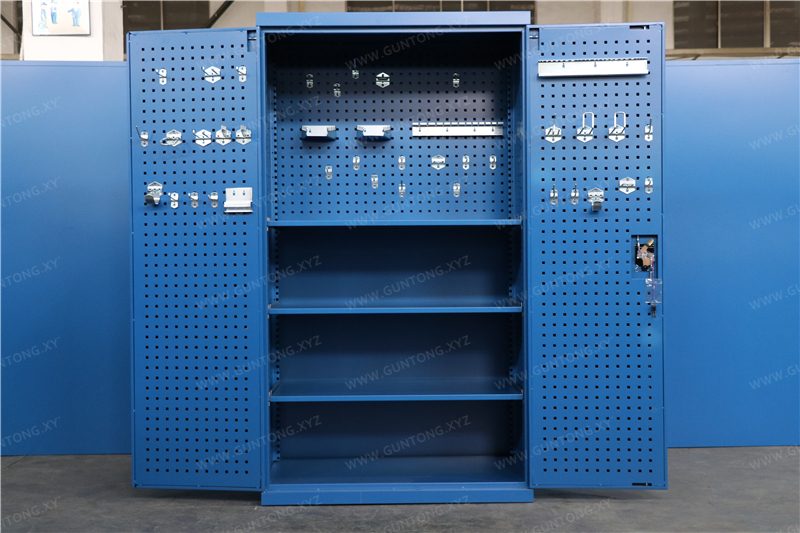
While drawers protect tools from dust and damage, pegboards offer superior visibility. The Inner Half-Pegboard Storage Cabinet and tool carts with integrated pegboards exemplify this hybrid approach.
1. Strategic Placement of High-Frequency Tools
Pegboards should be reserved for tools used multiple times per hour. In the 4-Drawer 1-Door Tool Cart, the 500 mm standard square-hole pegboard allows for flexible expansion.
- Shadow Boarding:*
- Use outline stickers or painted shadows behind hooks to indicate exactly where each tool belongs. This makes missing tools immediately apparent, supporting 6S audit requirements.
- Ergonomic Reach:*
- Place the most frequently used tools at eye level or waist height. Less frequently used items can be placed higher or lower on the board.
2. Utilizing Square-Hole Flexibility
The square-hole design mentioned in Guang'ErMei’s product specifications offers greater flexibility than traditional round holes. It allows for:
- Multi-angle Hooking:*
- Hooks can be inserted vertically or horizontally to accommodate oddly shaped tools.
- Accessory Integration:*
- Bins, shelves, and document holders can be mounted directly onto the pegboard, keeping related manuals or small parts close to the primary tools.
3. Combining Cabinets and Pegboards
For larger inventories, the Pegboard Storage Cabinet (Inner Half-Pegboard Type) provides a comprehensive solution. It features an inner half-pegboard structure with a dual pegboard layout on the cabinet door. This design maximizes vertical space while keeping tools protected when the doors are closed. The 100 kg load capacity per shelf inside ensures that heavier backup stock or bulk materials can be stored securely below the visual tool area.
Implementation Boundaries and Maintenance
Load-Bearing Limits
Always adhere to the specified load capacities. For example, the Single Back Panel Single Door 4-Drawer Steel Plate Workbench has a total load capacity of 1000kg. Distributing weight evenly across drawers and avoiding point-loading on dividers is crucial for longevity. Exceeding these limits can deform the C-type cold-rolled steel frame or damage the drawer slides.
Material Compatibility
Ensure that divider materials are compatible with the tools being stored. Sharp metal tools may cut through soft foam over time, requiring periodic replacement. Stainless steel or powder-coated steel dividers are recommended for harsh industrial environments involving oils or chemicals.
Regular Audits
Tool organization is not a one-time setup. Conduct monthly 6S audits to:
- Remove broken or obsolete tools.
- Adjust divider positions if tool sets change.
- Clean pegboard holes to ensure hooks remain secure.
Conclusion
Effective tool accessibility is achieved by matching storage hardware to operational habits. By utilizing Guang'ErMei’s configurable drawer systems and pegboard solutions, facilities can reduce search time, improve safety, and maintain strict 6S standards. Whether deploying a mobile tool cart for maintenance teams or a stationary storage cabinet for production lines, the key lies in respecting load limits, standardizing layouts, and prioritizing visual management for high-frequency items.
For customized workstation planning that integrates these organizational principles with your specific floor plan and workflow, consult with our engineering team.
Key Takeaways:
- Load Awareness:*
- Match divider strength to drawer load capacity (e.g., 80kg/drawer for tool carts).
- Tiered Logic:*
- Use shallow drawers for precision tools and deep drawers for bulk items.
- Visual Priority:*
- Reserve pegboards for high-frequency tools using shadow boarding techniques.
- Standardization:*
- Apply consistent layouts across all workstations to reduce operator error.
Next Steps:
Review your current tool inventory and categorize items by frequency of use and weight. Contact Guang'ErMei Precision Components to discuss custom divider configurations or pegboard layouts tailored to your specific workstation dimensions.