
Static Load vs Impact Load on Workbenches: A Technical Guide for Workshop Planners
Manufacturing planners and facility engineers often specify workbenches by a single "load capacity" number. In real workshop environments, however, the forces acting on a workbench are rarely uniform. A fitter dropping a 15 kg mold onto a steel-top surface generates a momentary impact force far exceeding the static weight of the mold itself. Misunderstanding these load types is a leading cause of desktop deformation, frame fatigue, and premature workstation replacement.
This article clarifies the technical differences between static, dynamic, and impact loads on industrial workbenches, outlines how Guang'ErMei Precision Components designs frames and desktops to handle each type, and provides a step-by-step evaluation path for buyers selecting workstation equipment.
Defining the Three Load Types on Workbenches
Static Load
A static load is a constant, evenly distributed force that does not change over time. Examples include a heavy motor resting on a workbench during inspection, or a stack of raw materials placed on the desktop for kitting. The force is predictable and uniform.
Guang'ErMei's composite desktop workbenches, built with 100×50×1.5 mm C-type cold-rolled steel frames, are rated for an overall static load capacity of 1,000 kg. This rating assumes the weight is distributed across the full desktop surface rather than concentrated at a single point.
Dynamic Load
A dynamic load involves movement or vibration. When an operator slides a heavy component across the desktop, or when a pneumatic press operates on the workbench surface, the force shifts position and magnitude continuously. Dynamic loads introduce lateral shear forces that static ratings alone do not capture.
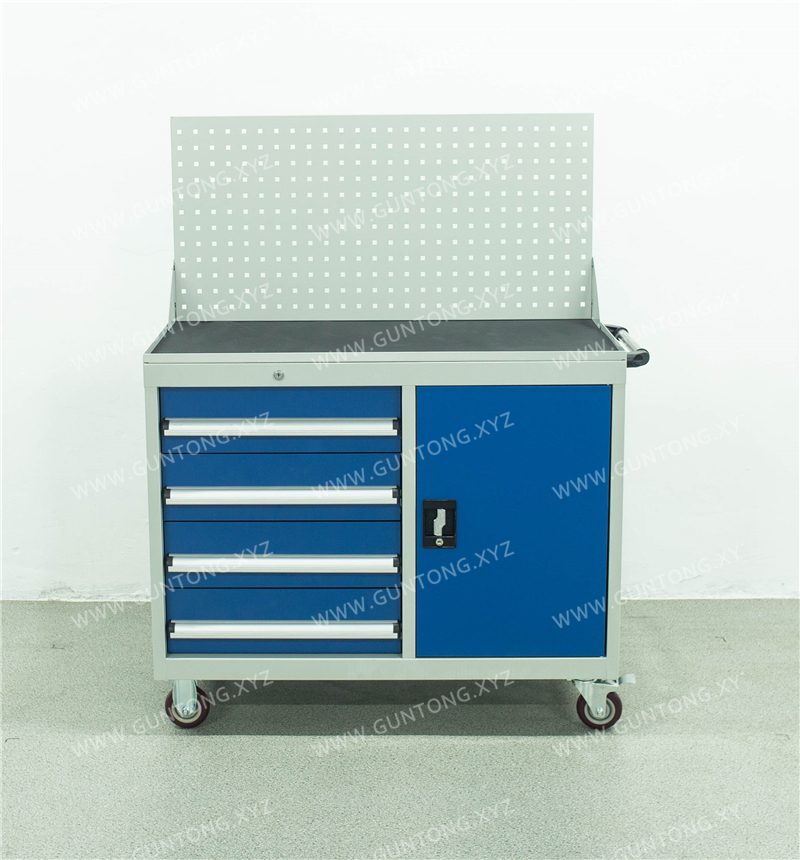
Drawer systems on workbenches also experience dynamic loading. For instance, Guang'ErMei's horizontal three-drawer workbench uses single-rail drawers rated at 80 kg per drawer, with 85% extension travel. Each time a loaded drawer is opened or closed, the rail and frame absorb shifting forces that differ from the static weight of the stored tools.
Impact Load
An impact load is a sudden, high-intensity force applied over a very short duration. Dropping a metal part, hammering on the desktop during fitter work, or setting down a heavy mold with force all generate impact loads. The peak force during impact can be 3 to 10 times the static weight of the object, depending on drop height and surface hardness.
Impact loads are the most difficult to design for because they concentrate stress on a small area of the desktop and transfer shock waves through the frame joints. A workbench rated for 1,000 kg static load may still suffer desktop denting or weld cracking if subjected to repeated high-impact forces without appropriate surface protection.
How Workbench Design Addresses Each Load Type
Frame Geometry and Material
The C-type cold-rolled steel frame (100×50×1.5 mm) used in Guang'ErMei's composite and steel-top workbenches provides high vertical load-bearing capacity for static loads. The C-channel profile resists bending under uniform weight distribution. For environments with significant dynamic or impact loading, additional cross-bracing or thicker gauge steel may be specified during non-standard customization.
Desktop Composition
Desktop selection directly affects impact resistance. Guang'ErMei offers several configurations:
- 5 mm raw steel plate + 45 mm high-density fiberboard composite: Used in heavy-duty steel plate workbenches, this desktop absorbs impact energy through the steel surface layer while the fiberboard core dampens vibration. The black PVC edge banding protects against edge chipping.
- 50 mm green composite desktop: Standard on composite workbenches, this surface handles general assembly and inspection tasks with good static load distribution but is less suited to repeated heavy impact.
- Stainless steel surfaces: Selected for environments requiring corrosion resistance (e.g., food processing, chemical testing), stainless steel desktops offer high hardness and impact resistance but transfer more shock to the frame.
Drawer and Cabinet Load Paths
Drawer systems must handle both static weight (tools at rest) and dynamic forces (opening/closing cycles). The 80 kg per-drawer rating on Guang'ErMei's workbench drawers assumes smooth operation on single-rail slides. Overloading drawers or slamming them shut introduces dynamic forces that accelerate rail wear and may compromise the cabinet-to-frame connection.
Step-by-Step Load Evaluation for Workbench Selection
Follow this implementation path when specifying workbenches for a new workstation layout or facility upgrade.
Step 1: Inventory the Tasks at Each Station
List every operation performed at the workbench: assembly, inspection, fitter work, testing, kitting, or packaging. Note which tasks involve lifting, dropping, hammering, or pressing.
Checkpoint: If any task involves dropping objects heavier than 10 kg or using hand tools with significant striking force, classify that station as impact-load environment.
Step 2: Calculate Static Load Requirements
Sum the weight of all items that will rest on the desktop simultaneously during the heaviest operational state. Add a 20% safety margin.
Checkpoint: If the calculated static load exceeds 800 kg, specify a workbench with a 1,000 kg rated frame and confirm the desktop material can handle point loads from heavy individual items.
Step 3: Assess Dynamic and Impact Exposure
For stations with presses, pneumatic tools, or frequent heavy object handling, estimate the frequency and magnitude of dynamic and impact events.
Exception: If impact events occur more than 20 times per shift, consider adding a sacrificial top plate (e.g., replaceable steel sheet or polyurethane mat) over the primary desktop to absorb repeated shock and extend workbench service life.
Step 4: Match Desktop and Frame to Load Profile
| Load Profile | Recommended Desktop | Frame Specification |
|---|---|---|
| Primarily static (inspection, kitting) | 50 mm composite | Standard 100×50×1.5 mm C-channel |
| Mixed static + moderate dynamic (assembly with sliding) | 5 mm steel plate + fiberboard composite | Standard C-channel with cross-brace |
| High impact (fitter work, mold maintenance) | 5 mm+ steel plate or stainless steel | Reinforced frame, additional gussets |
Step 5: Verify Drawer and Accessory Ratings
Ensure drawer load ratings match the actual tool weight stored. Do not exceed 80 kg per drawer on standard single-rail systems. For heavier tool storage, specify heavy-duty double-rail drawer cabinets or separate tool cabinets.
Next Action: Request a load-bearing design review from Guang'ErMei's engineering team for any station where impact loads are expected or where total static load approaches the rated capacity.
Applicable Boundaries and Risk Factors
- Point loads vs. distributed loads: A 500 kg object placed on a small area of the desktop creates higher local stress than 500 kg spread across the full surface. Always consider contact area, not just total weight.
- Fatigue failure: Repeated dynamic or impact loading, even below the rated static capacity, can cause weld fatigue and frame deformation over months or years. Regular inspection of weld joints and frame connections is necessary in high-impact environments.
- Temperature and corrosion: In environments with chemical exposure or high humidity, stainless steel workbenches maintain structural integrity longer than painted carbon steel frames, preserving load capacity over the equipment lifecycle.
- Automated storage integration: For facilities using tote-based automated storage and retrieval systems (Miniload), where totes weighing 50–100 kg are transferred onto workbenches, the transfer mechanism itself generates dynamic loading that must be factored into workbench specification.
Conclusion
Static load ratings provide a baseline, but real workshop conditions involve dynamic and impact forces that demand appropriate desktop materials, frame reinforcement, and accessory ratings. By classifying each workstation's load profile and matching it to the correct workbench configuration, manufacturing planners can prevent premature equipment failure and reduce long-term replacement costs.
Guang'ErMei Precision Components supports this process with on-site workstation planning, load-bearing design consultation, and non-standard customization for environments where standard products do not meet the load requirements. Contact our engineering team to review your specific workstation load conditions and receive a tailored equipment specification.