
Stainless Steel Workbench Corrosion Resistance vs Load Capacity: Decision Checklist for Manufacturing Upgrades
Stainless Steel Workbench Corrosion Resistance vs Load Capacity: Decision Checklist for Manufacturing Upgrades
Manufacturing enterprises facing workstation equipment upgrades must carefully evaluate the trade-offs between corrosion resistance and load capacity when selecting stainless steel versus composite desktop workbenches. This decision checklist addresses the core considerations for electronics assembly, automotive parts handling, and maintenance operations.
Understanding Your Application Requirements
The choice between stainless steel and composite workbenches depends on your specific operational environment. Stainless steel workbenches excel in corrosive environments where chemical exposure, moisture, or cleaning agents are routine. However, composite desktop workbenches often provide superior load capacity for heavy-duty assembly tasks.
For electronics manufacturing facilities, the decision often centers on ESD protection requirements rather than pure corrosion resistance. Anti-static composite workbenches may better serve sensitive component assembly while maintaining adequate durability for daily operations.
Corrosion Resistance Evaluation Criteria
When corrosion resistance is paramount, stainless steel provides protection for industrial environments. The stainless steel package offers sufficient protection for most industrial applications while maintaining competitive pricing for large-scale implementations.
The C-type cold-rolled steel frame structure provides the foundational support needed for stainless steel tops. This combination ensures structural integrity while the stainless surface handles environmental challenges. However, the overall corrosion performance depends on proper welding and finishing processes that must be verified during supplier evaluation.
Load Capacity Assessment Framework
Composite workbenches typically achieve higher load capacities through their layered construction approach. The Single Back Panel Single Door 4-Drawer Steel Plate Workbench demonstrates this capability with its composite desktop structure combined with high-density fiberboard, achieving significant load capacity through C-type cold-rolled steel frame construction.
Stainless steel workbenches face inherent limitations in maximum load capacity due to the material properties and thickness constraints required for cost-effective manufacturing. While suitable for most applications, heavy-duty assembly operations may require the enhanced capacity of composite alternatives.
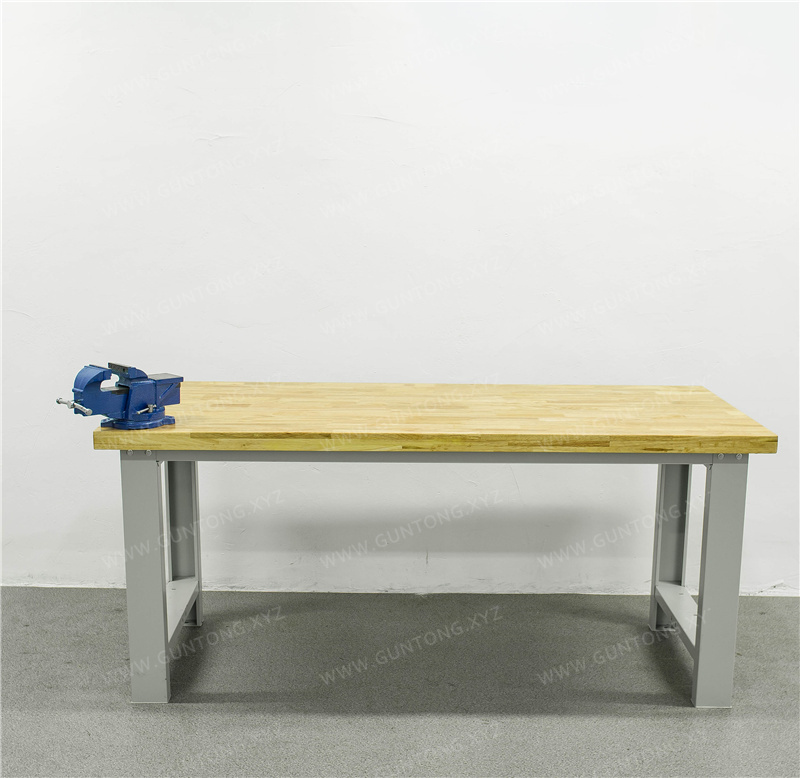
Extension Capability Considerations
The expandability of your workstation setup significantly impacts long-term operational flexibility. Stainless steel workbenches generally offer limited modification options once installed, requiring careful upfront planning for future needs.
Composite workbenches often provide better integration potential with modular systems, allowing for easier addition of accessories, pegboards, or utility connections as operational requirements evolve. This flexibility proves valuable in dynamic manufacturing environments.
Implementation Decision Matrix
High Corrosion Environment + Moderate Load: Stainless steel workbench with grade top and C-type frame
Heavy Load + Standard Environment: Composite desktop workbench with steel plate reinforcement
Mixed Requirements: Evaluate specific duty cycles and environmental factors against load profiles
Regulatory Compliance: Verify material certifications match industry standards for your application
Verification Requirements
Before finalizing your selection, confirm the following specifications with your supplier:
- Actual material grades and thickness measurements
- Verified load capacity testing results
- Corrosion resistance certification for your specific environment
- Compatibility with existing facility utilities and safety systems
- Warranty coverage for both structural and surface components
The 4-Drawer 1-Door Tool Cart with Pegboard configuration demonstrates how integrated storage solutions can complement your primary workbench selection, providing load capacity per drawer while maintaining organized tool access.
Risk Mitigation Strategies
Avoid common selection errors by requesting dimensional drawings and load distribution calculations before purchase. Many facilities underestimate the impact of point loading or uneven weight distribution on workbench longevity.
Consider pilot installations in critical areas before full deployment. This approach allows for real-world performance validation and identifies any unforeseen compatibility issues with existing processes.
Next Steps for Replacement Projects
Begin your upgrade process by documenting current workstation utilization patterns and identifying specific improvement objectives. Focus on measurable outcomes such as operator efficiency gains, maintenance reduction, or compliance improvements.
Contact qualified suppliers to discuss your specific requirements and request detailed technical specifications that align with your operational parameters. Ensure any proposed solution includes comprehensive installation and after-sales support commitments.
For complex installations involving multiple workstation types, consider engaging suppliers who offer complete design, production, installation, and after-sales service packages to minimize coordination challenges and ensure consistent quality across your facility.