
Installing a Bench Vise on Composite Workbenches: Structural Pre-Checks and Safety Boundaries
Operational Symptom: The Risk of Improper Vise Installation
In high-intensity manufacturing environments—such as electronics assembly, automotive parts processing, or hardware mold maintenance—the bench vise is an essential tool for clamping workpieces. However, improper installation can lead to catastrophic failures, including desktop cracking, frame deformation, or even total workstation collapse.
For operators and workshop managers, the primary risk is not just equipment damage but also personnel safety. A vise mounted incorrectly on a composite workbench can compromise the structural integrity of the entire unit, leading to downtime and potential injury.
Root Cause Analysis: Why Standard Mounting Fails
Composite workbenches are designed with specific load-bearing characteristics. They typically feature a desktop made of raw steel plate combined with high-density fiberboard (HDF) or similar materials, supported by a C-type cold-rolled steel frame. While these units offer high overall load capacity (often up to 1000kg), the local stress concentration from a vise can exceed the design limits if not properly managed.
The common causes of failure include:
- Ignoring Desktop Structure: Drilling through thin composite layers without reinforcement can cause delamination or cracking under torque.
- Overlooking Frame Stress: Concentrated loads near the edge or unsupported areas can bend the C-frame legs.
- Incorrect Mounting Positions: Holes drilled in non-reinforced zones or too close to the edge reduce the effective holding power and stability.
Critical Pre-Checks: What Operators Must Verify
Before any drilling or mounting begins, operators must perform the following checks based on verified product specifications and engineering principles.
1. Verify Desktop Structure and Thickness
Most Guang'ErMei composite workbenches feature a desktop structure combining raw steel plate with high-density fiberboard (HDF). This composite design provides excellent vibration damping and load distribution.
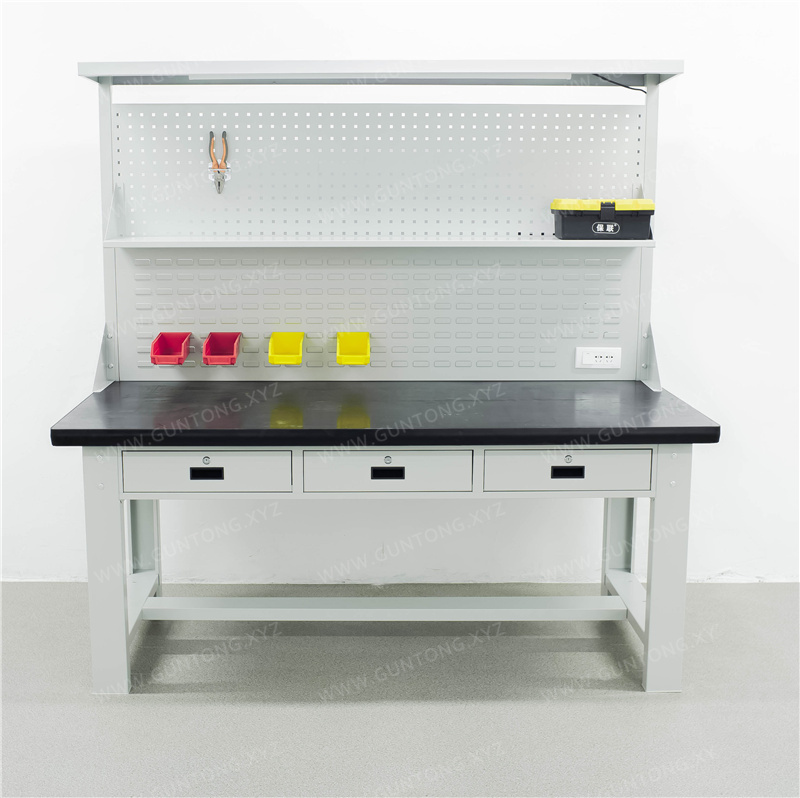
- Check:*
- Ensure the desktop is intact and free of pre-existing cracks or delamination.
- Action:*
- If drilling new holes, use carbide-tipped bits to prevent tearing the HDF layer. Reinforce the mounting area with metal washers or backing plates to distribute the clamp force across the steel plate rather than relying solely on the fiberboard.
2. Assess Frame Load Capacity and Stability
The frame of standard composite workbenches is typically constructed from C-type cold-rolled steel, providing a total load capacity of 1000kg. However, this capacity is distributed across the entire surface. A vise creates a point load that can destabilize the unit if not anchored correctly.
- Check:*
- Confirm the workbench is level and all feet are adjusted to bear weight evenly.
- Action:*
- For heavy-duty vises, consider anchoring the workbench to the floor or using additional support brackets. Avoid mounting the vise directly over the leg joints unless the manufacturer specifies reinforced zones.
3. Determine Optimal Mounting Hole Positions
Proper placement is crucial for both safety and usability. Mounting a vise too close to the edge reduces leverage and increases the risk of tipping. Mounting it in the center may limit access for large workpieces.
- Check:*
- Identify the internal reinforcement ribs within the desktop structure. These are often located along the edges and centerlines.
- Action:*
- Position the vise base so that its mounting bolts align with these reinforcement points. Avoid drilling into areas without visible or documented internal support. Use a template to mark hole positions accurately before drilling.
Resolution and Escalation Boundary
If your application requires a vise with higher clamping force than standard models, or if the workpiece dimensions exceed typical workbench capacities, standard off-the-shelf solutions may not suffice.
- Standard Boundary:*
- For general assembly, light machining, and inspection tasks, standard composite workbenches with reinforced mounting are sufficient.
- Escalation Needed:*
- For heavy forging, high-torque machining, or continuous high-load operations, consider upgrading to a heavy-duty steel plate workbench or requesting a custom-designed workstation with integrated vise mounts and enhanced frame structures.
Guang'ErMei Precision Components offers non-standard customization services to address these specific needs. Our team can provide detailed engineering drawings and load calculations tailored to your exact operational requirements.
Next Steps for Safe Implementation
- Consult Specifications: Review the technical datasheet of your specific workbench model to confirm desktop composition and frame specs.
- Perform Visual Inspection: Check for any signs of wear or damage before installation.
- Use Proper Hardware: Always use high-grade bolts and washers rated for industrial applications.
- Seek Professional Support: If unsure about mounting configurations, contact our technical support team for guidance or request a custom solution.
By adhering to these pre-checks and safety boundaries, you can ensure that your bench vise installation enhances productivity without compromising safety or equipment longevity.
For more information on our range of workbenches and custom solutions, please visit our product catalog or contact our sales team.