
When Your Workshop Outgrows Its Workbench: A Customer Scenario Guide to Single Pegboard 3-Drawer Composite Workbench Sel
The Customer Problem: When Expansion Creates a Bottleneck
A mid-sized automotive parts manufacturer recently faced a familiar challenge. After three years of steady production, they expanded their assembly line from two shifts to three. Within weeks, the existing workbenches—adequate for the original operation—became a daily frustration. Operators reported that tool drawers jammed because they were overstuffed, the desktop surface sagged visibly when they placed heavier assembly fixtures, and valuable time was lost searching for frequently used hand tools buried in disorganized storage compartments. This scenario plays out across manufacturing enterprises regularly. The workbench that served initial production phases adequately suddenly becomes a constraint when operations scale. Understanding whether this represents a temporary inconvenience or a structural limitation requiring equipment upgrade is the first diagnostic step.
Symptom Diagnosis: Identifying the Warning Signs
Primary Symptoms Requiring Attention
Tool Storage Overflow When drawers cannot close properly because tool inventories have expanded beyond original specifications, the workbench has exceeded its practical storage capacity. This manifests as operators leaving drawers partially open, stacking tools on the desktop surface, or creating ad-hoc storage solutions that compromise workspace organization. In multi-operator workstations or environments where a single operator handles diverse tasks, standard two-drawer configurations frequently prove insufficient. Desktop Surface Degradation Composite desktops designed for light to moderate loads show clear distress signals under consistent overloading. Surface warping, delamination at edges, or visible sagging in the center indicate the desktop structure experiences mechanical stress beyond its design tolerance. This becomes particularly problematic when workstations serve as assembly points for heavier components or when precision measurement equipment requires a stable, level surface. Load Distribution Challenges A workbench rated for substantial total load capacity can mislead purchasers who don't understand how that load distributes across the surface and storage compartments. When heavy items concentrate in one drawer while others remain empty, or when the desktop bears concentrated loads from stationary equipment, the actual usable capacity falls significantly below the nominal rating.
Secondary Symptoms Affecting Operations
Operator Efficiency Losses Time spent searching for tools or navigating around disorganized storage represents hidden production costs that accumulate daily. A three-drawer configuration with a dedicated pegboard area addresses this through visual management—operators can see available tools at a glance rather than opening multiple drawers to locate specific items. 6S Compliance Difficulties Modern manufacturing environments require organized, labeled, and accessible tool storage to meet operational standards. Workbenches lacking proper pegboard systems or organized drawer configurations make achieving 6S compliance challenging, potentially affecting audit results and operational discipline.
Root Cause Analysis: Why Standard Workbenches Fail at Scale
Specification Mismatch with Operational Reality
The fundamental cause of workbench failure during production scaling is typically a mismatch between original procurement specifications and actual operational demands. Initial purchasing decisions often prioritize lowest cost or simplest configuration, assuming production volumes will remain stable. When scaling occurs, the original workbench was never designed for the new workload intensity.
Inflexible Storage Configuration
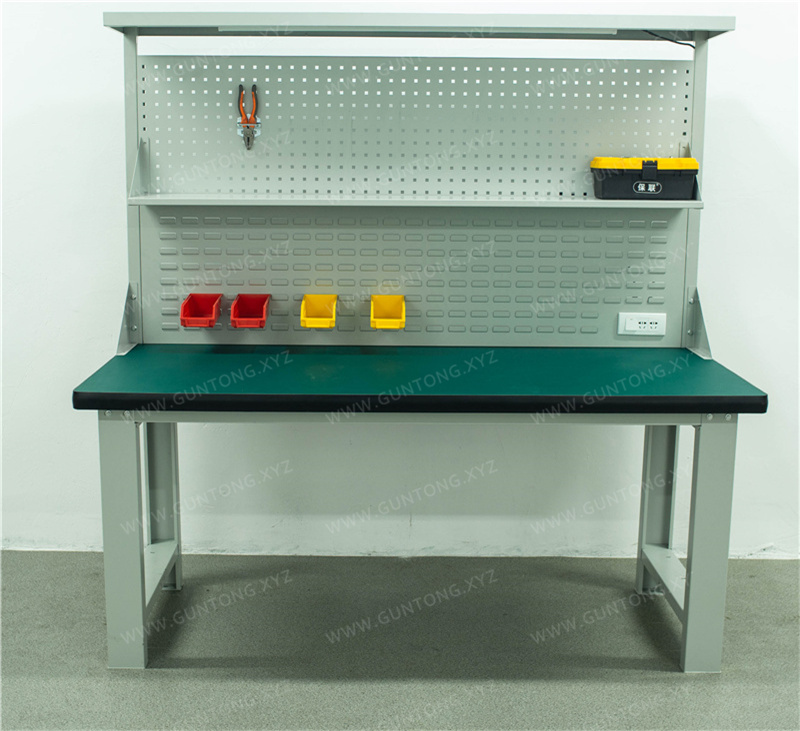
Standard workbenches with fixed drawer configurations cannot adapt to changing tool inventories. The three-drawer composite workbench offers improved flexibility—different drawer heights accommodate various tool sizes, while the pegboard section provides additional hanging storage for frequently accessed items that operators need within arm's reach.
Material Properties Under Load
Composite desktops using high-density fiberboard with steel plate overlay provide an effective balance of cost and performance, but their load-bearing characteristics differ from pure steel or stainless steel alternatives. The composite structure handles distributed loads well but performs poorly under concentrated point loads. Understanding these material properties helps evaluators match the workbench to their specific environment—humid conditions may favor stainless steel options, while heavy mechanical work suits the composite structure.
Verification Checklist: Confirming the Right Configuration
Load Capacity Assessment
Before specifying a Single Pegboard 3-Drawer Composite Workbench, technical evaluators should verify:
- Total load requirement: Calculate the combined weight of all items typically placed on the desktop and in storage compartments. The composite desktop structure supports substantial distributed load capacity, but this rating assumes even loading across the surface rather than concentrated point loads.
- Concentrated load points: Identify any stationary equipment that creates point loads on the desktop surface, as these require different specifications.
- Drawer load distribution: Each drawer handles significant weight when fully opened to approximately 85% extension. Verify that no single drawer will consistently exceed its load threshold.
Dimensional Compatibility
Standard dimensions for this configuration include multiple size options. The evaluator must confirm:
- Available floor space accommodates the selected dimension with adequate clearance for drawer operation and operator movement around the workstation.
- The pegboard height integrates with existing or planned wall systems without interference.
- Workbench height matches operator ergonomic requirements or adjustable workstation specifications.
Environmental Fit Assessment
The composite workbench suits most manufacturing environments, but specific conditions require attention:
- Humidity exposure: In environments with high moisture or chemical exposure, stainless steel alternatives may provide longer service life despite higher initial cost.
- Temperature variation: Extreme temperature cycles can affect the adhesive bond between steel plate and composite core over time.
- Cleanliness requirements: The edge banding on composite desktops provides some moisture resistance but requires regular inspection in washdown environments.
Integration Requirements
Technical evaluators should verify compatibility with:
- Existing lean pipe systems or workstation framing that may need to connect with the workbench structure
- Tool management systems requiring pegboard compatibility with standard square-hole configurations
- Future automation plans, including any interfaces with automated storage and retrieval systems
Resolution Framework: Matching Symptoms to Solutions
When This Configuration Is Appropriate
The Single Pegboard 3-Drawer Composite Workbench represents an effective solution when:
- Total load requirements fall within the distributed capacity rating of the composite structure
- Tool inventory requires three storage compartments plus pegboard organization for visual management
- The environment does not involve sustained high humidity or chemical exposure that would degrade composite materials
- Desktop surface will accommodate standard manufacturing operations without concentrated heavy equipment placement
- 6S compliance and visual management are operational priorities requiring pegboard functionality
When Alternative Specifications Are Required
Escalation to alternative configurations becomes necessary when:
- Higher load requirements: Four-drawer configurations or reinforced frames may be required for loads approaching the upper limits of standard specifications
- Specialized surface requirements: Anti-static workbenches for electronics assembly or stainless steel surfaces for food and pharmaceutical applications require different product lines
- Mobile requirements: If the workstation must move between locations throughout the facility, a tool cart configuration provides better mobility
- Automated integration: Facilities implementing automated storage and retrieval systems require different infrastructure planning and may benefit from Miniload solutions with 50-100KG per-tote capacity and rack heights up to 12 meters
Implementation Boundaries for Success
The Single Pegboard 3-Drawer Composite Workbench delivers expected performance when:
- Installation follows manufacturer specifications for level placement and secure anchoring where required by facility conditions
- Load distributes across the desktop surface rather than concentrating at edges or corners where structural reinforcement is limited
- Drawer operation follows specified extension limits to prevent track damage and maintain smooth operation
- Regular maintenance includes drawer track lubrication and periodic desktop surface inspection for signs of stress
Decision Criteria for Technical Evaluators
Select this configuration when your scaling scenario exhibits these characteristics:
- Current workbench storage capacity is exhausted but load requirements remain within the distributed capacity rating of composite construction
- Tool management efficiency has degraded due to organization limitations that a three-drawer plus pegboard configuration can address
- The operational environment is compatible with composite desktop materials—neither high humidity nor chemical exposure
- Standard dimensions fit available workshop space with appropriate clearance for drawer operation
- Budget constraints favor standardized products with known specifications over fully customized solutions requiring extended lead times
Next Steps for Implementation
Manufacturing enterprises identifying these symptoms and matching the resolution criteria should proceed with:
- Detailed load audit: Document all items to be stored, including weights and dimensions, to confirm drawer configuration matches actual inventory requirements
- Space verification: Confirm available dimensions with clearances for drawer operation and operator access around all sides of the workstation
- Installation planning: Coordinate with facilities team for delivery access, level surface preparation, and any anchoring requirements specific to the facility
- Documentation review: Obtain complete specifications, warranty terms, and installation guidelines from the manufacturer before procurement For enterprises requiring load-bearing analysis beyond standard specifications, or when dimensional adaptations are needed to fit existing workstation layouts, consulting with the manufacturer on non-standard customization options ensures the selected configuration actually resolves the scaling problem rather than merely relocating it to a new piece of equipment.