
Before Choosing a Single Pegboard 3-Drawer Composite Workbench: Diagnosing Common Selection Errors
Before Choosing a Single Pegboard 3-Drawer Composite Workbench: Diagnosing Common Selection Errors
Symptom: Workshop Efficiency Decline
Many manufacturing enterprises, including electronics assemblers and automotive parts manufacturers, experience sudden drops in workflow efficiency. Tools are misplaced, drawers jam during operation, or the work surface sags under heavy loads. These symptoms often indicate that the initial workstation specification did not match the actual operational requirements of the production line.
Cause: Overlooking Technical Specifications
The root cause is frequently selecting equipment based on appearance rather than structural integrity. Buyers often ignore critical parameters such as frame steel thickness, drawer rail mechanics, and desktop layering. Without verifying these details, the equipment fails to support the intended 6S management standards or physical load demands.
Checks: Verifying Frame and Drawer Mechanics
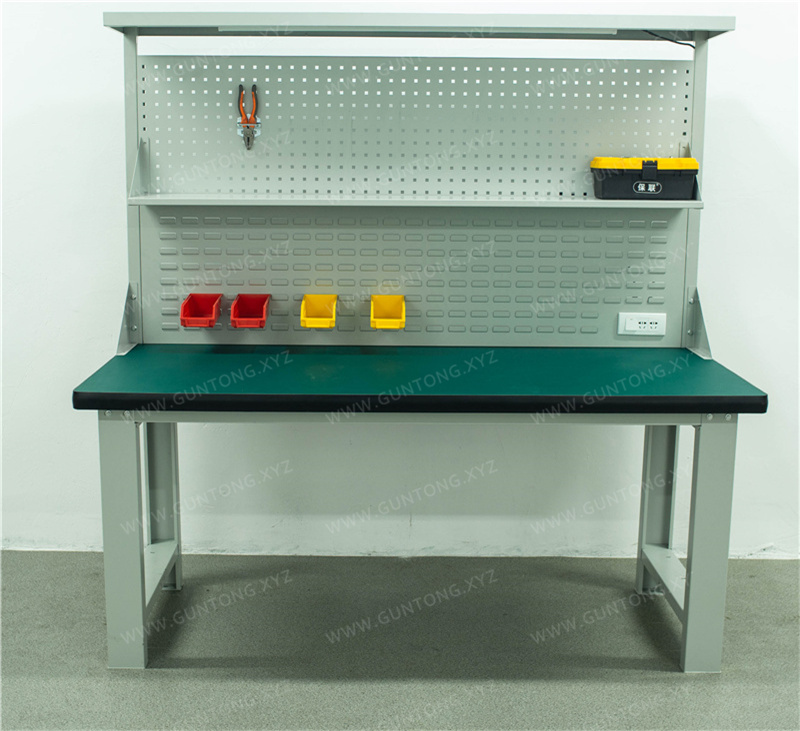
When evaluating a Single Pegboard 3-Drawer Composite Workbench, technical evaluators must verify specific construction details found in product documentation:
1. Frame Steel Gauge
The stability of the workstation depends on the C-channel steel used for the legs. A common error is accepting frames with insufficient gauge. For heavy-duty applications, the frame should utilize 100501.5mm C-channel steel. This specification ensures the structure can handle significant weight without deformation over time.
2. Drawer Opening Ratio and Load
Storage capacity is not just about volume; it is about accessibility. A frequent mistake is assuming full drawer access. In standard industrial designs, the drawer can open approximately 85%, which impacts how tools are organized inside. Additionally, the load limit per drawer is critical. Each drawer typically supports 80KG of load. Exceeding this limit risks rail failure, even if the total unit capacity remains within safe limits.
3. Desktop Composition
The work surface must resist wear and chemical exposure. The desktop is not a single material but a composite structure. It consists of 4 layers of materials combined: a 2mm imported polymer composite surface, middle-density fiberboard layers, black glue backing, and plastic edge banding. Ignoring this layered construction can lead to premature wear or delamination in high-use environments.
Resolution: Aligning Specs with Application Scenarios
To resolve these issues, procurement teams should align their selection with verified product capabilities:
- Load Management:*
- Ensure the total unit load capacity matches the heaviest anticipated use case. Standard composite workbenches often support a total load of 1000KG, but individual drawer limits (80KG) must be respected.
- Surface Treatment:*
- Verify the frame undergoes proper surface treatment, such as pickling, phosphating, and anti-static spray painting, to prevent rust and ensure safety in sensitive electronics zones.
- Customization Boundaries:*
- If standard dimensions do not fit, understand the production timeline. Regular stock items may ship within 2-3 working days, while non-standard customizations require 7-10 working days.
Escalation Boundary: Warranty and Support
When deploying these units, clarify the service boundaries immediately. Equipment comes with a three-year warranty covering structural integrity. However, damage caused by exceeding specified load capacities (e.g., placing weights over 80KG in a single drawer) voids this coverage. For complex installation needs involving automated storage accessories or specialized layouts, direct consultation with the manufacturer is required before finalizing the order.
Conclusion
Selecting the right workstation requires moving beyond visual inspection to technical verification. By confirming the C-channel steel dimensions, drawer opening percentages, and desktop layering, enterprises can avoid common deployment errors. Guang'ErMei Precision Components provides design, production, and installation services to ensure the equipment meets your specific workshop constraints.
Next Steps
If you need to validate specifications for your current facility upgrade, contact our engineering team for a site assessment. We can assist in planning workstation layouts that adhere to 6S standards and load-bearing requirements.