
Selecting the Right Single Pegboard 3-Drawer Composite Workbench: A Practical Evaluation Guide - Guang'ErMei Precision C
Selecting the Right Single Pegboard 3-Drawer Composite Workbench: Selection Criteria
Direct Conclusion
Choosing a single pegboard 3-drawer composite workbench requires aligning three operational factors: static workspace stability, modular 6S visibility, and verified load distribution. This configuration is optimal for fixed assembly, inspection, and light-to-medium maintenance stations where tools are frequently accessed but not constantly relocated across multiple lines.
Evidence & Scenario Matching
Desktop Structure & Frame Rigidity
Composite desktops typically layer a durable top surface (such as steel plate or high-density fiberboard) over a reinforced base to balance impact resistance and operator comfort. When paired with a C-type cold-rolled steel frame, these units generally support total loads around 1,000 kg, making them highly suitable for electronics assembly, appliance testing, and automotive component inspection where precision instruments and moderate-weight fixtures are used daily.
Pegboard Integration & Drawer Configuration
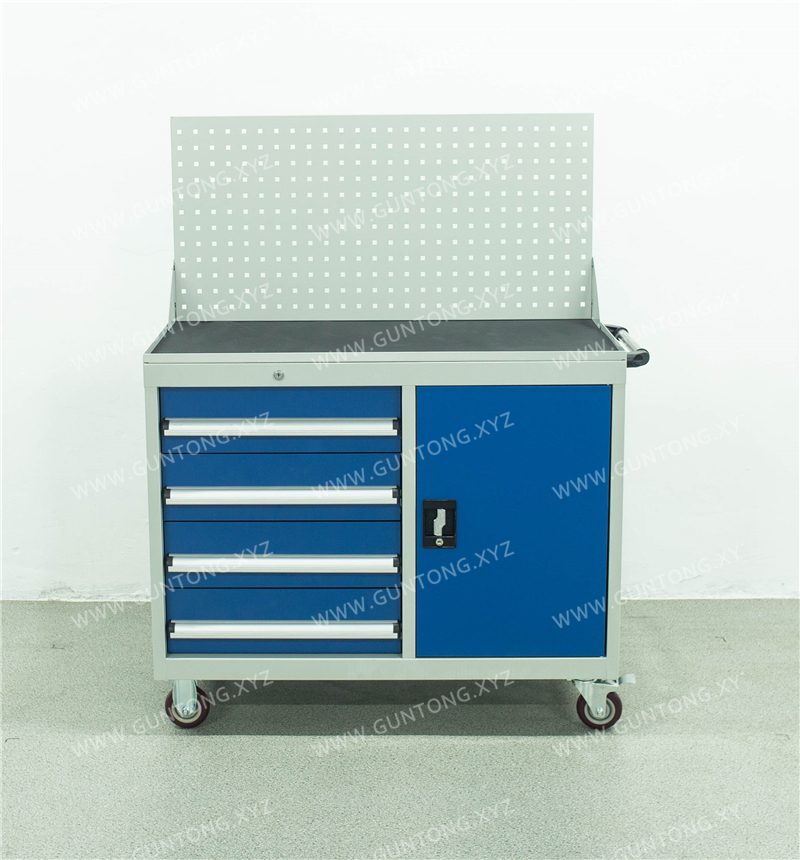
The integrated square-hole pegboard enables rapid visual management of hand tools, jigs, and measuring devices. Combined with a three-drawer tiered layout, operators can separate fasteners, consumables, and sensitive equipment. Standard drawer mechanisms in this category often support approximately 80 kg per compartment, ensuring heavy wrenches or calibration tools do not compromise structural integrity during repeated use.
6S Workplace Adaptation
Unlike open shelving, enclosed drawers reduce dust accumulation and prevent tool scatter, while the vertical pegboard maximizes available floor space. This setup directly supports 6S workplace organization standards in hardware mold factories, maintenance workshops, and vocational training centers by standardizing storage locations and improving retrieval efficiency.
Counterexamples & Boundary Conditions
- Mobile vs. Fixed Workflow:*
- If your production line requires frequent relocation of tools between stations, a dedicated four-drawer tool cart with casters is more appropriate than a fixed composite workbench. Mobile carts prioritize maneuverability, whereas fixed workbenches prioritize stable, stationary operation.
- Heavy-Duty vs. Light/Medium Storage:*
- For mold repair stations handling large stamping dies or bulk raw materials, rely on reinforced shelf storage cabinets rather than drawer mechanisms. Adjustable shelves in these cabinets are typically rated at 100 kg per level, providing better weight distribution for bulky items that exceed drawer slide limits.
- Environmental Resistance:*
- In high-humidity logistics warehouses or chemical-testing labs, standard composite desktops may require environmental upgrades. Verify whether 201 stainless steel cladding or fully stainless construction is necessary to prevent corrosion, as standard cold-rolled steel frames prioritize rigidity over moisture resistance.
Implementation & Customization Inputs
Non-standard workstation planning begins with three verified inputs: exact floor footprint, maximum dynamic load points, and primary operator tasks. Guang'ErMei uses this data to generate 3D spatial layouts and detailed configuration lists, ensuring lean pipe routing, power/data drop placement, and ergonomic heights match actual shop-floor workflows.
Final specifications, including drawer slide grades, pegboard dimensions, and surface finishes, should be confirmed against engineering drawings before production. Load ratings, dimensional tolerances, and material thicknesses vary by model and reinforcement level. Always validate configurations against your specific operational stress points to avoid under-specification.
Key Points
- Align desktop material and frame type with expected static and dynamic loads.
- Use pegboard + drawer combinations to enforce 6S visual management and reduce search time.
- Reserve mobile tool carts for high-relocation scenarios; reserve fixed benches for stable assembly/inspection.
- Upgrade to stainless or coated surfaces only when environmental exposure exceeds standard workshop conditions.
- Confirm all load ratings, slide types, and dimensional tolerances via engineering drawings prior to procurement.
Conclusion
The selection criteria for a single pegboard 3-drawer composite workbench ultimately depend on matching workspace stability, visual organization needs, and environmental conditions. By evaluating load capacity, drawer mechanics, and pegboard utility against actual workflow patterns, manufacturers can eliminate mismatched equipment and establish reliable, compliant workstation layouts.
CTA Text
Share your workshop layout, load requirements, and primary use cases with our engineering team to receive a customized 3D workstation configuration and verified specification sheet.