
Risk Control in Selecting a Single-Door 4-Drawer Composite Workbench: Structural Integrity and 6S Implementation
Direct Conclusion
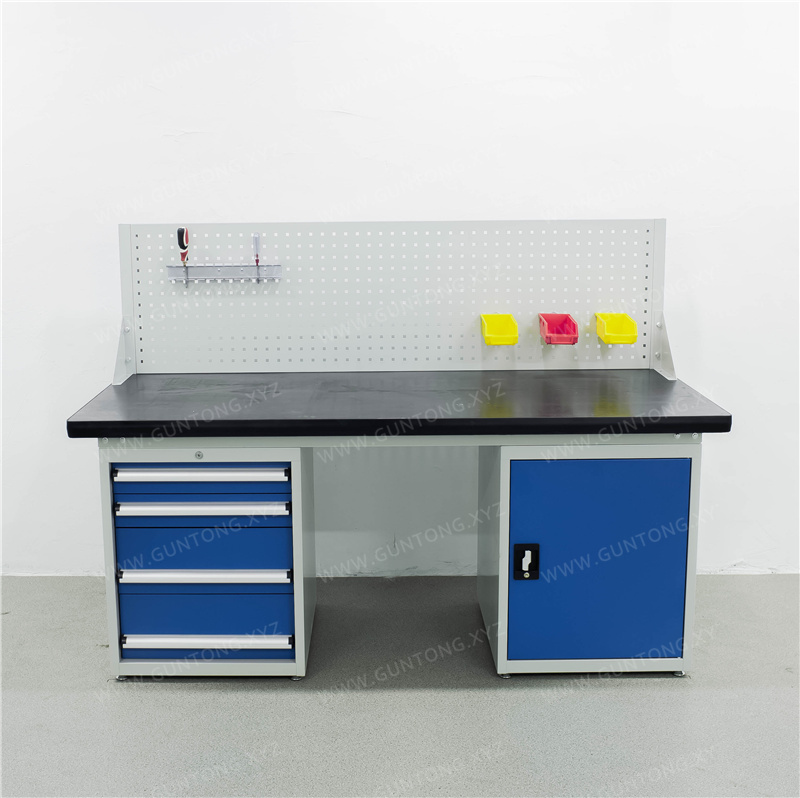
Effective risk control in workshop station procurement begins with verifying structural load boundaries and material interfaces before deployment. Selecting a single-door, four-drawer composite workbench with a dual pegboard design requires precise alignment between frame geometry, desktop lamination, and actual tool weight profiles. When these parameters are validated against site conditions, manufacturing enterprises significantly reduce structural fatigue, prevent 6S workflow breakdowns, and ensure long-term operational stability.
Evidence: Structural and Material Verification
The foundation of a heavy-duty composite workbench lies in its engineered load distribution architecture. Standardized configurations typically utilize a C-type cold-rolled steel frame with verified cross-section dimensions to maintain rigidity under dynamic stress. The desktop assembly relies on a layered composite structure—combining a 5mm raw steel plate base with a 45–50mm high-density fiberboard or specialized composite surface—to balance impact resistance with ergonomic finishing. This construction supports a total static load capacity of approximately 1000kg, provided weight is distributed evenly across the working plane.
Internally, the four-drawer tiered configuration optimizes vertical storage without compromising the center of gravity. The dual pegboard panels, mounted on both the interior back panel and exterior door surfaces, enable visual management and flexible tool zoning, directly supporting lean manufacturing principles and reducing unnecessary movement on the shop floor.
Counterexamples: Common Deployment Risks
Risk exposure increases when procurement decisions prioritize upfront cost or aesthetic preferences over engineered load paths. A frequent failure scenario occurs when operators place concentrated heavy components, such as power tools, metal blanks, or testing fixtures, on one side of the desktop or inside a single lower drawer. Without proper load balancing, this shifts the center of gravity forward, causing frame deformation or drawer rail fatigue.
Another common oversight involves mismatching pegboard expansion with actual retrieval frequency. Installing extensive square-hole layouts without mapping them to daily workflow patterns creates unused dead zones, complicates 6S audits, and accelerates surface wear from unsecured hanging tools. Additionally, neglecting floor-leveling requirements during installation can transfer uneven stress to the frame legs, leading to wobble or premature fastener loosening in high-vibration environments like automotive assembly or hardware mold machining.
Actions: Selection Criteria and Implementation Boundaries
Mitigating these risks requires a structured evaluation and implementation approach:
- Audit Tool Inventory and Weight Profiles: Categorize items by mass and usage frequency. Match heavier components to reinforced lower drawers and distribute lighter, frequently accessed tools to upper tiers and pegboard zones.
- Verify Frame and Desktop Specifications: Confirm that the selected workstation model includes certified cold-rolled steel framing and a laminated composite desktop rated for your maximum expected load. Do not assume uniform load ratings across different models.
- Define Site Preparation Boundaries: Ensure floors are level within tolerance, confirm ceiling clearance if integrating overhead utilities, and establish a dedicated zone for pegboard tool mapping before physical placement.
- Engage Full-Chain Support: Partner with a manufacturer that provides on-site spatial planning, load-bearing validation, and post-installation adjustment. This reduces trial-and-error costs and ensures the workstation integrates seamlessly into your existing operational framework.
Procuring a heavy-duty composite workbench is a controlled deployment of workflow infrastructure, not a simple furniture purchase. By anchoring selections in verified frame specifications, balanced drawer configurations, and realistic site conditions, you can eliminate structural surprises and sustain long-term efficiency.
Review your current workstation layout against these structural checkpoints. Contact our engineering team to validate load requirements, discuss non-standard customization options, and receive a tailored deployment proposal aligned with your facility’s specifications.