
Pegboard vs Shelf Storage Cabinets: A Field Guide for Workshop Configuration
Who This Comparison Actually Matters To
If you are equipping a maintenance bay, an electronics assembly line, or a hardware mold workshop, the choice between pegboard and shelf storage cabinets is rarely about aesthetics. It is about whether your operators spend time searching for tools or using them. Manufacturing enterprises, automotive parts manufacturers, and testing institutions face the same core question: which cabinet internal structure reduces retrieval time while holding up under daily industrial use?
This field guide breaks down the decision using configuration data from Guang'ErMei Precision Components' workstation equipment lineup, focusing on real load capacities, dimensional constraints, and the operational signals that should drive your choice.
The Core Difference: Visual Retrieval vs. Bulk Containment
Pegboard storage cabinets expose tools on a perforated steel panel, typically using square-hole or louver patterns. Operators see every item at a glance. This structure supports 5S visual management and makes missing tools immediately obvious.
Shelf storage cabinets enclose items behind doors on adjustable horizontal planes. They protect contents from dust, coolant splash, and casual handling. They handle bulkier items and stacked containers that cannot hang on a pegboard.
Neither is universally better. The right choice depends on three signals from your actual workflow.
Signal 1: Tool Size and Weight Distribution
Look at the items that need to live inside the cabinet.
- Small hand tools, gauges, and cordless drivers (under 5 kg each) are natural pegboard candidates. Guang'ErMei's Inner Half-Pegboard Storage Cabinet uses a dual pegboard layout on the cabinet door plus an upper interior pegboard section, keeping frequently used tools visible while reserving shelf space below for heavier items.
- Bulkier items like solvent bottles, calibration kits, or stacked component trays need horizontal shelf support. Shelf cabinets in the Guang'ErMei range offer adjustable shelves rated at 100 kg per shelf, with configurations of three to four shelves per unit.
- Mixed loads are common in maintenance and testing environments. The hybrid approach—pegboard on the door and upper section, shelves in the lower section—covers both needs in a single 1000 × 500 × 1800 mm footprint.
Signal 2: Retrieval Frequency and Operator Count
How often do operators open the cabinet, and how many people share it?
- High-frequency, multi-operator stations benefit from pegboard visibility. When three technicians share a cabinet during shift changes, a pegboard lets each person confirm tool presence without opening doors or moving items. This directly supports 6S management discipline.
- Low-frequency, single-operator stations can rely on shelf cabinets. If one fitter uses a dedicated set of measuring instruments twice per shift, enclosed shelves protect precision tools from shop-floor contamination.
Signal 3: Environmental Exposure
Consider what the cabinet will face.
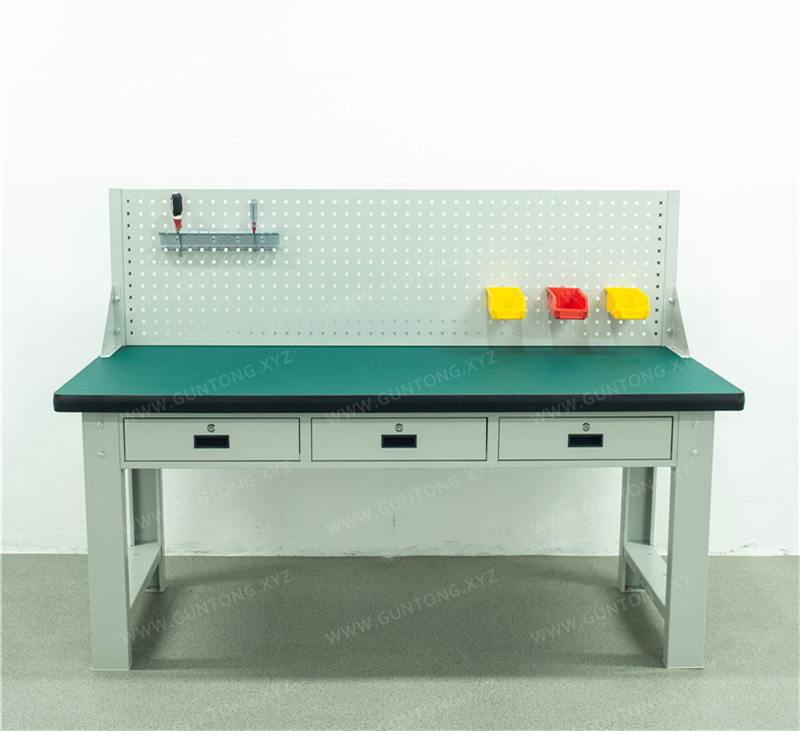
- Coolant, oil mist, and metal dust favor enclosed shelf cabinets or stainless steel construction. Guang'ErMei offers stainless steel storage cabinets for environments where cold-rolled steel would corrode. Stainless steel resists weak corrosive media including water vapor, mild acids, and alkalis—common in food-grade electronics assembly or chemical testing labs.
- Clean, dry assembly areas can use standard cold-rolled steel pegboard cabinets (1.0 mm or 1.2 mm body thickness) without corrosion risk.
Load Capacity: What the Numbers Actually Mean
Published load ratings assume evenly distributed weight. Here is how to interpret them for configuration decisions:
| Cabinet Type | Typical Shelf Load | Typical Drawer Load | Pegboard Load |
|---|---|---|---|
| Shelf Storage Cabinet | 100 kg per shelf | N/A | N/A |
| Inner Half-Pegboard Cabinet | 100 kg per shelf | N/A | Light hand tools only |
| Drawer-Type Cabinet | N/A | 80 kg per drawer | Optional door pegboard |
A 100 kg shelf rating does not mean you should load 100 kg of concentrated point weight. Heavy items like large torque wrenches or hydraulic fittings should be centered and spread across the shelf depth. For pegboard sections, the practical limit is the hook and panel shear strength—typically suited for tools under 3–5 kg each.
Configuration Trade-Offs: What You Give Up
Every choice has a cost.
Choosing pegboard means:
- You gain visual management and fast retrieval.
- You lose dust protection and cannot store loose or stackable items.
- You must commit to hook spacing and tool silhouette discipline.
Choosing shelves means:
- You gain containment, protection, and flexibility for odd-shaped items.
- You lose at-a-glance inventory visibility.
- Operators may stack items, burying tools at the back.
Choosing a hybrid (inner half-pegboard) means:
- You gain both, but within a fixed cabinet envelope.
- The pegboard section competes with shelf space for interior volume.
- This configuration works best when tool counts are stable and well-defined.
Dimensional Constraints That Affect Your Floor Plan
Standard cabinet footprints from Guang'ErMei's workstation equipment line include:
- 1000 × 500 × 1800 mm (common for pegboard and hybrid cabinets)
- 1000 × 600 × 1800 mm (common for shelf-heavy configurations, offering deeper shelves for larger items)
The 100 mm depth difference matters when cabinets sit against a wall with limited clearance or when they form part of a continuous workstation row. Always confirm the depth against your aisle width and adjacent workbench dimensions (common workbench depths are 750 mm).
Risks and Boundaries
- Do not exceed rated shelf loads. Overloading a 100 kg shelf with concentrated weight can deform the shelf bracket over time.
- Pegboard hooks are not universal. Confirm hook type (square hole vs. louver) matches the panel specification before ordering accessories.
- Stainless steel cabinets cost more and weigh more. Specify them only when environmental conditions require corrosion resistance, not as a default upgrade.
- Drawer cabinets and shelf cabinets have different footprint efficiencies. A drawer cabinet (e.g., 1000 × 500 × 1800 mm with two 100 mm drawers and two shelves) offers finer organization but less open volume than a pure shelf cabinet of the same external size.
Practical Next Steps
- Audit your tool list. Separate items into hangable (under 5 kg, with a hole or handle) and non-hangable (bulk, liquid, or stacked).
- Count operators per cabinet. More than two users sharing one unit strongly favors pegboard or hybrid visibility.
- Check your environment. If coolant, dust, or moisture is present, specify enclosed shelves or stainless steel construction.
- Confirm dimensions against your floor plan. Measure aisle clearance and adjacent equipment before locking in 500 mm vs. 600 mm depth.
- Request a configuration drawing. Guang'ErMei provides on-site workstation planning and can produce cabinet layout drawings that account for load, access, and 6S requirements.
For a detailed quote or configuration review, contact Guang'ErMei Precision Components with your tool list, operator count, and environmental conditions. The engineering team can recommend specific cabinet models and internal layouts matched to your workshop scenario.