
Organizing Storage on a Double-Tier Two-Drawer Beech Workbench: A Facility Planner’s Layout Guide
Organizing Storage on a Double-Tier Two-Drawer Beech Workbench: A Facility Planner’s Layout Guide
When configuring a double-tier two-drawer beech workbench for manufacturing, maintenance, or testing environments, the most effective approach is to divide the workstation into three distinct functional zones: the upper double-tier for visual management and immediate reach, the two drawers for secure and categorized tool storage, and the primary beech surface for active operational tasks.
By aligning your storage strategy with the physical structure and load-bearing boundaries of the workbench, you can significantly reduce retrieval time and maintain strict 6S management standards on the shop floor.
Zoning the Double-Tier Structure for Visual Management
The double-tier structure elevates storage above the primary work surface, keeping the main desktop clear for assembly or inspection tasks.
- Top Tier (Display and Bulk Storage):*
- Use this level for lightweight, low-frequency items, reference manuals, or bulk material bins that do not require constant handling.
- Lower Tier (Immediate Reach):*
- This shelf should be reserved for high-frequency components, active work-in-progress trays, or frequently used measuring instruments.
- Pegboard Integration:*
- If your double-tier configuration includes a square-hole or louver pegboard back panel, utilize hooks and bins to hang hand tools, power cords, or small parts. This transforms the vertical space into a highly visible, shadow-board-style management area.
Configuring the Two-Drawer System
A two-drawer setup provides enclosed storage, protecting sensitive tools from dust and preventing unauthorized access or misplacement.
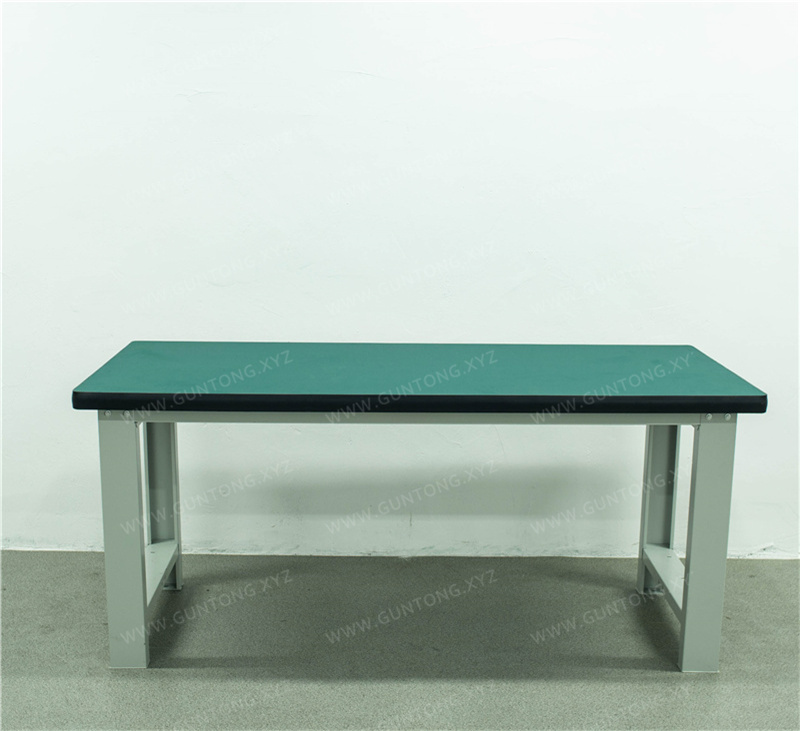
- Top Drawer (Precision and Small Tools):*
- Equip the top drawer with adjustable dividers or EVA foam inserts. This is the ideal location for precision measuring tools, small hand tools, and delicate electronic components. Keeping these items in the top drawer minimizes bending and speeds up retrieval.
- Bottom Drawer (Heavier or Bulky Items):*
- Use the lower drawer for heavier hand tools, power tools, or larger consumable supplies. Ensure that the weight distribution is even to maintain smooth drawer operation and prevent rail deformation.
Note: Always verify the specific load capacity of the drawer slides for your chosen model, as heavy-duty drawer rails typically support substantial weight but have strict limits to ensure longevity.
Maximizing the 50mm Beech Work Surface
The primary advantage of a beech workbench is its robust, wear-resistant surface. A standard 50mm thick beech finger-joint board provides a solid, shock-absorbing foundation ideal for heavy-duty assembly, hardware mold maintenance, and mechanical fitting.
- Keep the Center Clear:*
- The central area should remain unobstructed to accommodate large workpieces or fixtures.
- Edge Utilization:*
- Mount bench vises or small pressing fixtures on the left or right edges of the beech top, ensuring the underlying frame can support the localized point load.
- Surface Protection:*
- While beech is durable, use protective mats or specialized jigs when handling sharp metal parts or applying heavy impact forces to extend the desktop's service life.
Structural Boundaries and Load Considerations
Before finalizing your storage layout, facility planners must respect the structural boundaries of the workbench to ensure safety and durability.
- Total Load Capacity:*
- Heavy-duty beech workbenches typically feature a C-type frame constructed from 1.5mm high-quality cold-rolled steel, supporting a total load capacity of up to 1000KG. This limit includes the weight of the desktop, the double-tier structure, the drawers, and all stored tools and workpieces combined.
- Dimensional Footprint:*
- Standard dimensions usually range from 1500x750x800 mm to 2100x750x800 mm (excluding the upper tier height). Ensure the chosen length matches your spatial constraints and the physical size of the items being assembled.
- Surface Treatment:*
- The steel frame undergoes acid washing, phosphating, and powder electrostatic spraying baked at 250 degrees. Avoid using highly corrosive chemical solvents directly on the frame during cleaning to preserve the finish.
Next Steps for Implementation
- Audit Your Tools: Categorize your tools and materials by frequency of use, weight, and sensitivity before assigning them to the tiers or drawers.
- Verify Specifications: Confirm the exact dimensions, drawer load limits, and pegboard compatibility with your workstation equipment manufacturer.
- Plan for Expansion: If your current two-drawer setup becomes insufficient, consult your supplier about modular upgrades, such as adding a floor cabinet or transitioning to a four-drawer configuration.
For customized workstation planning, load-bearing design, and 6S adaptation, professional guidance ensures your equipment perfectly matches your operational workflow.