
Integrating Miniload AS/RS with Existing Workshop Workstation Flows: A Scalability Guide for Manufacturing Leaders
Integrating Miniload AS/RS with Existing Workshop Workstation Flows: A Scalability Guide for Manufacturing Leaders
As manufacturing enterprises scale production volume or adopt leaner inventory practices, integrating a Miniload Automated Storage and Retrieval System (AS/RS) into existing workshop environments becomes a strategic priority. However, successful integration is not just about installing automated equipment—it requires alignment with current workstation layouts, tool management systems, and structural load capabilities.
This article addresses the real-world challenges faced by enterprise decision-makers when upgrading workshop infrastructure. Drawing from verified product specifications and application data from Guang'ErMei Precision Components, we explain how to evaluate compatibility, define implementation boundaries, and choose workstations that support seamless AS/RS integration.
Real-World Scenario: Scaling Tool and Component Storage in an Automotive Parts Facility
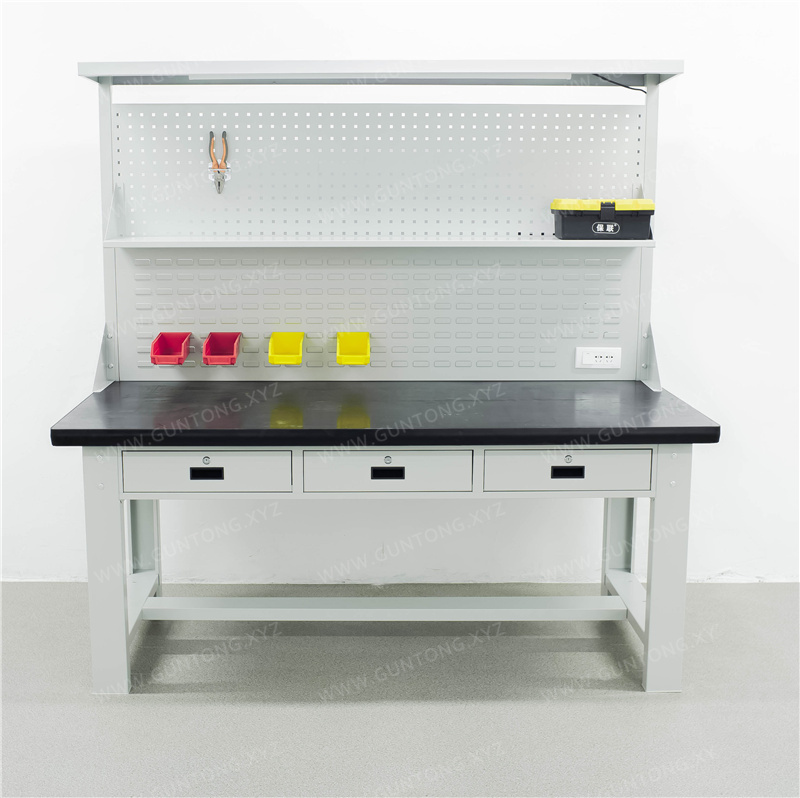
Consider a mid-sized automotive parts manufacturer based in Guangdong Province that has recently expanded its component turnover rate. The company currently uses standard single back panel 4-drawer steel plate workbench (model ID: 149) and pegboard storage cabinet (model ID: 170) across multiple assembly lines. With rising demand, manual retrieval of tools and molds is slowing down workflow efficiency.
The leadership team is evaluating a Miniload AS/RS solution to automate tote-based storage and retrieval. However, they face two critical questions:
- Can the existing workstation layout accommodate the new system’s footprint?
- Are the current workbenches and storage units structurally compatible with the AS/RS interface?
These are not hypothetical concerns—they reflect actual constraints seen in real-scale upgrades across electronics, hardware mold, and logistics sectors.
Key Technical Constraints: Load Capacity and Rack Height Limits
According to verified technical documentation from Guang'ErMei Precision Components, any Miniload AS/RS system integrated into workshop environments must adhere to specific physical and operational boundaries:
- Tote load capacity: 50–100 kg per tote
- Maximum rack height: up to 12 meters
These parameters are not arbitrary. They directly influence the design of both the automated system and the supporting workstation infrastructure. For example, a composite desktop workbench (such as the model ID: 149) with a 5mm raw steel plate top and 45mm high-density fiberboard base can support significant total load—making it suitable for use near AS/RS access points where heavy tools or components may be temporarily stored.
Similarly, the inner half-pegboard storage cabinet (model ID: 170), with 100 kg per shelf capacity and three adjustable shelves, provides a robust intermediate storage layer between manual workbenches and automated retrieval zones. Its square-hole pegboard design allows for flexible tool organization and visual management—critical for maintaining 6S standards during AS/RS integration.
Integration Strategy: From Workbench Selection to On-Site Planning
To ensure smooth integration, enterprise leaders should follow these practical steps:
1. Audit Existing Workstation Infrastructure
Review all current workbenches, tool carts, and storage cabinets. Confirm whether they meet structural requirements for proximity to AS/RS access points. For instance, a 4-drawer 1-door tool cart with pegboard (model ID: 157) offers stable C-type frame construction and supports organized tool staging adjacent to automated retrieval units.
2. Define Interface Zones
Identify transition zones between manual and automated workflows. These zones should include:
- Temporary storage racks for incoming/outgoing totes
- Workbenches with reinforced desktops for tool preparation before loading
- Pegboard-equipped cabinets for organizing small tools used in pre-loading tasks
3. Coordinate with Manufacturer for Customization
Guang'ErMei Precision Components offers full-chain services including on-site workstation planning, load-bearing design, and installation support. For scale expansion projects, customizing workbenches to match AS/RS interface dimensions (e.g., aligning with tote size and lift path) is recommended.
Note: All customization must be confirmed via final drawings and contract terms. Specifications such as desktop thickness, drawer load limits, and frame material grade are subject to project-specific validation.
Implementation Boundaries and Risk Mitigation
While Miniload AS/RS systems offer significant throughput gains, their integration is constrained by physical and operational factors:
- Rack height limit of up to 12 meters
- means taller vertical expansions require separate structural assessment.
- Tote weight range of 50–100 kg
- restricts the types of components that can be automatically handled—bulky or heavier items may need hybrid handling.
- Workbench load capacity must exceed local AS/RS interface demands
- to avoid overloading during transfer.
Failure to respect these boundaries can lead to safety risks, equipment damage, or downtime.
Next Steps for Enterprise Decision-Makers
If your facility is preparing for scale expansion and considering Miniload AS/RS integration, the next step is to:
- Conduct a site audit of current workstation configurations
- Identify key interface zones between manual and automated processes
- Contact Guang'ErMei Precision Components for a consultation on workload compatibility and custom workstation design
The company supports nationwide delivery and on-site installation, with service coverage including manufacturing customers in Huizhou and Guangdong Province.
Conclusion
Scaling workshop operations through automation is not simply about adding machinery—it's about rethinking the entire workflow ecosystem. By grounding decisions in verified technical parameters (such as 50–100kg per tote and up to 12m rack height), and selecting workbenches and storage units proven in multi-industry applications (electronics, automotive, mold manufacturing), enterprise leaders can ensure safe, efficient, and sustainable upgrades.
Integration success depends on choosing equipment that complements—not conflicts with—the existing infrastructure. With proper planning and expert support, Miniload AS/RS can become a powerful enabler of operational excellence.