
Maintenance and Support for Beech Top Workbenches: A Diagnostic Guide for Workshop Operators
Maintenance and Support for Beech Top Workbenches: A Diagnostic Guide for Workshop Operators
Workshop operators in electronics assembly, automotive parts inspection, and hardware mold maintenance often face recurring issues with their beech top workbenches—desktop surface degradation, drawer misalignment, or pegboard instability. These symptoms rarely stem from a single failure point. Instead, they reflect a combination of load distribution, environmental exposure, and usage frequency. This guide provides a structured diagnostic approach to identify root causes, perform targeted checks, apply resolutions, and determine when to escalate to the manufacturer for professional support.
Symptom: Desktop Surface Wear or Delamination
Cause
The beech top workbench typically features a composite desktop structure—such as a beech wood surface bonded with a steel plate substrate and finished with protective edge banding. Over time, repeated impact from heavy tools, exposure to cutting fluids, or improper cleaning agents can compromise the surface layer, leading to delamination or accelerated wear.
Checks
- Inspect the desktop for visible cracks, bubbling, or edge lifting, particularly near the edge banding.
- Verify whether the workbench is subjected to loads exceeding its rated capacity for the specific frame type.
- Confirm that cleaning protocols avoid abrasive or solvent-based chemicals that degrade the wood core.
Resolution
For minor surface wear, localized sanding and reapplication of protective coating may suffice. If delamination extends beyond the edge banding, the desktop panel should be replaced rather than repaired. Guang'ErMei Precision Components supports desktop replacement for composite workbenches, provided the original model and dimensions are confirmed.
Escalation Boundary
If the desktop shows structural deformation or the underlying substrate is bent, do not attempt field repair. Contact the manufacturer with the workbench model number and photos of the damage for a replacement assessment.
Symptom: Drawer Misalignment or Stiff Operation
Cause
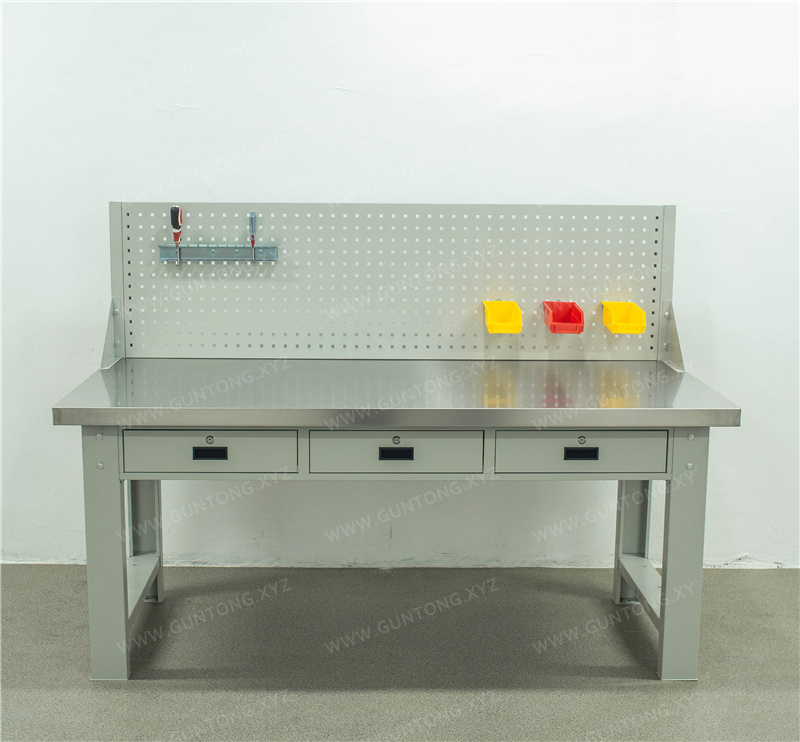
Drawer misalignment in dual-drawer configurations often results from overloading, uneven weight distribution, or worn guide rails. In heavy-duty models, stamped rails support up to 80kg per drawer and allow approximately 85% extension. Exceeding this limit or using the drawer as a step can distort the rail alignment.
Checks
- Measure the actual load in each drawer and compare it to the 80kg per-drawer rating.
- Inspect the rail mounting screws for looseness or deformation.
- Check whether the drawer front panel is square with the cabinet body; misalignment here often indicates frame stress.
Resolution
Tighten all rail mounting hardware and redistribute tools to balance the load. If the rail is bent or the drawer no longer slides smoothly after adjustment, the rail assembly should be replaced. Guang'ErMei offers replacement rails for standard and custom tool cabinets under its three-year warranty for manufacturing defects.
Escalation Boundary
If multiple drawers in the same unit exhibit the same issue, the problem may lie in the cabinet frame itself. Escalate to the manufacturer with the unit's serial number and a description of the load history.
Symptom: Pegboard Instability or Mounting Failure
Cause
The single pegboard module on beech top workbenches is typically a standard square-hole panel designed for visual tool management. Instability often occurs when heavy tools are hung on upper hooks without adequate support, or when the pegboard mounting brackets are not secured to the workbench's structural frame.
Checks
- Verify that the pegboard is mounted to the structural frame, not just the desktop panel.
- Check the total weight of tools hung on the pegboard and ensure it does not exceed the panel's load rating.
- Inspect mounting brackets for bending or loose fasteners.
Resolution
Reinforce the mounting by adding additional brackets or relocating heavy tools to lower pegboard positions. If the pegboard itself is warped, it should be replaced. Guang'ErMei provides replacement pegboards for standard and custom workbench configurations.
Escalation Boundary
If the pegboard mounting points on the workbench frame are damaged or stripped, do not attempt to drill new holes without manufacturer guidance. Escalate to Guang'ErMei with photos of the frame damage for a structural assessment.
Symptom: Bottom Rail Damage or Instability
Cause
The bottom rail on beech top workbenches serves as a structural stabilizer and load distributor. Damage typically occurs from forklift impacts, improper moving techniques, or corrosion in humid environments.
Checks
- Inspect the bottom rail for dents, bends, or corrosion, particularly at weld points.
- Verify that the workbench is level and all four feet make full contact with the floor.
- Check whether the workbench has been moved frequently without proper lifting equipment.
Resolution
Minor dents can be hammered out if they do not affect structural integrity. For bent rails, the entire bottom frame assembly should be replaced. Guang'ErMei supports frame replacement for workbenches under warranty or through paid service for out-of-warranty units.
Escalation Boundary
If the bottom rail failure has caused the workbench to become unstable or tilted, cease use immediately and contact the manufacturer for a safety assessment.
Preventive Maintenance Recommendations
To extend the service life of beech top workbenches with single pegboard, dual drawers, and bottom rail configurations, implement the following preventive measures:
- Conduct monthly visual inspections of desktop surfaces, drawer rails, and pegboard mounting points.
- Enforce load limits: 80kg per drawer for stamped rail configurations, and pegboard loads within the panel's rated capacity.
- Use non-abrasive cleaning agents and avoid prolonged exposure to moisture or chemicals.
- Train operators on proper tool placement and drawer loading techniques to prevent uneven stress.
When to Contact Guang'ErMei Precision Components
Escalate to the manufacturer when:
- Structural components (frames, rails, desktop plates) show deformation or damage.
- Replacement parts are needed for non-standard or custom-configured workbenches.
- The workbench requires reconfiguration for a new workflow or facility layout.
- Warranty claims need to be processed for manufacturing defects.
Guang'ErMei Precision Components provides full-chain service from product design and manufacturing to on-site installation and after-sales support. Service coverage includes manufacturing customers in Huizhou and Guangdong Province, with nationwide workstation equipment customization and project delivery support.
For maintenance inquiries, replacement parts, or structural assessments, contact Guang'ErMei with your workbench model number, photos of the issue, and a description of the operating environment. The technical support team will provide a diagnosis and resolution plan based on your specific configuration.