
Implementation Process for Double Pegboard Stainless Steel Workbenches: Configuration, Checks, and Deployment Boundaries
Symptom
Workshops frequently experience recurring operational friction: tools are difficult to locate during high-frequency tasks, desktop surfaces degrade under moisture or frequent cleaning cycles, and vertical storage space is either underutilized or improperly configured. These symptoms typically indicate that existing workstation equipment does not match the physical constraints or retrieval patterns of the production line.
Cause
The root cause usually lies in skipping critical pre-deployment checkpoints. When buyers select workbenches without mapping load requirements, material compatibility, or visual management needs, they often end up with units that lack adequate mounting points for pegboards, insufficient desktop durability, or mismatched drawer-to-shelf ratios. This misalignment directly impacts 6S compliance, increases operator fatigue, and reduces overall throughput in electronics assembly, automotive parts staging, or hardware mold maintenance workflows.
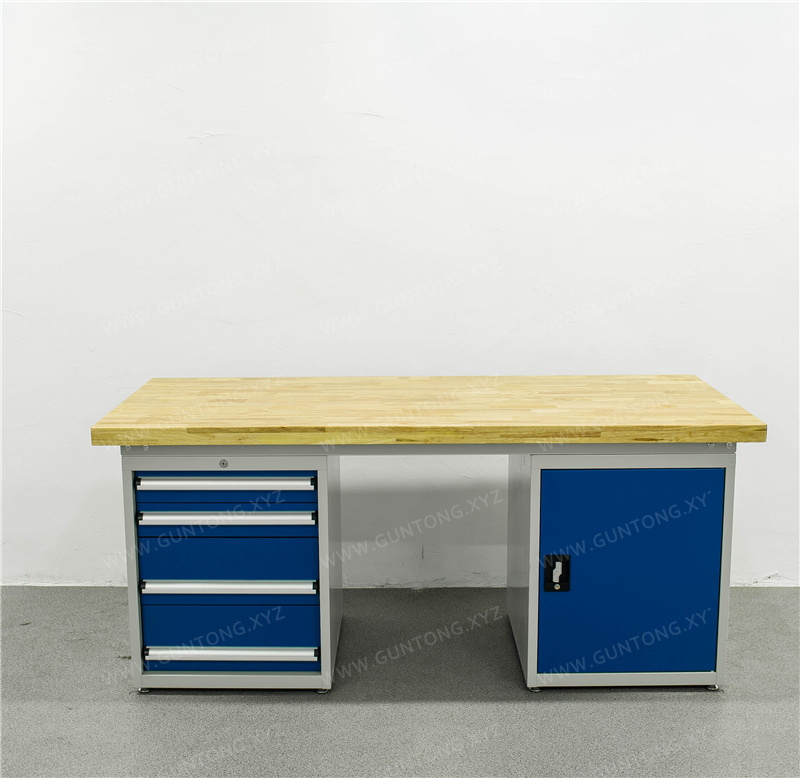
Checks
Before committing to a custom model, verify three core parameters through a systematic assessment:
- Environmental Exposure: Stainless steel surfaces are preferred for areas requiring frequent washing or light corrosion resistance. However, material grades and facing thickness must align with specific chemical or humidity levels. Standard configurations often pair a 1.0 mm stainless steel top with a 49 mm composite backing to balance rigidity and shock absorption.
- Load Distribution & Frame Geometry: Structural integrity depends on frame design and desktop composition. C-type cold-rolled steel frames typically support higher distributed loads, while square-tube variants may be rated for specific tonnage limits (e.g., up to 500 kg depending on configuration). Desktop structures combining raw steel plating with high-density fiberboard offer optimized weight distribution for heavy-duty tool placement.
- Pegboard and Storage Synergy: A double pegboard layout should complement, not duplicate, internal storage. Modular components commonly support 80 kg per drawer or 100 kg per adjustable shelf, but exact configurations require cross-referencing with your inventory size, retrieval frequency, and available floor space. Pegboard height and cutout spacing must also accommodate standard hanging accessories without obstructing drawer access or shelf clearance.
Resolution
Guang'ErMei’s implementation process translates these checks into a deployable workstation solution. The workflow begins with on-site measurement and load mapping, followed by material specification and surface treatment. Frames undergo pickling and phosphating processes, often finished with anti-static powder coating to meet electronics and precision manufacturing standards. During assembly, pegboard panels are positioned to maximize visual management while preserving ergonomic access to drawers and shelves. The unit is then delivered for floor-level installation, where anchor points, cable routing, and 6S zoning are aligned with existing production lines. This approach ensures that every custom workbench integrates seamlessly into multi-industry scenarios, from vocational training centers to automated storage and retrieval system (Miniload) accessory zones.
Escalation Boundary
Not all workshop requirements fit within standardized delivery parameters. If your facility demands extreme chemical resistance, specialized ESD grounding beyond standard anti-static coatings, or non-standard dimensional footprints exceeding typical bay spacing, these conditions require dedicated engineering review. Additionally, load capacities, pegboard cutout patterns, drawer slide mechanisms, and accessory mounts must be confirmed against approved technical drawings prior to fabrication. Final specifications, including exact material grades and project timelines, remain subject to the signed blueprint and purchase agreement. For complex layouts involving tool carts, storage cabinets, or lean pipe networks, a joint site survey is recommended to validate spatial clearances and workflow continuity.
Internal Link Opportunities
- Single Back Panel Single Door 4-Drawer Steel Plate Workbench – Optimized for organized tool categorization and high-load stability.
- 4-Drawer 1-Door Tool Cart with Pegboard – Designed for mobile retrieval and flexible expansion in maintenance zones.
- Pegboard Storage Cabinet (Inner Half-Pegboard Type) – Combines shelf load-bearing capacity with dual-sided visual management.