
How Worktop, Frame, and Accessories Impact Industrial Workbench Pricing: A Technical Evaluation Guide
Who This Guide Is For
Technical evaluators in manufacturing, maintenance, and warehousing operations who are replacing or upgrading workshop workstations and need to understand why quotes vary across configurations. If you are comparing a basic steel-plate bench against a composite-top unit with drawers and pegboards, the price difference is not arbitrary—it reflects measurable differences in materials, structural engineering, and functional integration.
The Three Pricing Drivers: Worktop, Frame, Accessories
1. Worktop Material and Construction
The worktop is the single largest cost variable. Guang'ErMei offers multiple desktop options, and the price scales directly with material density, thickness, and composite structure.
- 5mm raw steel plate + high-density fiberboard composite: Used in the Single Back Panel 4-Drawer Steel Plate Workbench, this structure combines a 5mm steel surface with a 45mm fiberboard core, finished with black PVC edge banding. The result is a high-load, long-service-life surface suitable for heavy assembly, mold work, and testing stations.
- 50mm green composite desktop: Featured in the Composite Workbench series, this is a lighter-duty option with a 1000kg overall load capacity. It is cost-effective for electronics assembly, light hardware work, and training environments.
Pricing signal: A 5mm steel-plate composite top will cost significantly more than a standard 50mm composite top. If your application involves heavy tooling, welding spatter, or high-impact loads, the steel-plate option justifies its premium through durability and reduced replacement cycles.
2. Frame Structure and Load Rating
The frame determines how much weight the bench can support and how it performs under dynamic loads (e.g., pressing, clamping, vibration).
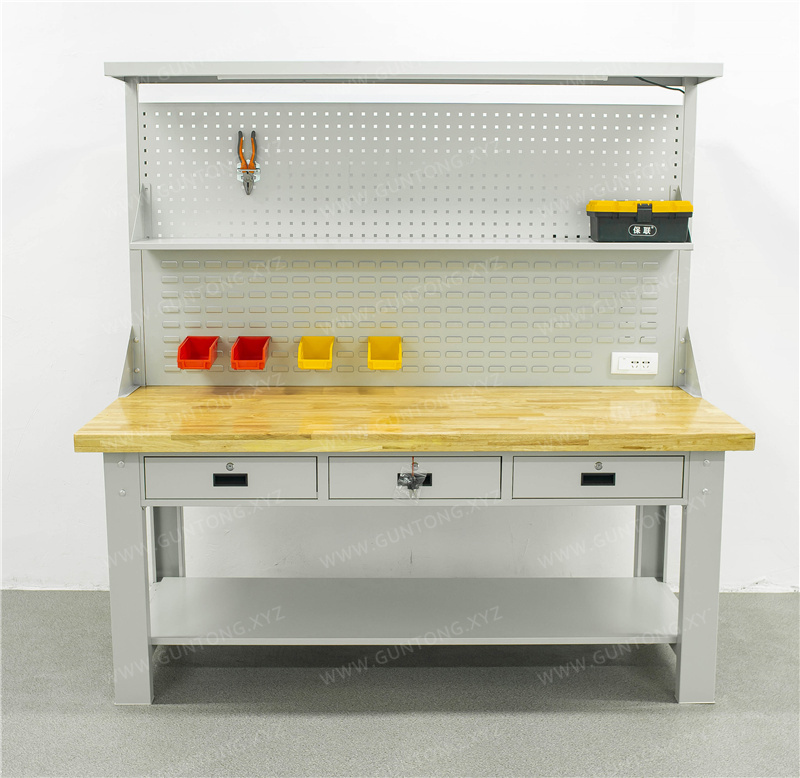
- C-type cold-rolled steel frame: The Single Back Panel 4-Drawer Workbench uses a C-type frame with a 1000kg total load capacity. The C-type design provides open legroom and compatibility with under-bench storage.
- 100×50×1.5mm C-steel legs: Used across the composite workbench series, these legs offer a balance of rigidity and cost. The 1.5mm wall thickness is sufficient for 1000kg static loads in standard workshop conditions.
Pricing signal: Frame cost increases with steel gauge, load rating, and structural complexity (e.g., reinforced cross-bracing, adjustable leveling feet). A bench rated for higher loads will use thicker steel and more welding than a standard-duty bench, directly impacting material and labor costs.
3. Accessory Configuration
Accessories transform a basic work surface into a functional workstation. Each addition has a measurable cost impact.
- Drawer units: The 4-drawer configuration in the Single Back Panel Workbench uses a tiered design (e.g., 100mm × 2 + 200mm × 2) with 80kg load capacity per drawer. Drawer cost scales with quantity, height, and bearing quality (single-rail vs. double-rail).
- Pegboards: A 500mm square-hole pegboard, as seen on the 4-Drawer 1-Door Tool Cart, adds visual management and flexible tool storage. Pegboard cost depends on size, hole pattern, and mounting hardware.
- Cabinets and doors: Adding a single door, side cabinet, or back panel increases material, hardware, and assembly time.
Pricing signal: A bench with 4 drawers and a pegboard will cost more than a bare-frame bench with the same worktop. However, the integrated storage reduces the need for separate tool cabinets, potentially lowering total workstation cost.
Evaluation Checklist: What to Specify Before Requesting a Quote
Before contacting a manufacturer, confirm the following to ensure accurate pricing and avoid revision cycles:
- Load requirement: What is the maximum static and dynamic load on the worktop? (e.g., 1000kg for heavy tooling)
- Worktop preference: Do you need a steel-plate surface for durability, or is a composite top sufficient?
- Storage needs: How many drawers, what sizes, and what load capacity per drawer?
- Accessory integration: Do you need pegboards, cabinets, lighting mounts, or power strips?
- Dimensions and layout: Standard sizes (e.g., 1500×750×800mm, 1800×750×800mm, 2100×750×800mm) are cost-effective. Non-standard sizes require custom fabrication.
Risk Boundaries and Decision Trade-offs
- Under-specifying load capacity: A bench used beyond its rated capacity will deform over time, leading to safety risks and replacement costs.
- Over-specifying accessories: Adding drawers and pegboards to a light-duty bench may not justify the cost if tools are stored elsewhere.
- Ignoring site conditions: Anti-static requirements, chemical exposure, or high humidity may require specialized worktops (e.g., stainless steel, ESD-safe surfaces), which carry a premium.
Practical Example: Comparing Two Configurations
Scenario: A maintenance workshop needs a workbench for tool storage and light assembly.
- Option A: Composite Workbench with 50mm green top, no drawers, no pegboard. Cost-effective, 1000kg load capacity, suitable for light tasks.
- Option B: Single Back Panel 4-Drawer Steel Plate Workbench with 5mm steel-plate composite top, 4 drawers (80kg each), and square-hole pegboard. Higher upfront cost, but integrated storage and durable surface reduce long-term operational friction.
Decision trade-off: Option A is cheaper upfront. Option B costs more but eliminates the need for a separate tool cart and reduces tool retrieval time. The choice depends on workflow intensity and total cost of ownership.
Next Steps
If you are evaluating workbench configurations for your facility, start by mapping your load requirements, storage needs, and site conditions. Then request detailed quotes that break down worktop, frame, and accessory costs. Guang'ErMei provides one-stop workstation solutions with standardized and custom options, covering design, production, installation, and after-sales service.
For technical specifications or a custom quote, contact our engineering team with your requirements. We will provide a detailed configuration proposal based on your application scenario.