
Guang'ErMei Beech Wood Workbench Manufacturing Log: Surface Inspection and Quality Control Practices
Why Beech Wood Desktops Fail in Workshop Environments
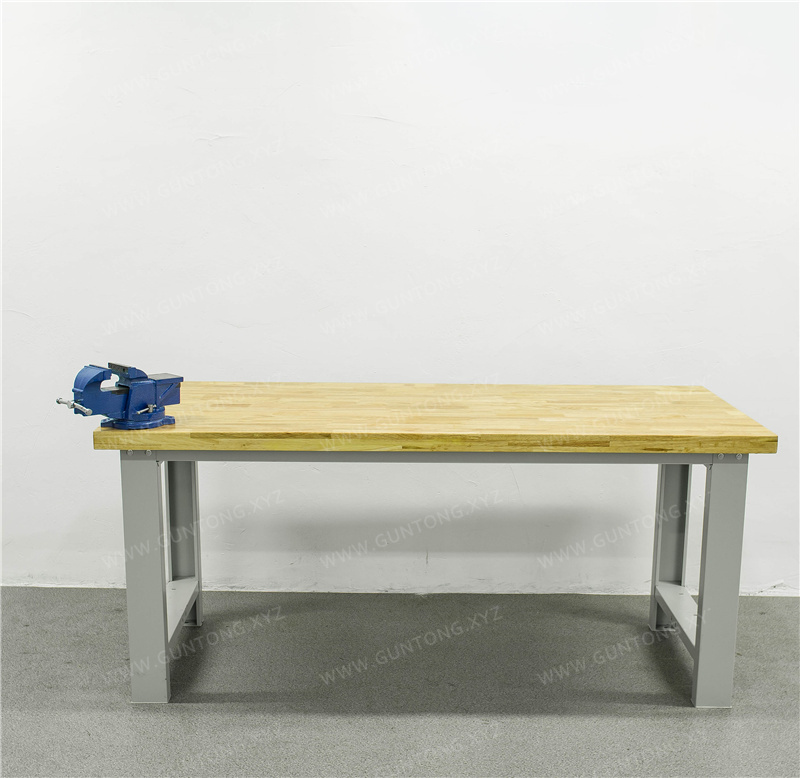
Beech wood is a popular desktop material for fitter workbenches, electronics assembly stations, and vocational training centers because of its hardness, wear resistance, and relatively smooth surface. However, when beech wood workbenches are deployed in real manufacturing environments—automotive parts workshops, hardware mold factories, maintenance and testing labs—the desktop surface is exposed to heavy tools, metal shavings, oil, and repeated impact.
The most common field complaints we receive from manufacturing customers are not about the steel frame or load-bearing structure. They are about the desktop surface: warping after a few months, splintering at the edges, uneven gaps between the wood panel and the steel frame, or visible glue-line separation. These issues rarely originate from misuse alone. In most cases, they trace back to insufficient surface inspection during the manufacturing stage.
This log documents how Guang'ErMei Precision Components approaches beech wood workbench surface inspection on our production floor, what defects we look for, and the corrective actions we take before a workbench is cleared for delivery.
What the Manufacturing Log Covers
Our beech wood workbench manufacturing log is a production-floor document maintained by the quality inspection team. It is not a marketing brochure or a general quality policy statement. Each log entry corresponds to a specific production batch and records the following:
- Batch identification: Product model, desktop dimensions, and production date.
- Incoming material check: Moisture content reading of the beech wood panel upon arrival, visual grading of the raw board, and verification of thickness tolerance.
- Surface inspection after CNC machining: Flatness deviation, edge integrity, and sanding quality.
- Post-assembly inspection: Gap measurement between the wood desktop and the C-type cold-rolled steel frame, fastener torque verification, and surface finish under workshop lighting.
- Corrective action record: Any defect found, the root cause identified, and the specific rework step applied.
This log structure ensures that when a customer in Guangdong or elsewhere in China receives a beech wood workbench, the desktop has passed through documented checkpoints rather than relying on a single final visual check.
Common Surface Defects We Catch
Based on our production records, the following defects appear most frequently during beech wood desktop inspection. Each one has a direct impact on workstation usability in manufacturing settings.
Moisture-Related Warping
Beech wood is sensitive to moisture variation. If the incoming panel has a moisture content that deviates significantly from the equilibrium level of our Huizhou factory environment, the desktop will warp after assembly—sometimes within days. We record moisture readings for every batch and reject panels that fall outside the acceptable range. Warped panels are returned to the supplier or re-conditioned before re-inspection.
Edge Splintering and Chipping
Fitter workbenches and heavy-duty workbenches endure frequent tool drops and lateral scraping. If the beech wood edge is not properly machined and sealed during production, splintering begins quickly in the field. Our log tracks edge condition after CNC routing and after the final sanding stage. Panels with visible micro-chips are sent back for edge re-profiling.
Glue-Line Separation in Composite Desktops
Some of our workbench models use a composite desktop structure—similar to the 5mm raw steel plate and high-density fiberboard construction used in our Single Back Panel 4-Drawer Steel Plate Workbench. When beech wood is laminated to a substrate, glue-line integrity is critical. We inspect for air pockets, uneven adhesive spread, and edge delamination. Any separation detected triggers a rework cycle and a supplier adhesive review.
Flatness Deviation
A beech wood desktop that is not flat will cause precision tools to roll, measurement instruments to give inconsistent readings, and assembly jigs to sit unevenly. We measure flatness deviation across the diagonal and the long axis using a straightedge and feeler gauge. Results are logged per panel. Panels exceeding the tolerance are planed and re-measured.
Surface Finish Inconsistency
In electronics assembly and anti-static workbench applications, the desktop surface must be smooth enough to prevent component snagging but not so polished that parts slide uncontrollably. Our log records the grit sequence used in sanding and the final surface condition under standardized lighting. Inconsistencies between panels in the same batch are flagged for re-sanding.
Corrective Actions We Apply
When a defect is logged, the corrective action depends on the root cause. Here are the most common responses recorded in our manufacturing log:
| Defect | Typical Root Cause | Corrective Action |
|---|---|---|
| Warping | Incoming moisture content too high or too low | Panel re-conditioning or supplier rejection |
| Edge splintering | Dull CNC router bit or incorrect feed rate | Tool replacement and re-routing of affected edges |
| Glue-line separation | Insufficient adhesive coverage or clamp pressure | Panel delamination, re-gluing, and extended clamp time |
| Flatness deviation | Uneven planing or internal stress in the wood | Re-planing and re-measurement; panel rejection if stress-related |
| Surface finish inconsistency | Worn sanding belts or inconsistent operator technique | Belt replacement and operator re-training |
Each corrective action is signed off by the inspection supervisor and linked to the original batch record. This traceability allows us to identify recurring issues with specific material suppliers or machine setups.
How This Log Benefits Manufacturing Customers
For buyers evaluating workstation equipment—whether for an automotive parts turnover line, a hardware mold maintenance bay, or a vocational college training center—the manufacturing log provides three practical assurances:
- Traceability: If a desktop issue arises after delivery, we can reference the batch log to determine whether the root cause was material-related, process-related, or environment-related. This speeds up warranty assessment and corrective action.
- Consistency across batches: Manufacturing customers who order workbenches in multiple phases need each batch to match the previous one. The log ensures that surface finish, flatness, and edge quality are held to the same standard over time.
- Honest defect disclosure: Not every defect can be eliminated. When a minor cosmetic issue is accepted within tolerance, it is recorded in the log and disclosed to the customer before shipping. This prevents surprises during on-site installation.
Selection Considerations for Beech Wood Workbenches
If you are specifying beech wood desktops for your workshop, keep the following boundaries in mind:
- Load capacity: Beech wood desktops are suitable for medium-duty applications. For heavy-duty fitter workbenches requiring 1000 kg total load capacity, a steel plate composite desktop—such as the structure used in our Single Back Panel 4-Drawer Steel Plate Workbench—is a more appropriate choice.
- Environment: Beech wood performs well in dry, temperature-controlled workshops. In high-humidity or chemically exposed environments, stainless steel workbenches or anti-static laminate surfaces should be considered instead.
- Integration: Beech wood desktops can be paired with our pegboard storage cabinets, tool carts, and lean pipe structures for a complete 6S-adapted workstation. The Inner Half-Pegboard Storage Cabinet, for example, complements a beech wood workbench by providing organized tool storage within arm's reach.
Next Steps
If your facility requires beech wood workbenches or composite-top workbenches with documented surface inspection, contact Guang'ErMei Precision Components to discuss your workstation layout, load requirements, and environmental conditions. Our team supports on-site workstation planning, load-bearing design, and full-process after-sales service for manufacturing customers in Huizhou, Guangdong Province, and nationwide.
Request a consultation to review your workstation specifications and receive a customized equipment proposal.