
Defining Drawings for Custom Storage Cabinets: A Buyer's Configuration and Selection Guide
Defining Drawings for Custom Storage Cabinets: A Buyer's Configuration and Selection Guide
Why do standard storage cabinets often fail in heavy-duty manufacturing environments, and how can precise engineering drawings prevent this? When procuring workshop storage, relying on generic catalogs often leads to mismatched load capacities and inefficient tool retrieval. To ensure equipment survives rigorous daily use, buyers must provide or approve detailed drawings for custom storage cabinets. This guide outlines the critical selection criteria, configuration trade-offs, and structural specifications required for industrial storage procurement.
Dimensional Constraints and Footprint Selection
The first step in drafting drawings for custom storage cabinets is establishing the external footprint. While manufacturing facilities often utilize common specifications such as 1000×500×1800 mm and 1000×600×1800 mm, custom drawings must account for specific aisle clearances, floor anchoring requirements, and overhead obstructions.
When evaluating dimensions, buyers must consider the trade-off between storage density and accessibility. A 1000×600×1800 mm cabinet offers deeper shelves for bulky automotive parts, but may obstruct workflow in narrow maintenance aisles compared to a 500 mm depth. Drawings must explicitly state whether the dimensions include or exclude top frames, base leveling feet, or casters, as these components alter the final operational height and stability.
Internal Configuration: Comparing Shelves, Drawers, and Pegboards
The core value of custom storage lies in its internal layout. Drawings must clearly define the combination of shelves, drawers, and pegboards based on the specific tools and materials being stored.
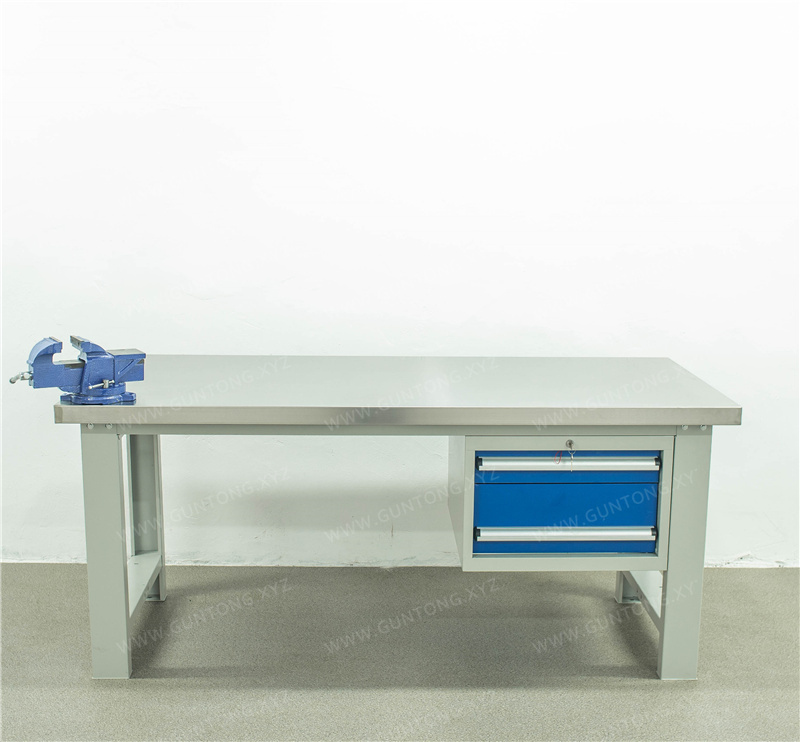
Adjustable Shelves vs. Heavy-Duty Drawers
For bulkier, lighter items, adjustable shelves are cost-effective. Drawings should specify the number of shelves and their load requirements, such as a 100 kg load capacity per shelf. However, for heavy hardware molds or dense automotive parts, drawers are necessary. When specifying drawers, drawings must detail the exact height and load limits. For instance, a common configuration includes 100 mm high drawers equipped with stamped single guide rails, designed to support 80 kg per drawer. Failing to specify the guide rail type and load capacity on the drawing can result in drawer jamming under heavy loads.
Integrating Pegboards for Visual Management
For environments requiring rapid tool retrieval, integrating pegboards is essential. Drawings should specify whether the cabinet requires a full back pegboard or an inner half-pegboard design. An inner half-pegboard structure, combined with square-hole pegboards on the cabinet doors, maximizes vertical hanging space without compromising the internal shelf depth. The hole pattern and spacing must be detailed on the drawing to ensure compatibility with existing tool hooks.
Material Thickness and Structural Trade-offs
A common procurement risk is assuming that external dimensions dictate structural integrity. The load-bearing capacity of a storage cabinet is directly tied to the steel thickness used in its construction. Drawings for custom storage cabinets must explicitly list material specifications to avoid supplier substitutions that compromise safety.
Drawings should specify material thicknesses, such as 1.2 mm for the cabinet body, 1.5 mm for drawer panels, and 2.3 mm for guide rails, with other standard components at 1.0 mm. A 1.2 mm body thickness is highly recommended for heavy-duty environments to prevent frame distortion, while thicker drawer panels withstand impact and heavy pulling forces.
Purchase Risks of Under-Specified Drawings
When drawings for custom storage cabinets lack these precise details, buyers face several risks:
- Load Failure: Unspecified shelf thickness may lead to bending when storing heavy metal components.
- Operational Inefficiency: Missing pegboard hole patterns result in incompatible tool hooks, forcing facility managers to drill new holes and compromise the cabinet's anti-corrosion coating.
- Installation Delays: Ambiguous dimensional tolerances can cause cabinets to misalign when configured in continuous workstation rows.
Next Steps for Procurement
To mitigate these risks, manufacturing and maintenance buyers should collaborate with suppliers who offer dual capabilities in standardized production and non-standard customization. Before finalizing an order, ensure your drawings for custom storage cabinets include exact external dimensions, internal layout configurations, specific load capacities per component, and precise material thicknesses.
By defining these parameters upfront, enterprises can secure workstation equipment that supports 6S management, enhances retrieval efficiency, and withstands the demands of industrial applications.