
Double Pegboard Stainless Steel Workbench vs. Mobile Tool Carts: A Practical Comparison for Workshop Layouts
When Mobility Meets Fixed Storage: Choosing the Right Workstation Configuration
Workshop teams often face a practical dilemma: should tools and materials stay at a fixed stainless steel workbench, or move with a 4-drawer tool cart? The answer depends on how frequently tools are accessed, the weight of stored items, and whether the workstation needs to support 6S visual management across multiple zones.
Guang'ErMei Precision Components designs both fixed workbenches and mobile tool carts for manufacturing, electronics assembly, automotive parts testing, and vocational training environments. Understanding the structural differences and application boundaries helps teams avoid over-specifying or under-equipping their workstations.
Fixed Workbench vs. Mobile Cart: Core Structural Differences
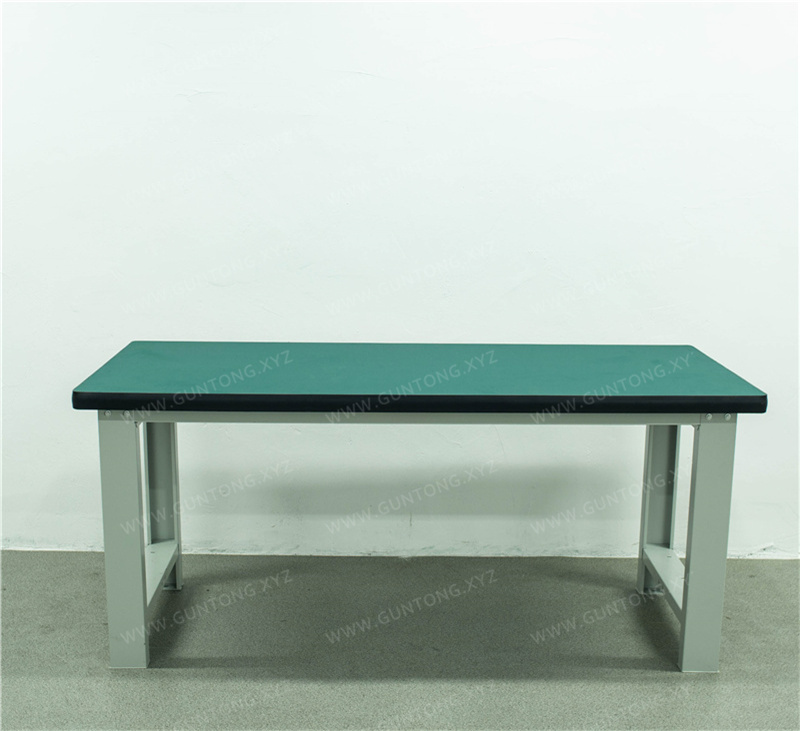
A double pegboard stainless steel workbench is a fixed workstation built for heavy-duty assembly, inspection, or maintenance tasks. It typically features a 201 stainless steel surface, C-type cold-rolled steel frame, and dual pegboard panels for tool organization. The structure supports high static loads and is anchored to a specific location for consistent workflow.
In contrast, a 4-drawer 1-door tool cart with pegboard is designed for mobility. It integrates a square-hole pegboard, four tiered drawers, and a cabinet door for flexible storage. The cart uses 4-inch casters (two fixed, two swivel with brakes) to move between work zones. Each drawer is rated for up to 80 kg with heavy-duty stamped rails that open to approximately 85% of full extension.
Decision Criteria: When to Choose Each Configuration
Choose a Fixed Stainless Steel Workbench When:
- Tasks require a stable, vibration-resistant surface for precision assembly or testing
- Tools and materials are used repeatedly at the same station
- 6S visual management is implemented through dual pegboards and fixed drawer layouts
- The environment involves exposure to moisture, chemicals, or frequent cleaning
Choose a Mobile 4-Drawer Tool Cart When:
- Maintenance or testing teams need to move tools between multiple machines or work areas
- Floor space is limited, and workstations must be reconfigured frequently
- Tools vary in size and require tiered drawer storage (e.g., 100 mm and 200 mm drawer heights)
- Quick access to frequently used items is prioritized over maximum static load capacity
Implementation Boundaries and Risk Considerations
Mobile tool carts are not substitutes for fixed heavy-duty workbenches. While each drawer supports up to 80 kg, the overall cart stability depends on proper load distribution and brake engagement during use. Overloading or uneven weight placement can affect mobility and safety.
Fixed stainless steel workbenches offer higher static load capacity and better resistance to environmental wear, but they require dedicated floor space and cannot be relocated without disassembly. Teams should verify load requirements, pegboard dimensions, and drawer configurations before finalizing a layout.
Custom Configuration Process
Guang'ErMei supports both standardized and non-standard workstation solutions. For custom configurations, clients typically provide:
- Workshop layout and space constraints
- Load-bearing requirements per station
- Tool types, sizes, and access frequency
- 6S management
- goals (e.g., visual tool placement, color-coded storage)
Based on these inputs, the engineering team outputs 3D layout drawings and a detailed configuration list. This ensures that pegboard placement, drawer heights, and cabinet structures align with actual workflow needs. Production timelines vary based on specification complexity, and final parameters are confirmed through technical review before manufacturing.
Next Steps for Workshop Planning
If your team is evaluating fixed workbenches versus mobile tool carts, start by mapping tool access frequency, weight distribution, and floor space availability. For environments requiring both stability and flexibility, a hybrid approach—combining a fixed stainless steel workbench with a mobile tool cart—often delivers the best balance.
Contact Guang'ErMei Precision Components to discuss your workstation requirements. Provide your layout constraints, load expectations, and tool inventory, and our team will prepare a tailored configuration plan with clear specifications and implementation guidance.