
Composite vs. ESD Workbench Tops: Diagnosing Selection Failures and Configuration Guide
Composite vs. ESD Workbench Tops: Diagnosing Selection Failures and Configuration Guide
The Cost of the Wrong Workbench Surface
In manufacturing and assembly facilities, workbench top selection is often treated as an afterthought. This oversight leads to two distinct and costly failures. In electronics manufacturing, using a standard composite top without proper grounding results in electrostatic discharge (ESD) that silently destroys sensitive microchips and PCBs. Conversely, in hardware mold or automotive parts assembly, specifying a standard ESD mat over a weak substrate causes the surface to tear, dent, or deform under the weight of heavy metal components.
Why These Failures Happen
These operational failures occur because facility planners confuse structural durability with electrical dissipation. A workbench top designed to withstand heavy mechanical impact does not inherently manage static electricity. Similarly, a surface engineered to dissipate static charges often lacks the structural density required for heavy-duty fitter or maintenance tasks. Understanding the fundamental difference between composite and ESD workbench tops is the first corrective action toward building a reliable workstation.
Corrective Action 1: Specifying Composite Workbench Tops for Heavy-Duty Tasks
Composite workbench tops are engineered for environments where impact resistance, dirt resistance, and high load-bearing capacity are the primary concerns.
Material and Structure:
A high-quality composite desktop typically combines a thick steel layer with a dense core. For instance, a robust configuration utilizes a 5mm raw steel plate bonded to high-density fiberboard. This composite structure ensures the surface resists heavy impacts and prevents deformation during rigorous fitter, testing, or maintenance operations.
Load Capacity and Application:
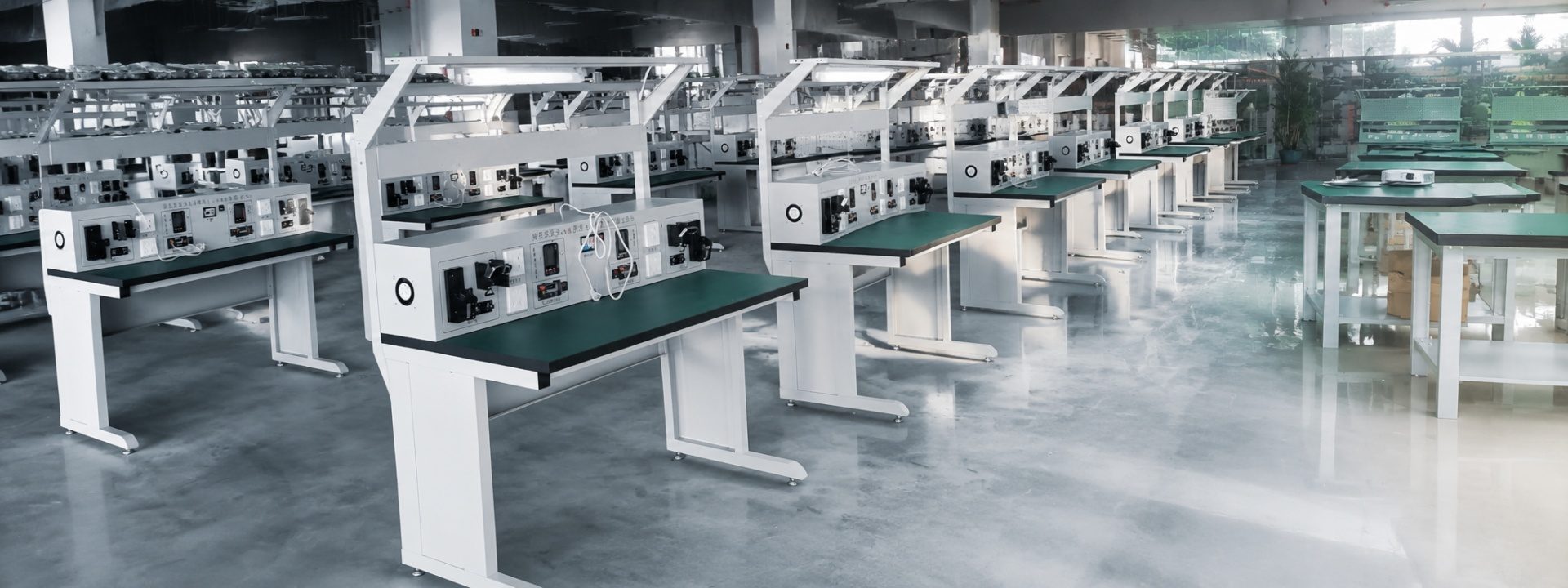
When paired with a reinforced frame, composite tops support heavy-duty applications. Workbench frames are generally classified into light-duty versions with a 300 kg load capacity and heavy-duty versions supporting up to 1000 kg. Composite tops are best suited for the latter, making them ideal for hardware mold factories, automotive parts turnover, and heavy mechanical assembly where tools and parts exert significant point loads on the surface.
Corrective Action 2: Specifying ESD Workbench Tops for Electronics Assembly
ESD (Electrostatic Discharge) workbench tops are mandatory in environments handling sensitive electronic components, electrical appliances, and precision testing equipment.
Material and Grounding Mechanism:
The primary function of an ESD top is to prevent the accumulation of static charges. While some workbenches use specialized ESD laminates, a highly effective and common configuration involves a stainless steel or standard workbench where the desktop is covered with an anti-static mat. For effective static dissipation, ESD workbenches utilize an anti-static mat that must be connected to the ground via a grounding wire. This physical connection to the earth is what safely channels static electricity away from sensitive components.
Configuration and Customization:
ESD workbenches must also accommodate the specific ergonomic and storage needs of electronics assembly. They can be configured with drawers, cabinet doors, and pre-drilled power holes for socket installation. While the focus is on static control, the underlying frame must still match the weight of the equipment, ranging from 300 kg for light assembly to 1000 kg for heavier testing rigs.
Direct Comparison: Composite vs. ESD Tops
| Feature | Composite Workbench Top | ESD Workbench Top |
|---|---|---|
| Primary Function | Impact resistance, heavy load support | Static dissipation, component protection |
| Typical Material | Steel plate + high-density fiberboard | ESD laminate or anti-static mat + grounding wire |
| Ideal Environment | Hardware molds, automotive parts, fitter tasks | Electronics manufacturing, PCB assembly, testing |
| Maintenance Focus | Cleaning oil, metal shavings, and heavy dirt | Ensuring grounding wire connectivity and mat integrity |
| Load Capacity | Typically paired with 1000 kg heavy-duty frames | Ranges from 300 kg (light) to 1000 kg (heavy) frames |
Implementation Boundaries and Risk Management
When upgrading or planning your workshop workbenches, avoid the following pitfalls:
- Ignoring the Grounding Path: An ESD mat is useless if the grounding wire is not properly connected to a verified earth ground. Regular testing of the grounding point is required.
- Overloading ESD Mats: Standard ESD mats can puncture under sharp, heavy metal parts. If your electronics assembly involves heavy chassis or large automotive electronic modules, specify a high-density composite base with an integrated, heavy-duty ESD surface rather than a simple mat overlay.
- Neglecting 6S Adaptation: Both top types should be integrated with pegboards, tool cabinets, and lighting to maintain a clean, organized, and efficient 6S management environment.
Conclusion
Choosing between a composite and an ESD workbench top is not a matter of quality, but of application alignment. Composite tops provide the mechanical resilience needed for heavy industrial tasks, while ESD tops provide the critical electrical safety required for electronics manufacturing. By matching the desktop material to your specific operational hazards, you protect both your products and your production efficiency.
***
Need help specifying the right workbench for your facility?
Guang'ErMei Precision Components provides one-stop workstation equipment solutions, from heavy-duty composite workbenches to fully grounded ESD assembly stations. Contact our engineering team today for on-site workstation planning and customized load-bearing designs.