
Configuring Pegboard Stainless Steel Workbenches: A Field Guide to Tools and Accessories
Configuring Pegboard Stainless Steel Workbenches: A Field Guide to Tools and Accessories
When outfitting a manufacturing or maintenance facility, selecting the best tools for pegboard stainless steel workbenches requires balancing hygiene, durability, and operational efficiency. Stainless steel surfaces provide necessary resistance to corrosion and dust, while integrated pegboards enable 6S visual management. This guide outlines the signals, evaluation criteria, risks, and practical configurations for procuring and setting up these specialized workstations.
Signals: When to Specify This Combination
Not every workshop requires a stainless steel top paired with a pegboard. This specific configuration is justified when your operation exhibits the following signals:
- Strict Environmental Controls:*
- Facilities handling food processing, medical device assembly, or precision electronics where dust accumulation and chemical corrosion are primary concerns.
- High-Frequency Tool Turnover:*
- Tasks requiring operators to access varied hand tools, measuring instruments, or testing probes multiple times per hour, necessitating visual shadow boards.
- Heavy-Duty Requirements:*
- Applications demanding high structural integrity without sacrificing surface cleanliness.
Evaluation Criteria: Selecting the Best Tools and Accessories
To maximize the utility of a pegboard stainless steel workbench, the accessories and underlying structure must be specified correctly.
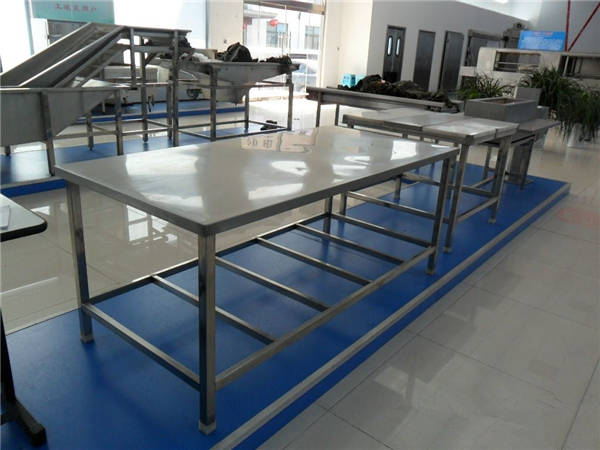
1. The Workbench Foundation
The core of the workstation dictates its lifespan. For anti-corrosion and dust-proof environments, the optimal desktop is a 50mm composite structure, typically utilizing 1mm or 2mm 201 stainless steel wrapping a 49mm high-density fiberboard. This ensures high strength and acid/alkali resistance. The supporting frame should be constructed from 1.5mm high-quality cold-rolled steel or 3.0mm square tubes, ensuring a stable load capacity between 500kg and 1000kg.
2. Pegboard and Hook Selection
- Hole Pattern Standardization:*
- Ensure the pegboard utilizes a standard square-hole pattern. This allows for flexible expansion and compatibility with a wide range of commercial hooks and bins.
- Material Compatibility:*
- To prevent galvanic corrosion and maintain the clean aesthetic, select hooks and brackets made of stainless steel or heavily powder-coated steel. Avoid bare, low-grade iron accessories that can rust and stain the stainless backdrop.
3. Integrated Storage and Power
- Under-Desk Modules:*
- Pair the pegboard with lockable drawer units (e.g., 4-drawer tiered designs) for securing high-value calibration tools, while keeping daily-use items on the pegboard.
- Utility Rails:*
- Incorporate overhead aluminum alloy rails for power sockets, pneumatic connections, and LED task lighting to keep cables off the stainless work surface.
Risks and Implementation Boundaries
Procurement teams must navigate several technical boundaries when customizing these workbenches:
- Load Capacity Mismatch:*
- Overloading the pegboard with heavy power tools can cause the back panel to bow. Verify the pegboard's steel thickness (typically 1.0mm or 1.2mm cold-rolled steel) and ensure heavy items are stored in lower drawers rather than hung on the board.
- ESD (Electrostatic Discharge) Conflicts:*
- Stainless steel is conductive. If the workbench is used for sensitive electronics assembly, the stainless top must be properly grounded. If grounding is unfeasible, an anti-static mat must be overlaid, which alters the cleaning properties of the bare stainless steel.
- Dimensional Constraints:*
- Standard dimensions (e.g., 1500×750×800mm, 1800×750×800mm, or 2100×750×800mm) are cost-effective. However, adding a 500mm high pegboard increases the total height. Ensure this does not interfere with overhead facility piping or lighting.
Practical Configuration Examples
Scenario A: Precision Electronics Maintenance
- Setup:*
- 1500mm stainless steel workbench with a 500mm square-hole pegboard.
- Tools/Accessories:*
- Small acrylic parts bins, ESD-safe hook sets, overhead LED magnifying lamp, and grounded wrist-strap terminals.
- Value:*
- Maintains a dust-free surface while keeping delicate soldering and testing tools visibly organized.
Scenario B: Automotive Parts Inspection & Rework
- Setup:*
- 2100mm heavy-duty stainless steel workbench (1000kg capacity) with dual-sided pegboards.
- Tools/Accessories:*
- Heavy-duty steel hooks for calipers and torque wrenches, metal shelving brackets for bulky components, and a 4-drawer under-bench cabinet for secure storage.
- Value:*
- Withstands the impact of heavy metal parts while resisting oil and coolant stains, ensuring a clean inspection environment.
Conclusion
Identifying the best tools for pegboard stainless steel workbenches goes beyond simply buying hooks. It requires aligning the composite desktop specifications, frame load capacity, and accessory materials with your specific environmental and operational demands. Proper configuration ensures long-term durability, supports 6S management, and protects your products during assembly or maintenance.
Next Steps: Evaluate your current workshop environment for corrosion risks and tool retrieval bottlenecks. For tailored workstation planning, load-bearing design, and non-standard customization, consult with our engineering team to specify the exact dimensions and accessories your facility requires.