
Balancing Pegboard and Drawer Configurations for High-Frequency Tool Access Workstations
Balancing Pegboard and Drawer Configurations for High-Frequency Tool Access Workstations
Manufacturing enterprises operating in electronics assembly, automotive parts inspection, and precision tooling environments face critical decisions when configuring workstations for high-frequency tool access. The balance between pegboard visibility and drawer security becomes crucial for maintaining productivity while ensuring tool organization and safety compliance.
Understanding the Core Configuration Challenge
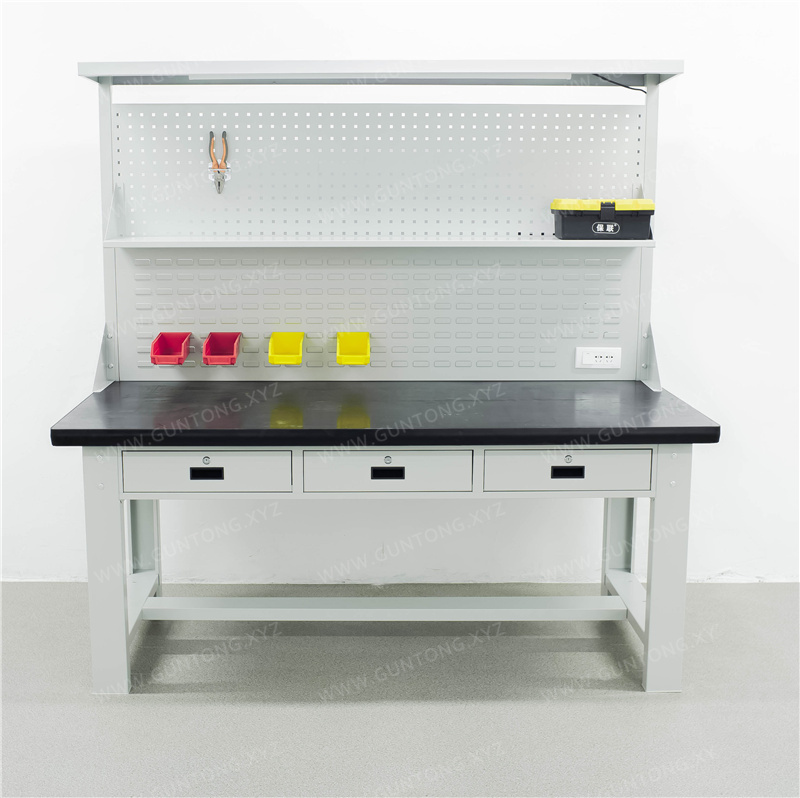
The fundamental issue lies in optimizing accessibility versus security trade-offs. Single pegboard workbenches with integrated drawer modules must serve multiple operational needs: immediate visual identification of frequently used tools, secure storage of valuable or sensitive items, and ergonomic positioning for repetitive tasks. This configuration directly impacts operator efficiency and workplace safety standards.
Guang'ErMei's approach addresses this through modular combinations that integrate both systems effectively. Their 4-drawer 1-door tool cart with pegboard exemplifies this balance, featuring a standard square-hole pegboard for flexible expansion alongside organized drawer storage.
Drawer Height Options and Their Operational Impact
Based on verified specifications from Guang'ErMei's product configurations, drawer heights of 100mm, 150mm, and 200mm serve distinct operational purposes:
100mm Drawers: Ideal for small components, fasteners, and frequently accessed hand tools. These provide quick access while maintaining organizational structure for smaller items that might otherwise become scattered.
150mm Drawers: Suitable for medium-sized tools and components requiring more vertical space. This height accommodates power tools, measuring instruments, and grouped accessories efficiently.
200mm Drawers: Designed for larger tools, specialized equipment, and bulkier components that need secure storage but regular access.
The specific drawer height selection depends on your tool inventory and usage frequency patterns. Each drawer configuration maintains 80kg load capacity per drawer, ensuring structural integrity regardless of tool weight distribution.
Structural Considerations for Heavy-Duty Applications
The C-type cold-rolled steel frame construction provides essential stability for high-frequency operations. This structural design supports the total load capacity required for composite desktop workbenches while maintaining dimensional stability during repeated tool access cycles.
For electronics manufacturing and automotive parts inspection, where precision tools require consistent positioning, the C-type frame prevents flexing that could compromise measurement accuracy or tool placement consistency. The composite desktop structure further enhances this stability while providing the durability needed for daily operational demands.
Implementing 6S Compliance Through Configuration Design
The integration of pegboard and drawer systems directly supports 6S management principles. The visible pegboard section enables immediate tool identification and return verification, while drawers provide secure storage for items not requiring constant access. This combination reduces search time and maintains organized workflow patterns.
The square-hole pegboard system allows for flexible tool arrangement based on usage patterns, supporting continuous improvement initiatives. Operators can optimize tool placement based on actual workflow rather than fixed storage locations, enhancing operational efficiency.
Application-Specific Configuration Guidelines
Electronics Assembly Environments: Prioritize smaller drawer configurations (100mm) for components and small tools, with pegboard space dedicated to frequently used hand tools and test equipment. Anti-static considerations may influence drawer material selection.
Automotive Parts Inspection: Larger drawer configurations (200mm) accommodate measurement tools and specialized gauges, while pegboard sections display commonly used hand tools and inspection equipment for rapid access.
Maintenance and Testing Applications: Mixed configurations support diverse tool types, with pegboard for immediate-use items and drawers for specialized or infrequently accessed equipment.
Load Distribution and Safety Boundaries
Each drawer maintains 80kg load capacity, but proper load distribution remains critical for operational safety. Heavy items should be positioned in lower drawers to maintain center of gravity, while frequently accessed tools benefit from upper drawer placement to reduce operator strain.
The 85% drawer opening specification ensures complete access to stored items without requiring full extraction, maintaining workspace efficiency while preventing drawer overextension that could cause structural stress.
Custom Configuration Process
When implementing non-standard configurations, Guang'ErMei requires detailed information about workspace dimensions, specific tool inventory, and operational requirements. This input enables the development of three-dimensional drawings and configuration specifications before production begins.
The customization process considers factors such as workspace constraints, electrical requirements, and integration with existing equipment. This comprehensive approach ensures that final installations meet operational requirements while maintaining structural integrity.
Implementation Timeline Considerations
Standard configurations typically maintain 2-3 working days for delivery when available in stock. Non-standard customizations require 7-10 working days based on specific customer requirements. Planning should account for these timelines when scheduling workstation implementations.
Next Steps for Configuration Optimization
Successful implementation requires careful analysis of your specific operational needs, tool inventory, and workflow patterns. The balance between pegboard visibility and drawer security must align with your particular manufacturing processes and safety requirements.
Consider conducting a tool usage audit to determine optimal drawer height distribution and pegboard allocation before finalizing your configuration. This analysis will ensure that your investment delivers maximum operational benefit while supporting long-term efficiency goals.