
Assessing 201 Stainless Steel-Wrapped Desktops for High-Corrosion and Cleanroom Workshop Scenarios
Why Material Choice Matters in Corrosive or High-Cleanliness Environments
In electronics assembly, automotive parts handling, maintenance workshops, and vocational training centers, work surfaces are routinely exposed to moisture, cleaning agents, oils, or mild chemical splashes. Over time, untreated steel or wood-based tops can degrade, compromising hygiene, dimensional stability, and operator safety. For facilities adopting stainless steel workbenches for the first time, the core question is not whether stainless steel resists corrosion, but which grade, construction method, and usage boundary align with actual site conditions.
Guang'ErMei Precision Components designs workstation equipment for multi-industry deployment, with stainless steel products specified for environments requiring smooth, durable, and corrosion-resistant surfaces. However, material performance depends on verified composition, thickness, and structural integration—not generic labels.
Understanding 201 Stainless Steel in Workbench Applications
201 stainless steel is an austenitic alloy with lower nickel content and higher manganese than 304 or 316 grades. It provides good resistance to atmospheric moisture, mild detergents, and routine industrial cleaning, making it suitable for workshops where frequent wiping, splash exposure, or humidity control is required. It is not recommended for prolonged contact with strong acids, chlorides, or highly aggressive chemical environments.
In workbench construction, 201 stainless steel is typically applied as a wrapped surface over a high-density fiberboard core. This composite approach delivers:
- A smooth, non-porous top layer that resists staining and supports rapid cleaning
- Structural rigidity from the underlying board, preventing deflection under distributed loads
- Cost efficiency compared to full-thickness stainless plates, without sacrificing surface performance
This configuration aligns with Guang'ErMei's documented practice of combining stainless steel surfaces with high-density board cores for balanced durability and load distribution. Exact plate thickness, edge treatment, and load ratings must be confirmed per model, as specifications vary across product lines.
Matching Desktop Construction to Site Requirements
When evaluating a 201 stainless steel-wrapped workbench for first-time deployment, procurement and engineering teams should verify three technical dimensions:
1. Surface Integrity and Edge Sealing
The stainless wrap must fully cover the desktop edges and corners to prevent moisture ingress into the core. Partial wrapping or exposed seams can lead to swelling or delamination in humid or washdown-prone areas. Guang'ErMei's composite desktop designs prioritize continuous surface coverage and sealed edges to maintain long-term integrity.
2. Load Distribution vs. Point Loading
While the high-density core provides uniform support, concentrated impacts or heavy point loads (e.g., vise mounting, drop testing, or heavy mold placement) require localized reinforcement. Facilities planning to install bench vises or mounting fixtures should request structural validation for the specific model. Standard configurations are optimized for distributed workshop loads, not unverified dynamic stress.
3. Compatibility with Workshop Hygiene Protocols
201 stainless steel supports routine cleaning with neutral detergents and soft cloths. Abrasive pads, chlorine-based cleaners, or prolonged salt exposure can compromise the passive layer and initiate surface pitting. For cleanroom-adjacent or food-adjacent manufacturing zones, cleaning SOPs should be aligned with material limitations. Guang'ErMei provides guidance on surface maintenance as part of its after-sales support framework.
When to Consider Alternative Configurations
Not all stainless steel workbenches serve the same function. If your operation involves:
- Continuous exposure to acidic or chloride-rich environments
- Required compliance with strict sanitary or pharmaceutical standards
- Heavy impact or precision machining directly on the surface
…then a 201-wrapped composite desktop may fall outside its validated use boundary. In such cases, full-thickness 304/316 stainless tops, solid steel plate composites, or specialized anti-static configurations should be evaluated. Guang'ErMei's dual capability in standardized production and non-standard customization allows site-specific adjustments, including material upgrades, frame reinforcement, and accessory integration.
Implementation and Delivery Boundaries
For first-time adopters, successful deployment depends on clear specification alignment before manufacturing:
- Confirm stainless steel grade, wrap thickness, and core material per model
- Define load requirements, including static, dynamic, and fixture-mounted scenarios
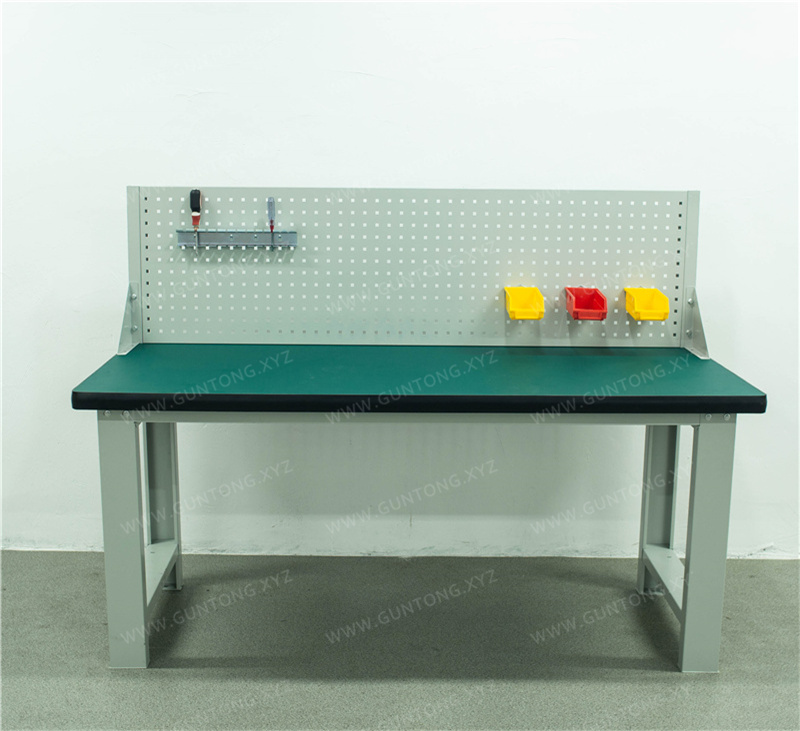
- Specify accessory needs: pegboards, drawers, casters, or ESD grounding points
- Review installation conditions: floor flatness, clearance, and utility routing
Guang'ErMei supports on-site workstation planning, load-bearing design, and 6S adaptation, with full-process after-sales service covering delivery, installation, and maintenance guidance. All technical parameters, including dimensions, load ratings, and material specifications, are subject to final model documentation and contract confirmation.
Next Steps for Procurement and Engineering Teams
If your facility is evaluating 201 stainless steel-wrapped workbenches for humid, clean, or mildly corrosive environments, start by mapping actual exposure conditions, load profiles, and cleaning routines against verified product specifications. Avoid assuming universal corrosion resistance across all stainless steel labels.
Guang'ErMei Precision Components provides standardized and custom workstation solutions for manufacturing, automotive, hardware mold, maintenance, warehousing, and training environments. For model-specific validation, material confirmation, or site layout consultation, contact our engineering support team to request technical documentation and configuration recommendations tailored to your operational requirements.