
Implementing 5S Tool Organization in Tool Carts: A Practical Configuration Guide for Workshop Teams
Who Needs 5S Tool Organization in Tool Carts
5S tool organization in tool carts is most relevant for manufacturing floors, maintenance bays, and testing labs where technicians share tools across shifts or move between workstations. Unlike fixed tool cabinets, mobile tool carts must balance accessibility, load safety, and visual management while being relocated daily. Teams in electronics assembly, automotive parts production, hardware mold maintenance, and vocational training centers commonly face this challenge.
The core problem is not a lack of storage space. It is the absence of a repeatable system that keeps tools sorted, labeled, and returned to designated positions—even when the cart is moved, tilted, or loaded near capacity.
Signals That Your Current Tool Cart Setup Is Failing 5S
Before selecting new equipment, evaluate whether your current carts show these warning signs:
- Sort failures: Drawers contain broken, obsolete, or duplicate tools that have not been removed in over 30 days.
- Set-in-order gaps: No dividers, foam cutouts, or shadow boards exist; tools shift during transport and pile up in corners.
- Shine breakdown: Metal shavings, oil residue, or debris accumulate in drawer bottoms because the interior is hard to access or clean.
- Standardize drift: Different carts on the same floor have different drawer layouts, making cross-shift handovers error-prone.
- Sustain collapse: Visual management labels peel off, pegboard hooks go missing, and no audit schedule exists.
If three or more of these signals are present, the issue is likely structural—not behavioral. The cart configuration itself must be redesigned.
Selection Criteria: Matching Cart Type to 5S Requirements
Drawer-Only Carts vs. Drawer-Plus-Pegboard Carts
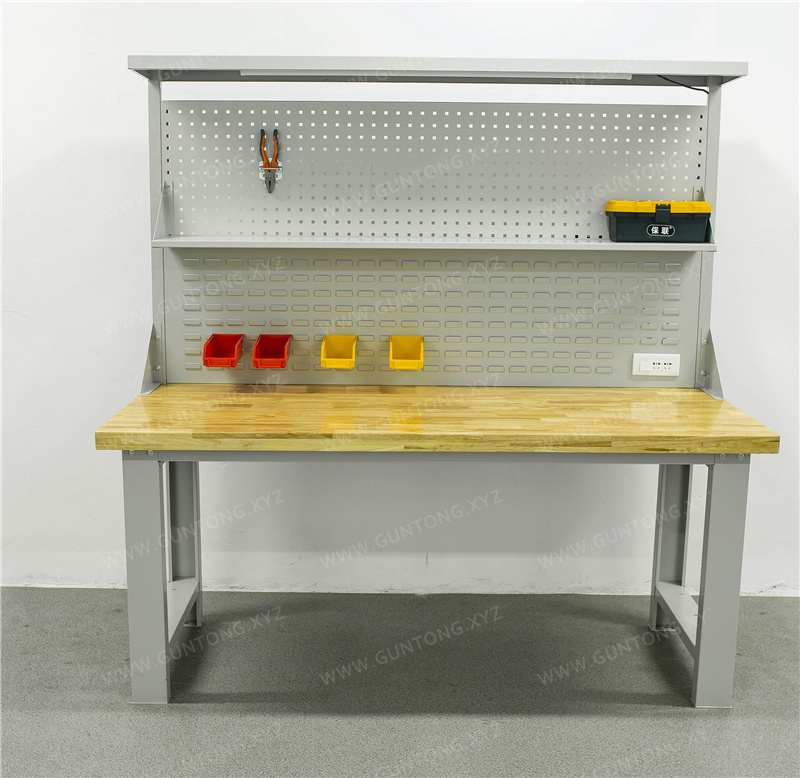
For 5S compliance, the cart must support both enclosed storage (drawers) and visual storage (pegboard or hanging panel). A drawer-only cart hides tools from view, which undermines the "Set in Order" and "Sustain" pillars. A cart with an integrated pegboard—such as a 4-drawer 1-door tool cart with a 500 mm square-hole pegboard—allows frequently used tools to be hung visibly while heavier or less-used items stay in drawers.
Load Capacity and Drawer Extension
Verify the per-drawer load rating before committing to a layout. Heavy-duty tool carts with stamped guide rails typically support up to 80 kg per drawer, with approximately 85% drawer extension. This matters for 5S because:
- Overloaded drawers sag, causing dividers to misalign and tools to jam.
- Partial-extension drawers force technicians to reach blindly into the back, breaking the "everything has a place" principle.
Always confirm the guide rail type and load rating per model, as these vary across configurations.
Caster and Brake Configuration
Mobile 5S carts must stay locked in position during use. A standard setup includes four-inch casters—two fixed and two swivel with brakes. If the cart will be used on inclined floors or near machinery vibration, verify that the brake mechanism holds under dynamic load. Unsecured carts drift, which breaks workstation positioning standards and creates safety hazards.
Material and Cleanability
Carts constructed from 1.0 mm cold-rolled steel with powder-coated finishes resist oil, coolant, and solvent exposure better than painted alternatives. For cleanroom-adjacent or food-grade environments, stainless steel workbenches and cabinets may be required instead. Confirm the material specification against your facility's contamination control policy.
Configuration Steps: Building a 5S-Ready Tool Cart
Step 1: Audit and Sort the Tool Inventory
Remove every tool from the existing cart. Discard or relocate broken, duplicate, or rarely used items. The remaining tools define the drawer and pegboard layout.
Step 2: Assign Locations by Frequency and Weight
- Top drawer or pegboard: High-frequency, lightweight tools (screwdrivers, pliers, calipers). These should be reachable without bending.
- Middle drawers: Medium-frequency, medium-weight tools (wrenches, sockets, small power tools). Use 100 mm or 150 mm drawer heights depending on tool profile.
- Bottom drawer: Low-frequency, heavy tools (hammers, large torque wrenches). Use 200 mm drawer height and ensure the 80 kg per-drawer limit is not exceeded.
- Pegboard panel: Tools used in every cycle, hung on square-hole hooks for instant visual confirmation of missing items.
Step 3: Install Physical Dividers and Shadow Foam
Use adjustable dividers or custom-cut foam inserts so that each tool has a unique, labeled slot. This is the physical enforcement of "Set in Order." Without dividers, tools migrate during cart movement and the system degrades within days.
Step 4: Label and Color-Code
Apply durable labels to drawer fronts and pegboard zones. Color-code by tool category (e.g., red for cutting tools, blue for measuring instruments) or by workstation assignment. This supports cross-shift standardization.
Step 5: Define the Audit Routine
Assign a 5-minute end-of-shift check: are all shadow slots filled? Are pegboard hooks occupied? Log deviations. Without this "Sustain" step, even well-configured carts revert to disorder within two weeks.
Boundaries and Risks
- Do not exceed rated drawer loads.*
- An 80 kg rating assumes even weight distribution. Concentrated point loads (e.g., a single heavy mold component) can deform the drawer base.
- Pegboard hooks are not universal.*
- Confirm that the square-hole spacing on your cart's pegboard matches the hook type you procure. Mismatched hooks fall out during transport.
- Non-standard cart dimensions require lead time.*
- Standard models may ship within 2–3 working days, but custom sizes or configurations typically require 7–10 working days for production. Plan rollout schedules accordingly.
- Caster wear is a sustain risk.*
- Inspect caster bearings and brake pads quarterly. Worn casters cause cart drift and misalignment with workstation markings.
Practical Example: A 4-Drawer 1-Door Cart for Maintenance Teams
A maintenance team supporting three production lines configured a 4-drawer 1-door tool cart with a 500 mm pegboard as follows:
- Drawer 1 (100 mm height): Precision measuring tools in foam cutouts—calipers, micrometers, feeler gauges.
- Drawer 2 (100 mm height): Fastener kits in compartmented trays, sorted by thread size.
- Drawer 3 (200 mm height): Hand tools—wrenches, pliers, hex keys—with adjustable dividers.
- Drawer 4 (200 mm height): Power tool and cord set, secured with a strap to prevent shifting.
- Cabinet door interior: Adjustable shelf for consumables (rags, lubricant, spare fuses).
- Pegboard (500 mm): Most-used tools hung on square-hole hooks with shadow outlines painted behind each tool.
This configuration supports one technician per shift, covers routine maintenance tasks, and passes a 5S audit in under 60 seconds.
Next Steps
If your workshop is planning a 5S rollout or upgrading existing tool carts, start by auditing your current tool inventory and mapping it against the drawer and pegboard configuration outlined above. For non-standard dimensions, specific load requirements, or multi-cart fleet standardization, contact Guang'ErMei Precision Components to discuss your workstation layout and confirm model specifications.