
Guang'ErMei Workshop Storage Locker Delivery Record: Configuration Verification and On-Site Acceptance Checklist
Delivery Scenario: Receiving Customized Workshop Storage Lockers
When a batch of customized workshop storage lockers arrives at a manufacturing facility, the receiving team faces a critical task: verifying that the internal configuration matches the original workstation planning requirements. For electronics assembly lines, automotive parts workshops, and hardware mold factories, a storage locker is not just a steel box. It is a core node in the 6S management system, directly affecting tool retrieval time, operator safety, and production flow.
Guang'ErMei Precision Components recently completed a delivery project involving multiple units of workshop storage lockers, including Pegboard Storage Cabinets (Inner Half-Pegboard Type) and 4-Drawer 1-Door Tool Carts with Pegboard. This record outlines the practical verification steps that procurement managers, workshop supervisors, and facility engineers should follow during on-site acceptance.
Step 1: Verify External Dimensions and Material Specifications
Before moving the equipment into position, the first checkpoint is dimensional accuracy and material compliance. Manufacturing environments often have strict aisle width limits and designated floor markings for 6S compliance.
- Dimensional Check:*
- Confirm the overall dimensions (Width × Depth × Height) against the approved layout drawings. For example, the standard Pegboard Storage Cabinet measures 1000 × 500 × 1800 mm, while the Tool Cart with Pegboard stands at 1000 × 500 × 850 mm (including the 500 mm pegboard height).
- Material Thickness:*
- Use a caliper or refer to the mill certificate to verify the cold-rolled steel thickness. Guang'ErMei cabinets typically use 1.0 mm or 1.2 mm cold-rolled steel for the main body to ensure structural rigidity under heavy-duty conditions.
- Surface Treatment:*
- Inspect the powder coating for uniformity, ensuring there are no bare spots or scratches that could lead to rust in humid workshop environments.
Step 2: Internal Configuration and Load Capacity Testing
The internal layout is where the real value of a customized storage locker lies. A mismatch in drawer heights or shelf spacing can render the unit useless for specific tool sets or mold components.
Drawer and Shelf Verification
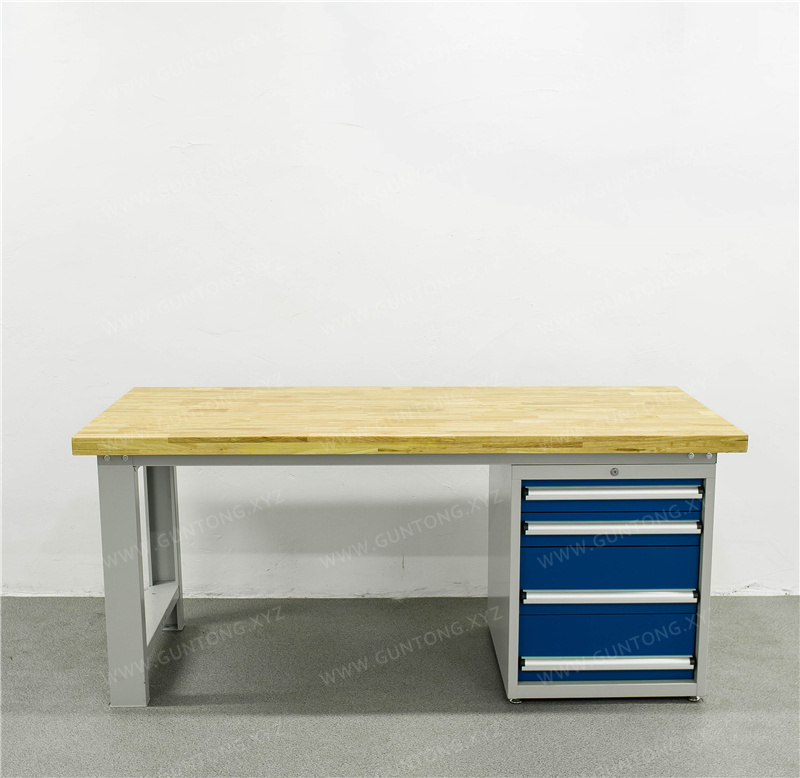
For units like the 4-Drawer Tool Cart, verify the drawer configuration. A common setup includes two 100 mm high drawers and two 200 mm high drawers. Open each drawer fully to check the slide mechanism and confirm the stamped steel divider slots are present for organizing small parts.
- Load Test:*
- Each drawer in the Guang'ErMei 4-drawer series is engineered for an 80 kg load capacity. During acceptance, place a representative weight (e.g., a box of metal fittings) inside and cycle the drawer 5–10 times to ensure the slides do not bind or deform.
- Shelf Adjustability:*
- For the Pegboard Storage Cabinet, check the 3 adjustable shelves. Each shelf should support up to 100 kg. Verify that the shelf clips lock securely into the column holes and that the inner half-pegboard structure on the upper section is firmly welded.
Pegboard and Visual Management
The 500 mm standard square-hole pegboard is essential for visual management. Ensure the holes are cleanly punched without burrs that could damage tool hooks. The dual pegboard layout on the cabinet doors should open smoothly without sagging, providing immediate visual access to frequently used hand tools.
Step 3: 6S Adaptation and Workstation Integration
A storage locker must integrate seamlessly into the existing workstation ecosystem. This involves checking compatibility with other equipment and ensuring it supports the facility's 6S (Sort, Set in order, Shine, Standardize, Sustain, Safety) protocols.
- Mobility and Locking:*
- For tool carts, test the casters. They must roll smoothly when loaded but lock securely when the cart is stationary at a fitter workbench.
- Grounding and ESD:*
- If the lockers are deployed in an electronics manufacturing area, verify that anti-static grounding chains or wrist strap jacks are installed and functional.
- Labeling and Shadow Boards:*
- Confirm that the square-hole pattern aligns with standard hook spacing, allowing for the immediate installation of shadow boards or labeled bins.
Risk Boundaries and Common Delivery Issues
Even with rigorous factory quality control, on-site conditions can introduce variables. Be aware of these common boundaries:
- Floor Levelness: Heavy-duty cabinets (loaded to 100 kg per shelf) require level floors. If the workshop floor is uneven, use adjustable foot cups or shims to prevent the cabinet from twisting, which can cause doors to misalign.
- Anchor Requirements: For tall units like the 1800 mm storage cabinet, seismic or safety regulations in certain regions may require floor anchoring. Ensure the pre-drilled anchor holes at the base match your facility's concrete anchor specifications.
- Clearance for Doors: When placing cabinets in tight aisles, ensure there is sufficient clearance for the doors to open fully (usually 180 degrees) without obstructing emergency exits or forklift paths.
Next Steps for Workshop Managers
Successful delivery is only the beginning of effective workstation management. Once the Guang'ErMei storage lockers are verified and positioned:
- Document the Configuration:*
- Take photos of the internal layout and create a "Tool Map" for each cabinet. This standardizes the "Set in order" phase of 6S.
- Schedule a 30-Day Review:*
- After one month of use, gather feedback from operators. Drawer dividers may need adjustment, or pegboard hooks may need repositioning based on actual workflow.
- Maintain the Slides:*
- Schedule quarterly lubrication for drawer slides and caster bearings to maintain the 80 kg load performance over the equipment's lifespan.
For teams planning a new workstation rollout or upgrading existing storage infrastructure, verifying these details during delivery ensures that the investment translates directly into operational efficiency.