Understanding the customization process from requirement alignment to delivery
Understanding the customization process from requirement alignment to delivery
Manufacturing enterprises, electronics manufacturers, automotive parts producers, and hardware mold factories face unique challenges when implementing workstation equipment. The customization process requires careful coordination between operational requirements, space constraints, and long-term productivity goals. Understanding the systematic approach from initial consultation to final delivery ensures optimal outcomes for your facility.
Initial Requirement Communication and Assessment
The customization process begins with comprehensive requirement analysis. Your team will work directly with Guang'ErMei's technical specialists to evaluate specific operational needs, including:
- Load capacity requirements: Assessing maximum weight loads for workbenches, tool carts, and storage systems
- Space utilization goals: Optimizing floor space for efficient workflow patterns
- Application-specific needs: Identifying requirements for electronics assembly, automotive parts handling, or mold storage
- Environmental considerations: Determining corrosion resistance, static control, or other specialized features
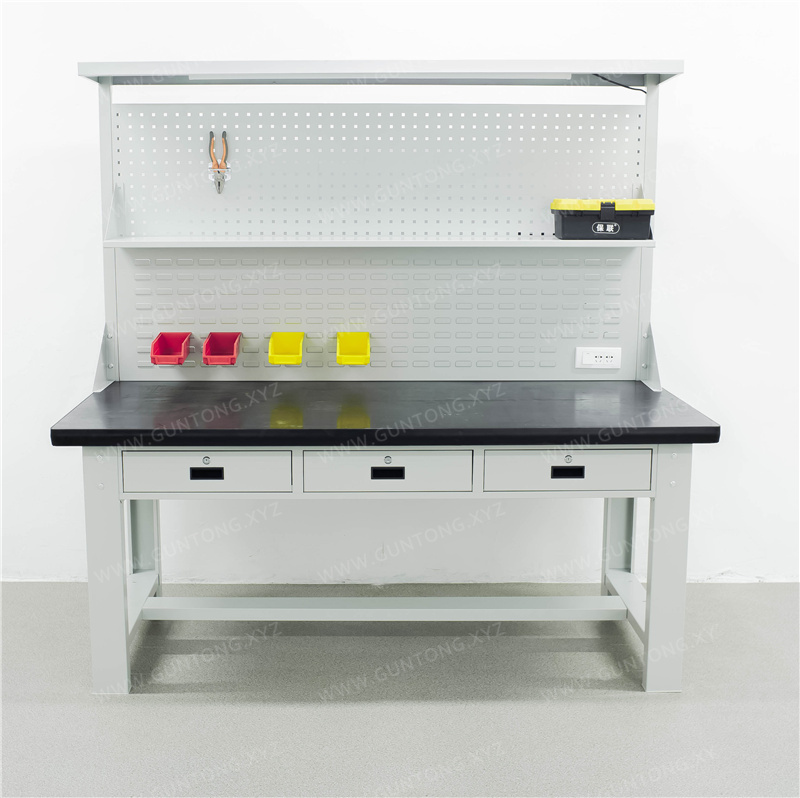
For example, the Single Back Panel Single Door 4-Drawer Steel Plate Workbench features a composite desktop structure of raw steel plate and high-density fiberboard with high load capacity and a C-type cold-rolled steel frame rated for total load capacity. This level of specification requires precise understanding of your operational demands.
Solution Design and Configuration Planning
Based on gathered requirements, the design phase focuses on creating customized solutions that balance standardized components with non-standard modifications. The design process includes:
- Layout optimization: Strategic placement of workbenches, tool cabinets, and storage systems
- Component selection: Choosing appropriate desktop materials, drawer configurations, and storage accessories
- Integration planning: Ensuring compatibility with existing equipment and workflows
- 6S compliance considerations: Incorporating visual management and organization standards
The 4-Drawer 1-Door Tool Cart with Pegboard demonstrates this approach, featuring a standard square-hole pegboard for flexible expansion and visual management, with load capacity per drawer and stable overall construction.
Production and Quality Assurance
Production follows established manufacturing protocols that maintain consistency across both standardized and custom configurations. Key production elements include:
- Material sourcing: Using specified cold-rolled steel, high-density fiberboard, and other required materials
- Quality control checkpoints: Verifying dimensional accuracy, load capacity, and structural integrity
- Custom modification integration: Implementing non-standard features while maintaining structural reliability
- Pre-assembly verification: Testing functionality before final packaging
The Pegboard Storage Cabinet (Inner Half-Pegboard Type) exemplifies this process, featuring cold-rolled steel construction with load capacity per shelf and three adjustable shelves designed for heavy-duty material storage.
On-Site Delivery and Setup Coordination
Delivery represents the critical final phase where theoretical designs become operational reality. Professional delivery services ensure proper setup and immediate functionality:
- Site preparation verification: Confirming adequate space, floor conditions, and utility access
- Systematic assembly: Following detailed procedures for complex multi-component installations
- Load testing and verification: Validating stated capacity ratings and safety margins
- User training and documentation: Providing operational guidance and maintenance schedules
Implementation Timeline and Project Management
Standard customization projects typically follow a defined timeline that accounts for design complexity and production capacity. Simple modifications may complete within weeks, while comprehensive facility-wide implementations require months of coordinated effort. Project management ensures milestone tracking and communication throughout the process.
Risk Mitigation and Quality Boundaries
Understanding implementation boundaries helps manage expectations and avoid common pitfalls:
- Load capacity limitations: All equipment has specified maximum loads that must not be exceeded
- Environmental constraints: Some materials and finishes have specific temperature or chemical exposure limits
- Modification boundaries: Non-standard changes may affect warranty coverage or structural integrity
- Space tolerance requirements: Precise measurements are essential for proper fit and function
Long-Term Support and Maintenance Considerations
The customization process extends beyond initial delivery to encompass ongoing support relationships. Full-process after-sales service includes routine maintenance, component replacement, and system modifications as operational needs evolve.
Next Steps for Implementation
Begin your workstation equipment customization by scheduling a comprehensive site assessment with Guang'ErMei's technical team. This initial consultation provides detailed understanding of your specific requirements and establishes the foundation for successful project execution.