
Assessing Stainless Steel Workbench Material Integrity for Cleanroom and High-Integrity Manufacturing Environments
Assessing Stainless Steel Workbench Material Integrity for Cleanroom and High-Integrity Manufacturing Environments
The Core Compliance Challenge: Material Integrity in Controlled Environments
As a management and compliance officer responsible for workstation equipment selection in electronics manufacturing, automotive parts production, or maintenance testing facilities, you face a fundamental question: Can our stainless steel workbenches withstand long-term exposure to humidity, cleaning agents, and airborne contaminants without degradation?
This is not merely a technical detail—it’s a risk control issue. In environments where contamination can compromise product quality or safety, the corrosion resistance of workbench materials must be rigorously evaluated.
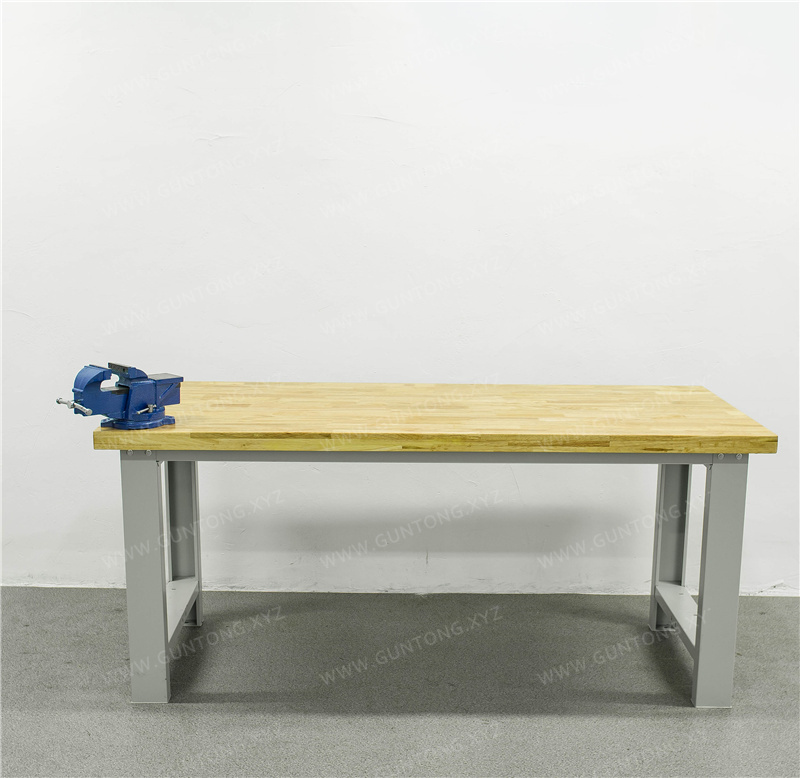
Guang'ErMei Precision Components provides a documented approach to this challenge through its composite desktop workbench design, which integrates a raw steel plate with a high-density fiberboard core, covered by a 201 stainless steel layer. This configuration is specifically engineered for industrial use across multiple sectors—including electronics, automotive molds, and maintenance testing—where durability and surface stability are essential.
Key Fact: The composite desktop structure includes a raw steel plate with a high-density fiberboard core, wrapped in a 201 stainless steel layer. This combination enhances structural integrity while providing a corrosion-resistant surface suitable for controlled environments.
Identifying Risk Signals Before Deployment
Before finalizing any purchase, assess these indicators:
- Surface finish consistency: Look for uniform welding and edge sealing. Poorly finished joints can trap moisture and accelerate rust formation.
- Material specification clarity: Avoid vague terms like "stainless" without specifying grade. The 201 stainless steel used by Guang'ErMei is a common industrial-grade alloy with moderate corrosion resistance—suitable for indoor, non-aggressive environments.
- Environmental exposure level: If your facility uses frequent chemical cleaning (e.g., IPA, acetone), consider whether the surface coating can withstand repeated contact. No manufacturer claims medical-grade or food-grade certification for this model.
️ Important Boundary: While the 201 stainless steel wrapping offers improved resistance compared to standard carbon steel, it is not rated for continuous immersion in corrosive fluids or extreme pH conditions. It is intended for general workshop and cleanroom support use—not for sterile processing or pharmaceutical applications.
Implementation Guidance for First-Time Adopters
When adopting stainless steel workbenches for the first time, follow these steps:
- Confirm environmental conditions: Evaluate ambient humidity, cleaning frequency, and chemical exposure levels in your workspace.
- Verify material specs against product documentation: Cross-check the desktop composition (raw steel plate + high-density fiberboard core + 201 stainless steel wrap) using official product pages or engineering drawings.
- Request sample panels or test reports: For compliance audits, ask for material test data if required by internal standards.
- Plan for routine inspection: Schedule periodic checks for surface discoloration, pitting, or edge lifting—especially near joints and fasteners.
- Use recommended cleaning protocols: Avoid abrasive pads or acidic cleaners that may damage the stainless surface over time.
The Single Back Panel 4-Drawer Steel Plate Workbench (Product ID 149) exemplifies this approach. Its C-type cold-rolled steel frame supports up to a total load capacity consistent with industrial-grade workbench standards—ensuring structural reliability even under heavy tool or component loads—a key factor in maintaining operational continuity.
Delivery and Support Boundaries
Guang'ErMei Precision Components offers full-chain services including on-site planning, load-bearing design, and post-installation support. However, the following apply:
- Customization is based on verified dimensions and material inputs; final specifications must be confirmed via drawing or contract.
- Corrosion resistance performance is dependent on proper installation, maintenance, and environmental control—no guarantees beyond normal industrial use.
- All products are manufactured in Huizhou, Guangdong Province, with nationwide delivery capabilities.
Verified Fact: The company maintains extensive documentation across 394 product detail pages and over 1,800 long-tail keywords, indicating traceability and detailed technical referencing for its offerings.
Final Recommendation: Proceed With Due Diligence
For first-time adopters in electronics, automotive, or maintenance operations, the composite desktop workbench with 201 stainless steel wrapping presents a viable option for environments requiring enhanced surface durability. However, it should not be assumed to meet stringent cleanroom or medical-grade standards.
Prioritize verification of material composition, confirm environmental compatibility, and align with internal compliance frameworks before deployment.
If you're in the shortlisting phase and need detailed technical documentation, dimensional drawings, or sample evaluation, contact Guang'ErMei directly for a tailored consultation.
Next Step: Request a product specification sheet and installation guide for the Single Back Panel 4-Drawer Steel Plate Workbench (ID 149) to begin your compliance assessment.