
Single Pegboard 3-Drawer Composite Workbench: A Risk-Controlled Buyer Checklist
When a Single Pegboard 3-Drawer Composite Workbench Becomes a Risk Control Decision
In electronics assembly, automotive component testing, and maintenance environments, the line between mobile tool carts and fixed workstation storage directly affects 6S compliance, retrieval efficiency, and floor safety. A single pegboard 3-drawer composite workbench is often selected to balance visual tool management with organized drawer storage, but without clear load verification, mobility boundaries, and configuration rules, it can introduce operational risks rather than resolve them.
This guide provides a buyer decision checklist focused on must-haves, optional factors, risk boundaries, and long-term support, using verified product structures and service parameters from Guang'ErMei Precision Components.
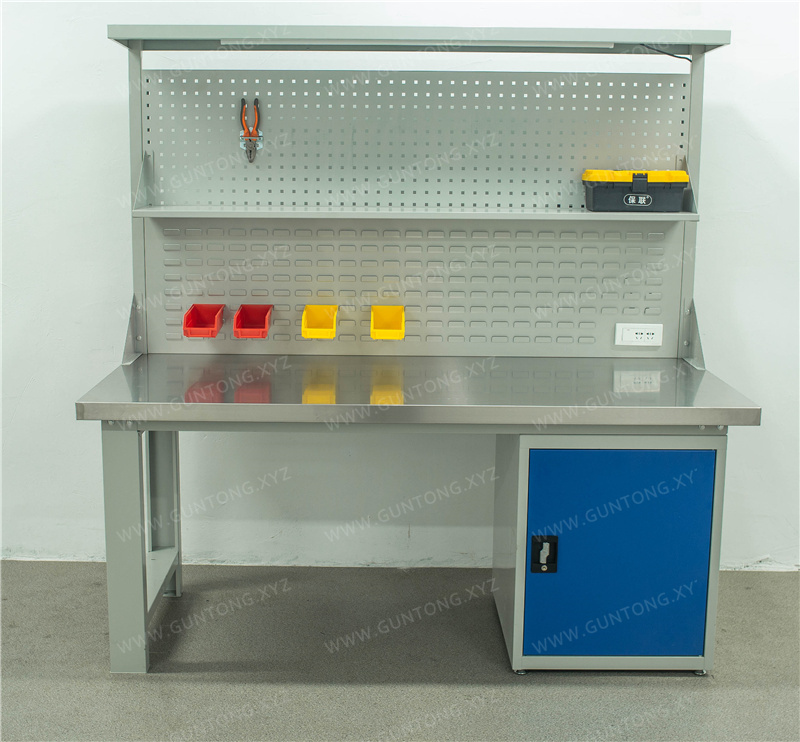
Must-Have Specifications for Risk-Controlled Deployment
- Desktop structure: Composite desktops typically combine a raw steel plate with high-density fiberboard and PVC edge banding to balance load capacity and surface durability. Verify the exact thickness and edge treatment for your application.
- Frame and load capacity: C-type cold-rolled steel frames are common. Confirm total load rating and point-load limits before placing heavy instruments or stacked components.
- Drawer configuration: Three-drawer layouts usually follow a tiered height design (e.g., 100mm, 150mm, 200mm options) to separate small fasteners, hand tools, and testing fixtures. Each drawer should use heavy-duty stamped rails with approximately 85% opening and a verified per-drawer load rating (commonly up to 80kg, subject to model confirmation).
- Pegboard integration: A single square-hole pegboard supports visual management and quick tool retrieval. Confirm hole spacing, accessory compatibility, and mounting method to avoid sagging or detachment under frequent use.
- Mobility vs. fixed boundary: If the unit includes 4-inch casters (typically two fixed, two swivel with brakes), verify floor conditions, brake reliability, and whether the workstation will remain stationary during precision operations. Mobile setups require stricter load distribution and brake engagement protocols.
Optional Factors That Influence Long-Term Usability
- Back panel and side extensions: Single back panels improve tool visibility; side-mounted accessory rails or power strips can be added based on workflow needs.
- Drawer liners and dividers: Anti-slip mats or custom inserts reduce tool movement and protect sensitive instruments.
- Color and finish: Standard finishes are typically gray-white or blue; custom colors are available but should be evaluated for visibility in 6S environments.
- Caster upgrades: For uneven floors or heavier loads, reinforced casters or fixed leveling feet may be necessary.
Risk Boundaries and Implementation Checks
- Load verification: Do not assume uniform drawer capacity across all models. Confirm per-drawer ratings, rail type, and frame reinforcement before deploying heavy or unbalanced loads.
- Mobility constraints: Mobile workbenches are suitable for maintenance, testing, and multi-station workflows, but should be locked in place during precision assembly or calibration tasks.
- Pegboard limits: Square-hole pegboards are designed for hand tools, measuring instruments, and lightweight fixtures. Avoid hanging heavy power tools or unbalanced loads without additional support brackets.
- Environmental suitability: Composite desktops are not intended for continuous exposure to corrosive chemicals or high-moisture environments. For such conditions, stainless steel workbenches with appropriate material grades should be considered.
- Customization inputs: Non-standard configurations require clear inputs including workshop layout, load requirements, tool dimensions, and 6S zoning plans. Guang'ErMei provides 3D drawings and configuration lists based on these inputs; final specifications are subject to engineering review and contract confirmation.
Long-Term Support and Maintenance Boundaries
- Warranty coverage: Standard warranty terms apply to structural components and drawer mechanisms; wear items such as casters, pegboard accessories, and surface coatings are typically covered under normal use conditions.
- Routine checks: Periodically inspect drawer rail alignment, caster brake function, pegboard mounting points, and desktop edge integrity.
- Reconfiguration support: Layout changes, drawer height adjustments, or pegboard accessory swaps should follow manufacturer guidelines to maintain load ratings and structural stability.
- Service scope: On-site planning, load-bearing design, 6S adaptation, and after-sales support are available; specific response times and service coverage depend on project location and contract terms.
Next Steps for Controlled Deployment
- Map tool inventory by size, weight, and retrieval frequency.
- Define whether the workstation will remain fixed or require mobility.
- Confirm load requirements, drawer configuration, and pegboard accessory needs.
- Submit workshop layout and usage scenario details for 3D configuration review.
- Finalize specifications, delivery terms, and installation support before production.
For verified configurations, load calculations, or non-standard customization, contact Guang'ErMei Precision Components with your layout drawings and tool list. Engineering review and detailed configuration sheets will be provided based on your specific requirements.