
Securing and Protective Inspections Before Tool Cabinet Packaging and Shipping: A Guang'ErMei Dispatch Log
Decision Memo: Pre-Shipment Inspection for Tool Cabinets
Objective: Ensure every tool cabinet, pegboard storage cabinet, and drawer-equipped workstation unit leaves the Guang'ErMei Huizhou facility in a condition that survives transit and arrives ready for immediate workshop deployment.
Audience: Manufacturing procurement teams, warehouse managers, and workshop planners at electronics, automotive parts, and hardware mold factories who need to understand what quality gates their workstation equipment passes through before dispatch.
The Problem: Transit Damage and Missing Components
Workshop tool cabinets—particularly units with drawers, pegboards, and adjustable shelves—face two primary risks during logistics handling:
- Structural shifting. Drawer slides, pegboard panels, and shelf brackets can loosen under vibration if not internally secured.
- Surface and edge damage. Cold-rolled steel surfaces, PVC edge banding on composite desktops, and powder-coated finishes are vulnerable to scratches and dents when packaging contact points are insufficient.
For buyers receiving equipment at remote manufacturing sites or vocational training centers, discovering damage or missing hardware after delivery means project delays and rework. A disciplined pre-packaging inspection protocol is the most effective control point.
Evidence: What the Guang'ErMei Dispatch Log Covers
Based on our internal quality control framework and the product configurations we manufacture, the following inspection stages are applied before any tool cabinet is cleared for packaging.
1. Structural Frame and Load-Bearing Verification
Every cabinet body—whether a Pegboard Storage Cabinet (Inner Half-Pegboard Type) constructed from 1.0 mm or 1.2 mm cold-rolled steel, or a 4-Drawer 1-Door Tool Cart with Pegboard—undergoes a frame alignment check. Inspectors confirm:
- Squareness of the welded or bolted frame within tolerance.
- That all load-bearing shelves (rated at 100 kg per shelf on our standard pegboard storage cabinets) sit level and lock securely into their adjustable positions.
- Drawer slide rails operate smoothly under the rated 80 kg per-drawer load without binding or lateral play.
Units that fail alignment or load smoothness checks are returned to the assembly bench before packaging is considered.
2. Drawer, Door, and Moving Part Securing
This is the step most directly tied to transit survival. Before a cabinet is wrapped:
- All drawers are closed and secured with internal transit locks or adhesive restraints to prevent them from sliding open under vibration.
- Cabinet doors are latched and, where applicable, taped at the hinge side to prevent swinging.
- On the Single Back Panel Single Door 4-Drawer Steel Plate Workbench, the single door and four tiered drawers (configured in 100 mm and 200 mm heights) are each individually restrained.
- Caster-equipped tool carts have wheel brakes engaged and, for long-distance shipments, casters are wrapped or blocked to prevent rolling inside the crate.
3. Surface Protection and Edge Guarding
Cold-rolled steel cabinets with powder-coated finishes require corner and edge protection. Our packaging protocol includes:
- Foam or corrugated corner guards on all eight external corners of freestanding cabinets.
- Protective film on large flat panels—particularly the 500 mm square-hole pegboard surfaces that are prone to visible scratching.
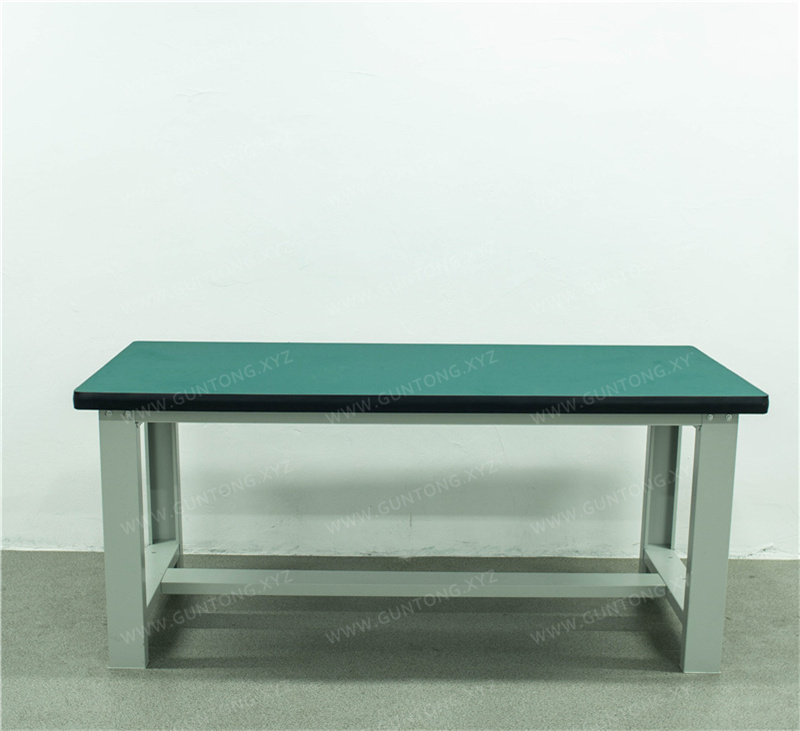
- For workbenches with composite desktops (5 mm raw steel plate + 45 mm high-density fiberboard with black PVC edge banding), the desktop surface receives a separate protective layer to prevent the steel plate from contacting the cabinet body during transit.
4. Accessory and Hardware Completeness Audit
A missing bag of bolts or a set of shelf clips can stall an entire workshop installation. Before sealing, the packing team cross-references the unit's bill of materials against the hardware kit placed inside the packaging:
- Adjustable shelf clips and pegboard hooks (where included).
- Assembly fasteners for bolt-together frame variants.
- Leveling feet or caster mounting hardware.
- Product documentation and installation guides.
Each kit is counted, bagged, and taped to an interior panel so it cannot shift to the bottom of the crate and be mistaken for packing debris.
5. Final Packaging and Labeling
The outer packaging is selected based on the unit's dimensions and weight. For a standard 1000 × 500 × 1800 mm pegboard storage cabinet, this typically means a reinforced corrugated carton with internal foam blocking. Larger or heavier units, such as 2100 mm steel plate workbenches, may require wooden crate framing.
Labels include product model, orientation arrows, handling weight, and destination information. For shipments to manufacturing sites across Guangdong Province and nationwide, logistics labels are matched against the dispatch order to prevent misrouting.
Alternatives Considered and Why They Were Rejected
| Approach | Limitation |
|---|---|
| Skip internal securing, rely on outer packaging alone | Drawer slides and pegboard panels still shift; high field damage rate |
| Fully disassemble units for flat-pack shipping | Increases on-site assembly time and risk of incorrect reassembly by customer |
| Generic packaging without model-specific hardware kits | Missing components cause installation delays; customer dissatisfaction |
Our current protocol balances transit protection with the customer's need for rapid deployment. Most cabinets arrive as near-complete assemblies requiring only leveling and shelf-position adjustments.
Risk Boundaries and Limitations
- Customer-side handling. Once the carrier accepts the shipment, handling conditions are outside our direct control. We recommend that receiving teams inspect outer packaging for visible damage before signing the delivery receipt and photograph any concerns immediately.
- Non-standard configurations. Heavily customized cabinets—such as units with non-standard dimensions or specialized automotive parts turnover rack integrations—may require bespoke packaging solutions. These are scoped during the design phase, not at the dispatch stage.
- Environmental exposure. Standard corrugated and foam packaging protects against mechanical damage but is not rated for prolonged outdoor storage. Cabinets should be moved indoors promptly upon delivery.
Recommendation for Buyers
If you are evaluating workstation equipment suppliers, ask specifically about their pre-packaging inspection protocol. A supplier who can describe drawer securing methods, surface protection details, and hardware completeness checks is more likely to deliver equipment that installs without surprises.
For Guang'ErMei customers with upcoming orders: if your site has specific receiving constraints—such as narrow doorways, limited unloading equipment, or staged delivery schedules—communicate these to our project team before dispatch so packaging and logistics can be adapted accordingly.
Next Steps
- Review our current Pegboard Storage Cabinet and 4-Drawer Tool Cart with Pegboard specifications to confirm configuration details before your order enters the packaging stage.
- Contact our Huizhou facility to discuss custom packaging requirements for non-standard workstation layouts or multi-site delivery schedules.
- Request a workstation planning consultation if you are outfitting a new production line or upgrading an existing workshop to 6S standards.