
Clarifying Load Constraints When Adapting Existing Storage Designs
Clarifying Load Constraints When Adapting Existing Storage Designs
When upgrading workshop or warehouse storage systems—especially during first-time adoption—enterprise decision-makers must prioritize structural integrity and long-term compliance. Misjudging load capacity can lead to equipment failure, workplace hazards, and non-compliance with internal 6S standards or safety protocols.
This article provides a clear, step-by-step approach tailored for manufacturing enterprises, electronics/electrical appliance manufacturers, automotive parts producers, hardware mold factories, maintenance institutions, logistics operators, and vocational training centers. It focuses on real-world implementation based on verified product specifications from Guang'ErMei Precision Components.
Step 1: Identify the Equipment Type and Application Context
Before any adaptation, determine whether the system involves a composite workbench, tool cart, pegboard cabinet, or mold rack. Each has distinct load-bearing characteristics:
- Single Back Panel 4-Drawer Steel Plate Workbench: Designed for heavy-duty tool storage in production lines or repair bays.
- 4-Drawer 1-Door Tool Cart with Pegboard: Ideal for mobile tool management in assembly or maintenance zones.
- Pegboard Storage Cabinet (Inner Half-Pegboard Type): Suited for high-frequency access scenarios requiring both shelf stability and visual organization.
These applications are supported by Guang'ErMei’s full-chain service model, including on-site planning, load-bearing design, and 6S adaptation.
Step 2: Verify Load Capacity Using Verified Product Data
Never assume load limits. Always refer to official product specifications. Based on current documentation:
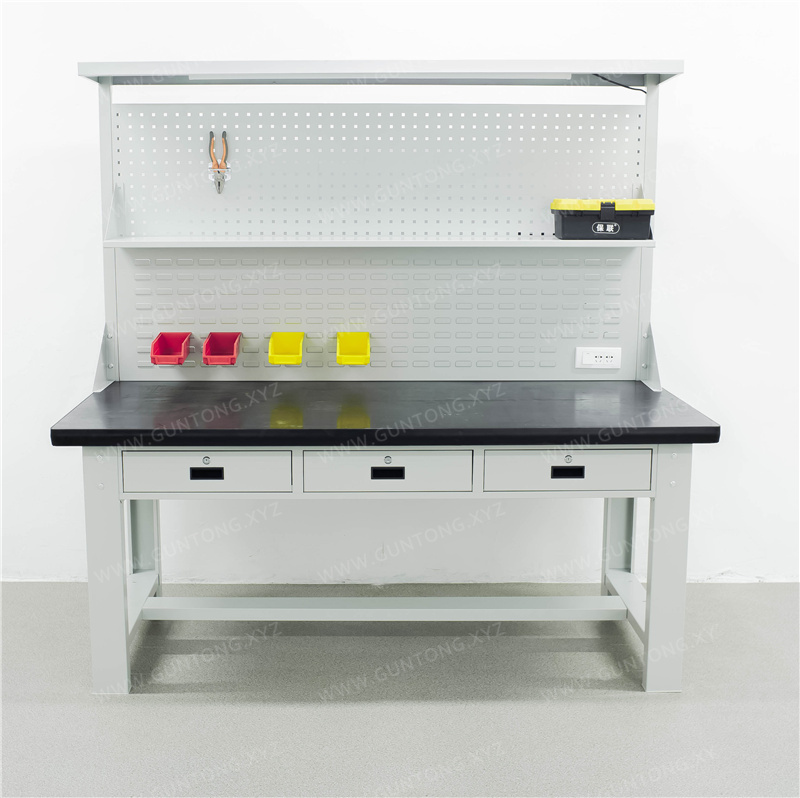
- The Single Back Panel 4-Drawer Steel Plate Workbench
- features a C-type cold-rolled steel frame with a total load capacity of 1000kg, suitable for environments where tools, materials, and components are stored at scale.
- The 4-Drawer 1-Door Tool Cart with Pegboard
- supports 80kg per drawer, ensuring stable performance even under repeated use.
- The Inner Half-Pegboard Storage Cabinet
- includes 3 adjustable shelves, each rated for 100kg load capacity, meeting demands in high-density material storage areas.
Note: These values are derived directly from product detail pages and technical specifications provided by Guang'ErMei Precision Components. Actual load performance depends on correct installation, floor condition, and usage patterns.
Step 3: Assess Structural Compatibility Before Modification
When adapting an existing layout—such as modifying a standard workbench into a multi-functional station—verify that:
- The original frame structure (e.g., C-type cold-rolled steel) remains intact.
- Mounting points align with new component additions (e.g., pegboards, drawers, or additional shelves).
- Floor surface supports distributed weight without deformation.
Any modification beyond factory-approved configurations should be reviewed by Guang'ErMei’s engineering team prior to installation.
Step 4: Align with 6S and Operational Workflow
Load capacity isn’t just about physics—it’s also about workflow efficiency. A well-designed workstation must support:
- Tool categorization via tiered drawer systems (e.g., 2×100mm + 2×200mm drawers).
- Visual management through square-hole pegboards (standard height configuration).
- Easy access and reorganization without compromising structural safety.
Guang'ErMei’s solutions integrate these principles across all product lines, enabling seamless alignment with 6S management practices in electronics, automotive, and mold manufacturing environments.
Step 5: Confirm Delivery and Installation Boundaries
While Guang'ErMei offers end-to-end services—including design, production, on-site installation, and after-sales support—certain conditions apply:
- Customized workbenches require final confirmation of dimensions, material thickness, and load requirements.
- On-site installation is available within Huizhou and Guangdong Province; nationwide delivery is supported but may involve extended lead times.
- Final load verification should occur post-installation, especially when integrating multiple components (e.g., tool carts with added pegboards).
️ Always confirm load-bearing details with the latest product drawing or contract specification. No guarantees are implied beyond documented parameters.
Conclusion: Prioritize Verification Over Assumption
For enterprise leaders initiating their first workstation customization project, the key takeaway is this: Do not rely on generic assumptions about load capacity. Instead, base decisions on verified product data and structured implementation steps.
By following these five steps—identifying equipment type, verifying load specs, assessing compatibility, aligning with workflow, and confirming delivery boundaries—you reduce risk, ensure compliance, and lay the foundation for efficient, safe operations.
Next Step: Request a Custom Design Review
If you’re planning a workstation upgrade or custom solution, contact Guang'ErMei Precision Components to schedule a free consultation. Our team will help validate your load requirements, recommend appropriate configurations, and provide a detailed proposal based on real product data.
Service coverage includes manufacturing customers in Huizhou and Guangdong Province, supporting nationwide customization and project delivery.