
How to Choose Stainless Steel Workbenches for Food Processing Plants: Configuration & Budget Trade-Offs
How to Choose Stainless Steel Workbenches for Food Processing Plants: Configuration & Budget Trade-Offs
Procurement managers in the food and beverage sector face strict hygiene, corrosion resistance, and structural durability mandates. When figuring out how to choose stainless steel workbenches for food processing plants, the decision extends beyond basic material selection. It requires balancing composite desktop configurations, frame load capacities, and long-term budget trade-offs. This field guide outlines the critical evaluation criteria and pricing factors to help you specify the right hygienic workstations without over-engineering your budget.
Operational Signals: When Standard Benches Fail
Before finalizing a purchase order, identify the specific operational signals that dictate the need for specialized stainless steel configurations over standard painted steel or wood:
- High-Moisture Washdown Zones:*
- Areas requiring daily high-pressure water cleaning or chemical sanitization.
- Acid and Alkali Exposure:*
- Processing lines handling acidic ingredients (e.g., citrus, vinegar) or utilizing alkaline cleaning agents.
- Strict Particulate Control:*
- Packaging or cleanroom environments where paint flaking or wood splintering poses a contamination risk.
Evaluation Criteria: Desktop and Frame Configurations
Desktop Construction and Thickness
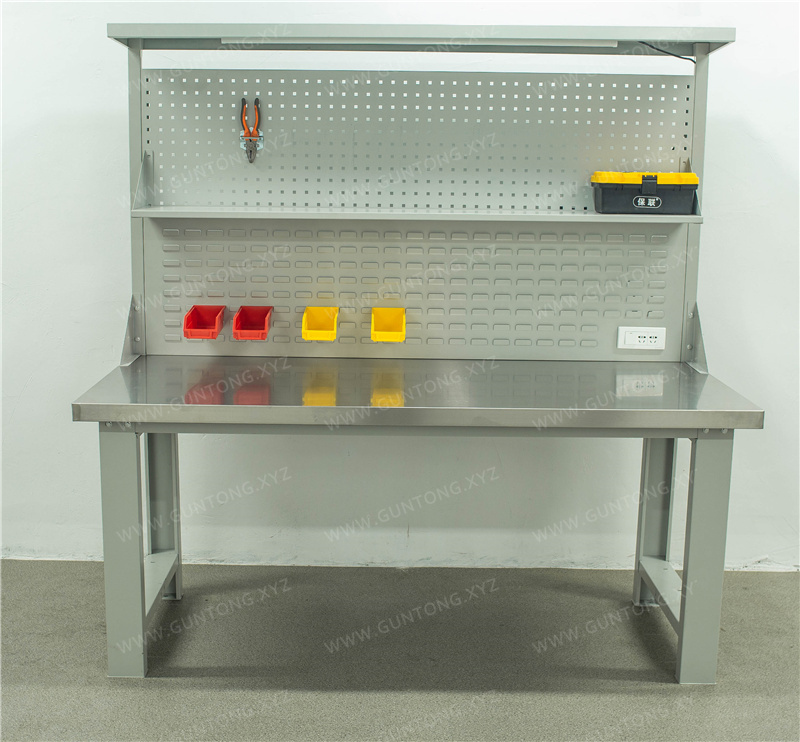
A common misconception is that solid steel tops are always superior. In reality, a composite structure offers optimal strength, noise reduction, and cost-efficiency. For demanding environments, a 50mm total thickness desktop constructed with a 1mm 201 stainless steel layer wrapping a 49mm high-density board (encasing all 5 sides) delivers high structural strength and excellent acid and alkali resistance, making it highly suitable for environments with strict dust and corrosion prevention requirements. This 5-sided wrapping prevents moisture from reaching the core while providing a seamless, easy-to-clean surface.
Frame Material and Load Capacity
The understructure must support heavy processing equipment, such as industrial mixers or vacuum sealers, without degrading. A robust configuration utilizes a 1.5mm high-quality cold-rolled steel frame capable of supporting up to 1000kg, treated with pickling, phosphating, and powder electrostatic spraying to ensure long-term rust prevention. This specific surface treatment is critical for preventing under-frame corrosion in humid processing facilities.
Budget Trade-Offs and Pricing Factors
When budgeting for food-grade workbenches, avoid focusing solely on the initial unit cost. Evaluate these key pricing factors:
- Steel Grade Selection:*
- 201 stainless steel is highly cost-effective and durable for general staging, packaging, and indirect contact zones. Upgrading to 304 stainless steel increases the upfront budget but is often mandatory for direct food contact surfaces or highly corrosive environments. Match the grade to the specific zone's regulatory requirements.
- Standard vs. Custom Dimensions:*
- Standard dimensions (e.g., 1500×750×800mm, 1800×750×800mm, 2100×750×800mm) benefit from manufacturing economies of scale and faster lead times. Non-standard customization—such as integrated drainage slopes, specialized cutouts for conveyor belts, or custom shelf heights—will increase fabrication costs.
- Accessory Integration:*
- Adding pegboards, under-shelves, or specialized drawer units improves 6S management and workflow efficiency but adds to the overall unit price. Prioritize accessories based on actual tool retrieval frequency.
Implementation Risks and Boundaries
- Moisture Ingress at Seams:*
- If the stainless steel wrapping lacks precision edge sealing, water from daily washdowns can penetrate the high-density core. This causes internal swelling and creates hidden harborage points for bacteria. Always verify the manufacturer's edge-banding and welding quality.
- Floor Gradient Instability:*
- Food plant floors are intentionally sloped for drainage. If workbench legs are not equipped with adjustable, rust-proof leveling feet, the workspace will be unstable, causing vibration issues for precision scales or liquid filling equipment.
- Galvanic Corrosion:*
- Avoid using standard carbon steel fasteners (screws, bolts) to assemble stainless steel components. The dissimilar metals will cause galvanic corrosion in wet environments, compromising structural integrity.
Next Steps for Procurement
Choosing the right stainless steel workbench for a food processing plant requires matching the physical and chemical demands of the environment with the correct composite desktop and treated steel frame. Guang'ErMei Precision Components provides both standardized and non-standard custom stainless steel workbenches, supporting on-site workstation planning and full-process after-sales service to ensure your facility meets operational and hygienic standards.