
Double Pegboard Stainless Steel Workbench | Guang'ErMei Precision Component Custom Model: A Practical Guide to Implement
Direct Answer
Implementing a double pegboard stainless steel workbench begins with defining retrieval frequency, environmental exposure, and load requirements before selecting frame structure, desktop material, and integrated storage modules. For high-frequency tool access in electronics assembly, automotive parts inspection, or maintenance laboratories, the process moves from site assessment to 3D layout drafting, followed by configuring C-type cold-rolled steel frames, corrosion-resistant surfaces, and compatible tool carts or pegboard cabinets to complete a standardized 6S workstation.
Scenario Signals: When This Configuration Fits Best
A double pegboard layout is most effective when operators need rapid visual management of frequently used tools without expanding floor space. The following signals indicate readiness for this implementation:
- High-moisture or chemical-exposure environments:*
- Electronics cleaning stations, automotive testing labs, and hardware mold maintenance areas benefit from stainless steel surfaces that resist corrosion and simplify wipe-down sanitation.
- Frequent tool rotation:*
- Assembly lines or repair bays where operators switch between screwdrivers, calipers, torque wrenches, and small fixtures require dual-sided pegboards for left/right reach optimization.
- 6S compliance targets:*
- Facilities aiming for standardized visual management can pair the workbench with square-hole pegboards (typically 500 mm height) and tiered storage to eliminate clutter and track item placement.
If your workshop prioritizes heavy stamping, welding spatter, or extreme point-load impact, a pure stainless steel top may require reinforcement or a composite alternative to maintain long-term flatness.
Implementation Actions: Configuration & Deployment Steps
The implementation process follows a structured sequence to ensure dimensional accuracy, load safety, and workflow alignment:
- Site Mapping & Workflow Audit
Measure available floor space, aisle clearance, and power/air line locations. Identify operator standing zones, material drop-off points, and adjacent equipment (e.g., CNC machines, testing rigs). Map daily task sequences to determine optimal pegboard height and drawer/cabinet placement.
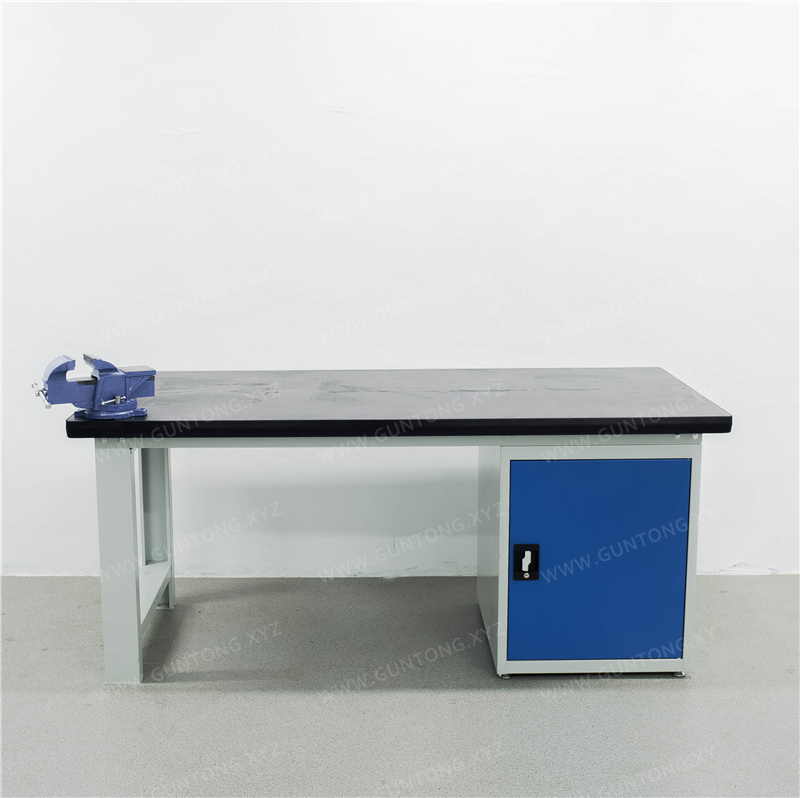
- Structural & Material Selection
Base configurations typically utilize a C-type cold-rolled steel frame for stability and vibration resistance. Desktop options depend on application intensity:
- Stainless steel cladding for moisture, oil, or chemical resistance.
- Composite desktops
- (e.g., 5 mm raw steel plate bonded to 45 mm high-density fiberboard with PVC edge banding) for balanced shock absorption and cost efficiency.
- Solid steel or reinforced alloy tops
- for heavy machining or die-setting tasks.
- Modular Integration & Load Verification
Pair the workbench with mobile or stationary storage units to complete the station. Integrated 4-drawer tool carts or inner-half-pegboard storage cabinets typically support 80 kg per drawer and feature stamped rails with ~85% opening depth. Verify total station load against frame ratings and ensure casters include locking mechanisms if mobility is required.
- 3D Layout Drafting & On-Site Installation
Guang'ErMei provides custom 3D modeling based on submitted floor plans, load specifications, and usage scenarios. Engineers validate clearances, pegboard expansion slots, and cable routing before fabrication. Standard configurations ship within 2–3 working days; non-standard layouts typically require 7–10 working days depending on material sourcing and assembly complexity.
Operational Boundaries & Risk Controls
Clear implementation boundaries prevent misapplication and extend equipment lifespan:
- Surface vs. Impact Trade-offs:*
- Stainless steel excels in hygiene and corrosion resistance but may dent under concentrated hammer strikes. For heavy manual assembly or mold grinding, specify a reinforced composite or solid metal desktop.
- Pegboard Expansion Limits:*
- Square-hole pegboards allow flexible accessory mounting, but excessive overhang or unbalanced tool weight can compromise frame rigidity. Distribute heavy items near cabinet joints or add lateral supports.
- Load Distribution Rules:*
- Frame capacity assumes even weight distribution across the desktop and shelves. Point loads exceeding rated limits should be supported by internal brackets or external stands.
- Delivery & Warranty Parameters:*
- Standard inventory ships rapidly, while custom dimensions, color finishes, or specialized rail systems follow production schedules. All manufactured workstation equipment carries a standard warranty period; exact terms apply to frame integrity, drawer mechanisms, and surface finishes.
Final engineering validation should always precede bulk ordering. Site-specific variables such as floor leveling, seismic zoning, or cleanroom classification may require supplementary anchoring or anti-static coatings.
Conclusion & Next Steps
A double pegboard stainless steel workbench delivers reliable 6S management, efficient tool retrieval, and durable surface performance when configured to match actual workshop demands. By following a structured implementation process—starting with scenario evaluation, progressing through material and load verification, and concluding with 3D layout approval—manufacturing teams can deploy workstations that reduce search time, minimize clutter, and scale with production changes.
For project-specific load calculations, desktop material recommendations, or custom 3D workstation planning, contact our engineering team with your floor plan and usage requirements. We will provide a detailed configuration list, lead-time estimate, and installation checklist tailored to your facility.