
How to Configure Drawer Storage on Stainless Steel Workbenches for Clean and Corrosive Environments
How to Configure Drawer Storage on Stainless Steel Workbenches for Clean and Corrosive Environments
Organizing storage on stainless steel workbenches with drawers requires aligning tool categorization with the specific anti-corrosion and dust-proof properties of the stainless steel surface, while strictly managing drawer load limits to protect the slide rails. The most effective approach is to implement a tiered storage system based on tool weight, usage frequency, and chemical exposure risks.
Understanding the Structural Boundaries of Stainless Steel Workbenches
Before organizing drawers, buyers must understand the physical limits of the equipment to prevent structural damage. According to Guang'ErMei's manufacturing specifications, a standard stainless steel workbench features a 50mm thick desktop, constructed with a 1.0mm 201 stainless steel layer wrapping a 49mm high-density board on all five sides. This design provides high strength and resistance to acids and alkalis. The C-type frame, made of 1.5mm high-quality cold-rolled steel, supports a total load capacity of up to 1000kg.
Boundary Condition: While the overall frame supports 1000kg, individual drawers typically have lower load limits (e.g., 50kg to 80kg per drawer). Overloading a single drawer will deform the slide rails, compromising the smooth operation required in precision environments.
Step-by-Step Drawer Organization for Specific Environments
Stainless steel workbenches are primarily deployed in environments with strict dust-proof and anti-corrosion requirements, such as electronics assembly, medical device manufacturing, and laboratory testing. The organization strategy must adapt to these specific scenarios.
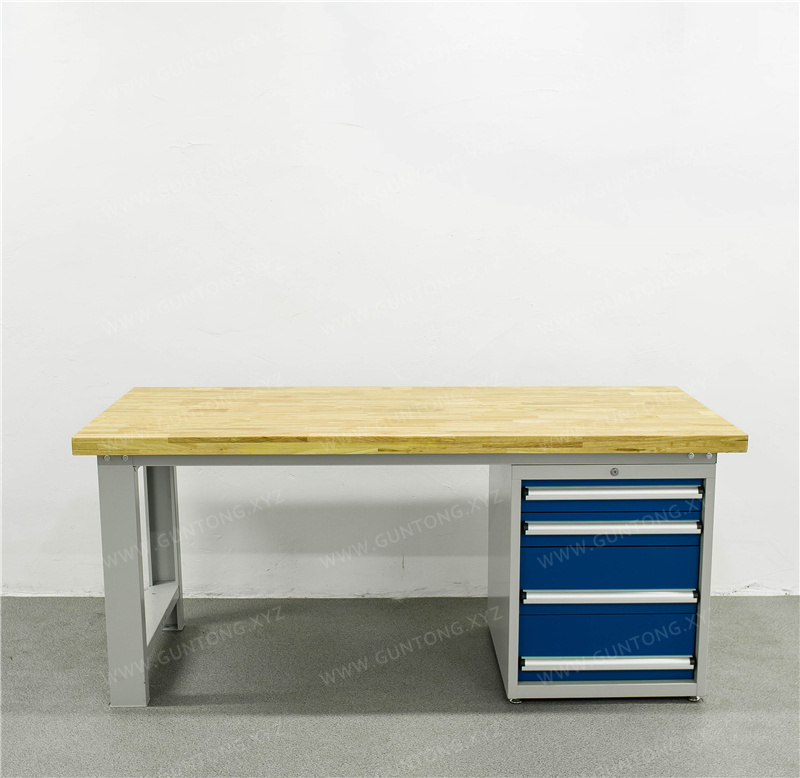
Scenario A: Electronics and Precision Assembly (Dust-Proof Focus)
- Top Drawers:*
- Store lightweight, high-frequency precision tools (e.g., tweezers, calipers, micro-screwdrivers). Use custom EVA foam shadow boards to implement 6S visual management. This prevents tools from shifting and makes missing items immediately visible.
- Middle Drawers:*
- Organize consumable components in anti-static partitioned bins. Ensure bins are sized to prevent excessive movement when the drawer is opened or closed.
- Bottom Drawers:*
- Reserve for heavier testing equipment or backup inventory, keeping the center of gravity low to maintain workbench stability.
Scenario B: Laboratory and Hardware Testing (Anti-Corrosion Focus)
- Chemical Isolation:*
- Never store open containers of corrosive liquids or harsh solvents directly in standard steel drawers. Use sealed, secondary containment trays within designated lower drawers to prevent accidental spills from reaching the drawer slides.
- Tool Separation:*
- Separate carbon steel tools from stainless steel tools to prevent cross-contamination and rust transfer. Use removable plastic dividers that can be easily washed and sanitized.
Configuration and Customization Options
Guang'ErMei Precision Components offers non-standard customization for workshop equipment. When specifying drawers for stainless steel workbenches, consider the following configurations to maximize efficiency:
- Drawer Heights:*
- Mix shallow drawers (e.g., 100mm) for small instruments with deeper drawers (e.g., 200mm) for bulky testing devices. This prevents wasted vertical space.
- Internal Dividers:*
- Opt for adjustable galvanized or plastic dividers rather than welded steel partitions, allowing flexibility as your tool inventory changes.
- Locking Mechanisms:*
- In shared lab or cleanroom environments, specify central locking systems to secure calibrated instruments when not in use, ensuring compliance with quality management standards.
Implementation Risks and Maintenance Boundaries
To ensure the longevity of your stainless steel workbench and its drawer systems, adhere to the following maintenance boundaries:
- Weld Point Protection:*
- Although the 201 stainless steel surface is acid and alkali resistant, the welded joints of the drawer slides are vulnerable. Wipe up spills immediately to prevent localized corrosion.
- Weight Distribution:*
- Always distribute weight evenly across the drawer bottom. Placing a heavy concentrated load in the center of a wide drawer can cause the bottom panel to sag over time.
- Cleaning Protocols:*
- Avoid using chlorine-based cleaners on the stainless steel surfaces and drawer fronts, as they can degrade the protective oxide layer. Use specialized stainless steel cleaners and microfiber cloths.
Next Steps for Workstation Customization
Properly organizing storage on a stainless steel workbench extends the equipment's lifespan and ensures compliance with strict environmental standards. By respecting load capacities and implementing targeted 6S management inside the drawers, facilities can maintain a highly efficient and compliant workspace.
If your current workstations do not meet the specific dimensional or load-bearing requirements of your cleanroom or lab, Guang'ErMei Precision Components can help. With 18 years of industry experience, we provide one-stop workstation equipment solutions, from on-site planning to non-standard customization and installation. Contact our engineering team to discuss your specific drawer configuration and stainless steel workbench needs.