
Verifying Beech Workbench Stability Before Mold Debugging Deployment
Verifying Beech Workbench Stability Before Mold Debugging Deployment
For manufacturing enterprises, automotive parts manufacturers, and hardware mold factories implementing new workstations, confirming structural integrity before deployment prevents costly precision errors in mold debugging operations. This technical assessment protocol provides measurable verification criteria for finger-jointed beech workbenches with C-type cold-rolled steel frames.
Critical Verification Points for Mold Debugging Precision
Tabletop Surface Integrity Assessment
Finger-jointed beech tabletops require specific verification to ensure measurement accuracy:
- Joint Alignment Inspection: Examine finger joints for consistent spacing and flush surfaces using straightedges
- Surface Flatness Measurement: Verify deviation tolerance across the entire working surface using precision levels
- Material Consistency Check: Confirm uniform density and grain pattern throughout the tabletop
Frame Structural Verification
C-type cold-rolled steel frames must demonstrate stability under anticipated loads:
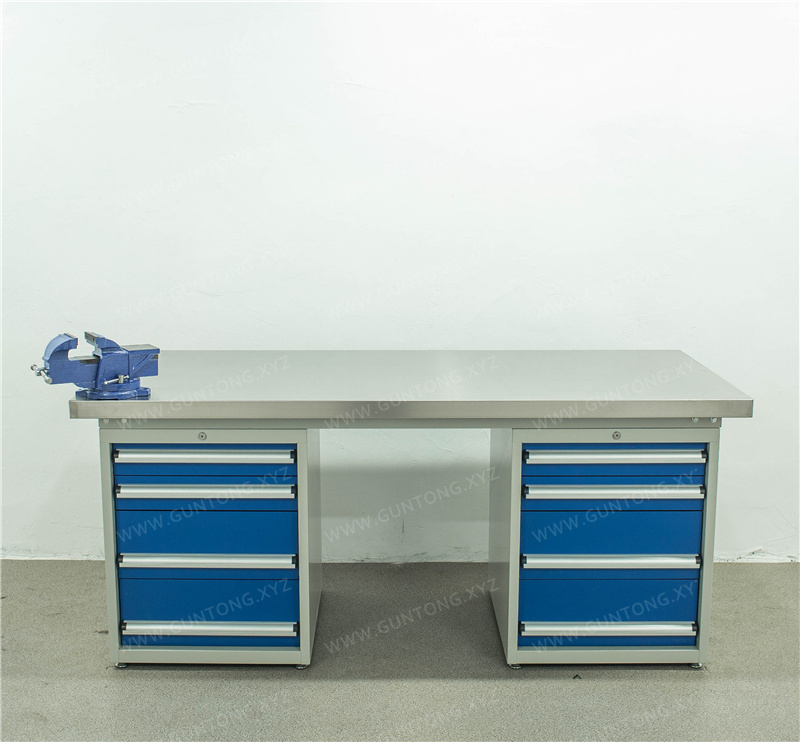
- Frame Squareness Confirmation: Measure diagonal dimensions to verify structural alignment
- Joint Integrity Examination: Inspect welded connections and mounting points for consistent quality
- Load Distribution Testing: Apply incremental weights to confirm even stress distribution
Step-by-Step Verification Protocol
Step 1: Pre-Deployment Visual Inspection
- Surface Condition Documentation: Photograph and note any visible imperfections in the beech tabletop
- Frame Construction Verification: Confirm C-type cold-rolled steel construction matches specification requirements
- Component Integration Check: Verify proper installation of single pegboard, drawers, and bottom pull rail
Step 2: Functional Precision Testing
- Measurement Surface Validation: Place precision instruments across the tabletop to identify any deviation points
- Static Load Performance: Apply weights equivalent to typical mold debugging fixtures to observe deflection
- Accessory Integration Testing: Operate drawers and test pegboard mounting under load conditions
Step 3: Environmental Stability Assessment
- Material Response Evaluation: Monitor tabletop behavior under typical workshop temperature and humidity conditions
- Long-term Performance Projection: Assess how seasonal variations might affect measurement accuracy
- Maintenance Requirement Identification: Document any adjustments needed for sustained precision
Implementation Boundaries and Technical Constraints
Technical evaluators should recognize these operational limitations:
- Material Characteristics: Beech wood exhibits natural movement that cannot be eliminated, only managed
- Frame Capacity: C-type frames have maximum load thresholds that must be respected (referencing standardized designs)
- Integration Complexity: Additional components like pegboards and drawers introduce potential stability variables
For facilities implementing 6S management systems, verification procedures should accommodate visual management requirements while maintaining focus on structural integrity for precision mold work.
Next Steps for Confirmed Deployment
After successful verification, manufacturing operations should:
- Document Verification Results: Create detailed records of all test outcomes and measurement data
- Establish Baseline Performance Metrics: Record initial conditions for future comparison and maintenance scheduling
- Develop Ongoing Monitoring Protocol: Implement regular assessment intervals to maintain precision standards
For operations with multiple workstations, establish consistent verification protocols across all precision work areas, particularly when managing mixed standardized and custom-configured equipment.
Maintenance and Re-verification Schedule
Implement regular assessment intervals:
- Initial deployment verification before first use
- Monthly visual inspections of joint integrity and surface condition
- Quarterly precision validation under controlled conditions
- Annual comprehensive structural re-evaluation