
Guang'ErMei Annual Quality Review: How We Audit Workstation Equipment Before Year-End Delivery
Manufacturing buyers planning year-end workstation upgrades often ask: How does Guang'ErMei ensure that workbenches, tool cabinets, and warehouse shelving meet load-bearing and 6S requirements before delivery? The Guang'ErMei annual quality review is our internal audit cycle that answers this question. It focuses on verifying product consistency, identifying process improvements, and aligning our standardized and non-standard customization lines with real workshop conditions.
This article outlines what the review covers, which product categories are affected, and how buyers in electronics, automotive parts, and hardware mold factories can use this information when scheduling their next workstation project.
Who This Review Affects
The annual quality review primarily impacts buyers who source workshop workstation equipment, warehousing equipment, and industrial supporting equipment from Guang'ErMei. This includes:
- Electronics and electrical appliance manufacturers
- requiring anti-static workbenches and lean pipe assemblies.
- Automotive parts manufacturers
- ordering turnover racks and heavy-duty mold tables.
- Hardware mold factories
- specifying high-load mold racks and fitter workbenches.
- Warehousing and logistics enterprises
- deploying warehouse shelving and tote-based automated storage and retrieval system (Miniload) accessories.
- Vocational college training centers
- outfitting practical training labs with standardized tool cabinets and tool carts.
If your facility falls into one of these categories and you are evaluating year-end procurement, the review outcomes directly influence lead times, customization options, and installation scheduling.
What the Annual Quality Review Covers
The review is structured around three audit tracks. Each track targets specific product lines and operational constraints.
Track 1: Load-Bearing and Structural Verification
Workbenches and mold racks must perform under sustained static and dynamic loads. During the review, we re-examine:
- Welding consistency on heavy-duty workbench frames.
- Load distribution across mold rack beams and automotive parts turnover rack structures.
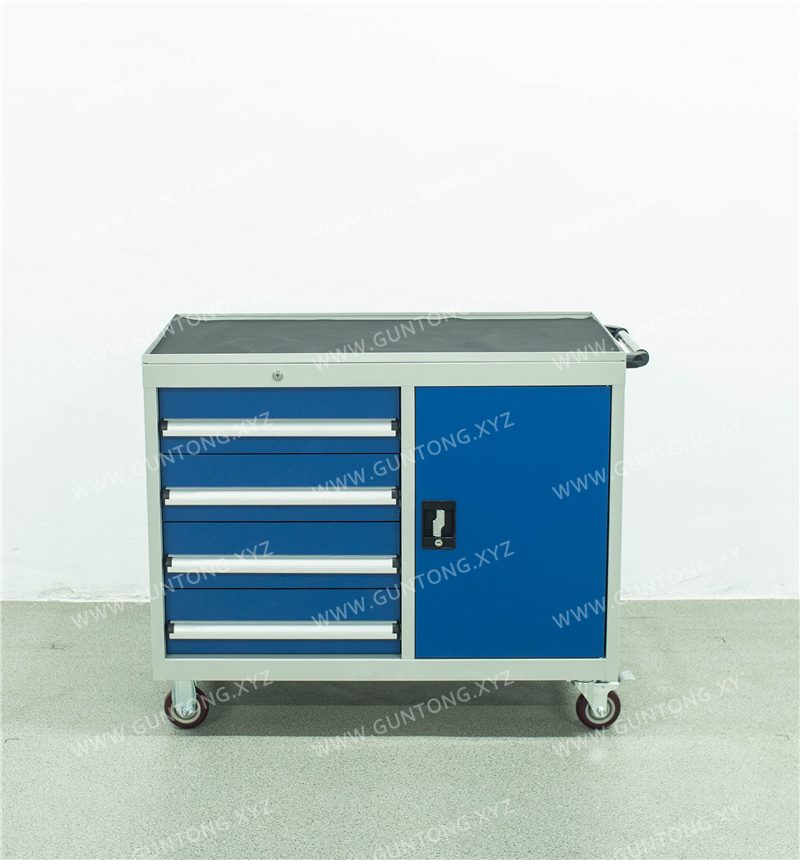
- Fastener torque specifications for modular tool cabinets and tool carts.
For automated storage and retrieval system accessories, we verify that tote-based Miniload components maintain alignment within rack heights up to 12 meters and support tote loads in the 50–100 kg range. Any deviation triggers a process correction before the next production batch.
Track 2: Surface Treatment and Material Compliance
Stainless steel workbenches and anti-static workbenches require specific surface finishes to meet workshop hygiene and ESD standards. The review audits:
- Stainless steel grade consistency across worktop and frame batches.
- Anti-static matting adhesion and grounding continuity on ESD workbenches.
- Powder coating thickness and curing uniformity on tool racks and warehouse shelving.
Buyers in electronics manufacturing should note that surface treatment audits are especially relevant when specifying cleanroom-adjacent or static-sensitive assembly stations.
Track 3: Non-Standard Customization Fit Check
A significant portion of our output involves non-standard customization—workbenches sized to specific cell layouts, tool cabinets with custom drawer configurations, and lean pipe racks adapted to unique workflow geometries. The review examines:
- Dimensional accuracy of custom-cut components against approved drawings.
- Compatibility of custom tool management equipment with standard modular accessories.
- On-site installation clearance for large-scale mold tables and turnover racks.
This track ensures that custom orders do not drift from the tolerances established during the design and quoting phase.
How the Review Affects Your Procurement Timeline
Buyers often wonder whether the annual quality review delays orders. The practical answer depends on when your project enters our production queue.
| Project Phase | Impact of Annual Review |
|---|---|
| Quoting and design | Minimal. Review findings may lead to updated material recommendations or revised load-bearing calculations, which improve accuracy but do not delay initial proposals. |
| In production | Orders already in production are subject to re-inspection at the next checkpoint. This may add a short verification step but prevents field failures. |
| Scheduled for installation | Installation teams receive updated checklists reflecting review outcomes. On-site workstation planning and 6S adaptation plans are adjusted if necessary. |
For buyers planning Q1 workstation deployments, initiating design consultations before the review cycle closes allows your project to incorporate the latest process improvements without schedule compression.
Trade-Offs Buyers Should Understand
The annual quality review strengthens product reliability, but it also surfaces trade-offs that buyers should weigh:
- Standardized vs. custom lead times.*
- Standardized workbenches and tool cabinets move through review faster because their specifications are fixed. Non-standard customizations require additional verification cycles, which can extend lead times by a measurable margin.
- Cost of re-inspection vs. cost of field failure.*
- Re-inspecting a batch of heavy-duty workbenches before shipment adds internal cost but avoids the far greater expense of on-site structural failure in a hardware mold factory.
- Design flexibility vs. tolerance constraints.*
- Pushing custom dimensions to extreme limits (e.g., unusually wide mold tables or unusually tall lean pipe racks) may require design compromises that the review process will flag. Buyers should expect honest feedback on feasibility rather than unconditional approval.
Boundaries and Limitations
It is important to state what the annual quality review does not cover:
- It does not replace third-party certification audits. Buyers requiring specific ISO or industry certifications should request current certificate documentation separately.
- It does not guarantee zero-defect delivery. It reduces defect probability through systematic re-inspection, but field conditions (uneven floors, improper anchoring, overload by end users) remain outside factory control.
- It does not lock pricing. Material cost fluctuations between the review period and order confirmation may affect final quotations.
Next Steps for Manufacturing Buyers
If you are evaluating workstation equipment for an upcoming project, here is a practical sequence:
- Identify your product category. Determine whether you need standardized workbenches, custom tool cabinets, mold racks, or automated storage accessories.
- Share your workshop layout and load requirements. This allows our team to provide accurate load-bearing design and 6S adaptation recommendations.
- Ask about review-cycle timing. Understanding where your project falls relative to the annual review helps set realistic delivery expectations.
- Request a site consultation. For large-scale deployments involving multiple product categories, on-site workstation planning ensures that custom and standardized components integrate correctly.
Guang'ErMei Precision Components supports manufacturing customers in Huizhou and Guangdong Province, with nationwide workstation equipment customization and project delivery capability. Whether you need a single anti-static workbench or a full workshop fit-out spanning tool carts, warehouse shelving, and Miniload accessories, the annual quality review ensures that every shipment reflects our current best practice.
To discuss your workstation equipment requirements or to request updated product specifications following this year's review cycle, contact our engineering team directly.