
Equipment Maintenance Tool Cart Configuration Checklist: How to Match Drawers, Casters, and Pegboards to Real Workshop L
Who Needs an Equipment Maintenance Tool Cart?
Maintenance teams in electronics plants, automotive parts factories, hardware mold workshops, and testing institutions share one problem: tools must move with the technician, stay organized under heavy daily use, and survive uneven shop floors. A mobile tool cart is not just storage—it is a mobile workstation that directly affects repair turnaround time and 5S compliance.
The configuration you choose determines whether the cart becomes a reliable daily asset or a tipping hazard within six months. Below is a practical checklist built around real constraints that maintenance buyers face.
Step 1: Define Your Actual Load Per Drawer
Before comparing cart models, list the heaviest tools that will sit in each drawer. Wrenches, torque multipliers, and diagnostic equipment can push a single drawer well beyond 40 kg.
Key specification to verify: Drawer load capacity and rail type. Guang'ErMei tool carts use stamped heavy-duty rails on cold-rolled steel drawers, supporting up to 80 kg per drawer with an 85% extension ratio. This means a fully loaded drawer remains stable when pulled out for tool retrieval—a critical safety factor when technicians work under time pressure.
| Load Scenario | Recommended Drawer Height | Rail Requirement |
|---|---|---|
| Small hand tools, fasteners | 100 mm | Standard single rail |
| Medium power tools, gauges | 150 mm | Stamped heavy-duty rail |
| Large torque wrenches, hydraulic tools | 200 mm | Stamped heavy-duty rail, reinforced bottom |
Trade-off: Choosing all 200 mm drawers maximizes capacity but reduces the total number of drawers within the same cabinet height. Most maintenance teams benefit from a mixed configuration—two 100 mm drawers for sorted small parts and two 200 mm drawers for heavy equipment.
Step 2: Caster Selection—Mobility vs. Stability
A tool cart loaded to 200+ kg total must roll across epoxy floors, steel grating, and occasional cable covers without tipping. Caster configuration is where most budget carts fail.
Standard configuration: 4-inch casters with 2 fixed wheels and 2 swivel wheels with brakes. This setup provides directional stability when pushing and secure locking when the cart is stationed at a machine or test bench.
- Uneven floors or outdoor yard crossings: Consider 5-inch casters with higher load ratings.
- ESD-sensitive electronics environments: Specify anti-static casters to prevent discharge near circuit boards.
- Frequent repositioning on smooth floors: All-swivel configurations improve maneuverability but require brake discipline from operators.
Risk boundary: Never substitute fixed wheels with all-swivel casters on carts exceeding 150 kg total load without adding a center brake or stabilizer bar. The tipping risk increases significantly on sloped surfaces.
Step 3: Pegboard Integration—Visual Management That Actually Works
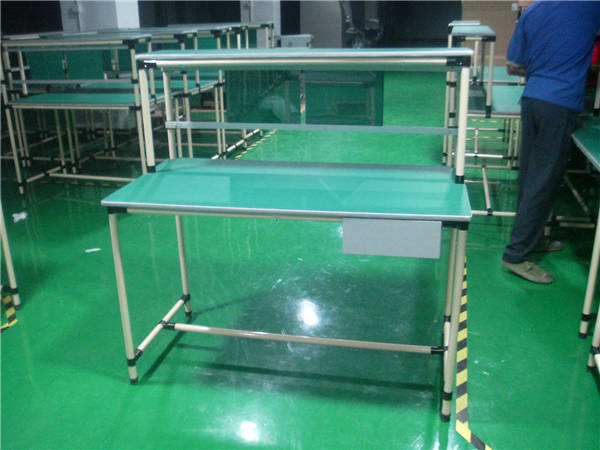
Maintenance teams lose time searching for specialty tools. A pegboard mounted above the cart body turns the top section into a visual tool board where every wrench silhouette has a marked position.
Guang'ErMei's 4-Drawer 1-Door Tool Cart with Pegboard integrates a 500 mm standard square-hole pegboard above the cabinet body. The total height reaches approximately 850 mm (cabinet) + 500 mm (pegboard), keeping tools within arm's reach while standing.
- Full pegboard back panel: Best for carts dedicated to a single machine line or maintenance zone.
- Half-pegboard with upper shelf: Better for teams that need both hanging tools and small parts bins.
- Inner half-pegboard cabinet: For environments where dust or coolant splash makes open pegboards impractical—tools hang inside the cabinet door.
Decision trade-off: Open pegboards offer the fastest visual retrieval but expose tools to contamination. Enclosed pegboard cabinets protect tools but add a door-opening step to every retrieval.
Step 4: Material and Build Quality—What Affects Long-Term Cost
The cabinet body material determines whether a cart lasts three years or ten. Budget carts often use 0.6–0.8 mm steel that dents under impact and warps under sustained drawer loads.
Guang'ErMei specification: Cabinet body and drawer panels use 1.0 mm cold-rolled steel, with stamped guide rails integrated into the frame. This thickness resists deformation at the 80 kg per-drawer load point and maintains drawer alignment over years of daily use.
Cost factor to understand: Thicker steel increases unit price but reduces replacement frequency. For a maintenance department running 15+ carts across shifts, the total cost of ownership favors 1.0 mm construction over lighter alternatives that require drawer realignment or rail replacement within 18 months.
Step 5: Standard vs. Custom—Where the Budget Line Should Be Drawn
Most maintenance workshops can operate with standard-dimension carts. Guang'ErMei's standard tool cart dimensions (approximately 1000 × 500 × 850 mm including pegboard) fit through standard workshop doors and elevator cabins.
- Aisle width constraints: Narrower carts (e.g., 800 mm width) for tight machine rows.
- Special tool lengths: Extended-depth drawers for automotive half-shafts or long calibration bars.
- Color-coded 5S zones: Custom colors beyond the default gray-white or blue to match workshop zone coding.
Lead time reality: Standard configurations ship within 2–3 working days from stock. Non-standard custom orders require 7–10 working days for production. Plan procurement timelines accordingly—especially when outfitting an entire maintenance department simultaneously.
Configuration Comparison Summary
| Configuration Factor | Budget Option | Recommended Standard | Heavy-Duty / Custom |
|---|---|---|---|
| Drawer load | 40–50 kg | 80 kg (stamped rail) | 80 kg+ with reinforced bottom |
| Steel thickness | 0.6–0.8 mm | 1.0 mm cold-rolled | 1.2 mm cold-rolled |
| Casters | 3-inch, basic | 4-inch, 2 fixed + 2 swivel brake | 5-inch, anti-static or heavy-duty |
| Pegboard | None or add-on | 500 mm integrated square-hole | Custom height or enclosed type |
| Lead time | Stock | 2–3 days | 7–10 days custom |
Next Steps for Maintenance Procurement Teams
- Audit your heaviest drawer: Weigh the tools that will go into your most loaded drawer. If it exceeds 50 kg, specify stamped heavy-duty rails as non-negotiable.
- Walk your floor route: Measure the narrowest aisle and any thresholds the cart must cross. This determines caster size and maximum cart width.
- Decide on visual management: If your team currently loses more than 5 minutes per shift searching for tools, an integrated pegboard pays for itself within weeks.
- Request a configuration quote: Share your drawer load requirements, floor conditions, and quantity with Guang'ErMei's engineering team for a tailored specification and delivery timeline.
Guang'ErMei provides a three-year warranty on tool carts and supports both standard stock orders and non-standard customization for maintenance environments across electronics, automotive, hardware mold, and testing applications.